


Zambia, Japan, ILO Launch E-Waste Initiative to Address Environmental Challenges, Create Jobs
 CHUKS OLUIGBO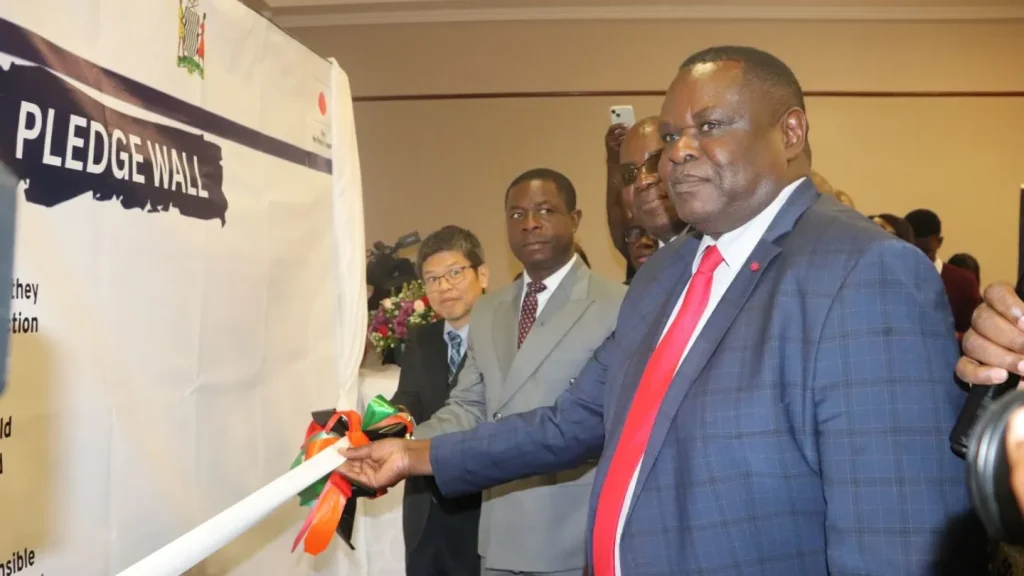
Launch of the Japan-funded Sustainable E-Waste Management for Youth Employment Project in Lusaka, Zambia. Image credit: ILO
Zambia, Japan and the International Labour Organization (ILO) have launched the Sustainable E-Waste Management for Youth Employment Project in Central Province, a landmark initiative aimed at addressing environmental challenges while creating decent and inclusive employment opportunities for young people.
Funded by the Government of Japan and implemented by the ILO in partnership with the Government of Zambia, the 12-month project seeks to promote sustainable e-waste management practices, support green enterprise development and create jobs for youth, women and persons with disabilities, contributing to Zambia’s environmental protection and economic transformation agenda.
A statement posted on the ILO website said implementation of the project is already underway across the five target districts of Chibombo, Chisamba, Kabwe, Kapiri Mposhi and Mumbwa.
Recent beneficiary induction sessions introduced participants to the project’s objectives and highlighted the role they can play in building a safer and more sustainable e-waste management sector. The project has also used platforms such as World Environment Day and the Zambia International Trade Fair to raise public awareness of the environmental and economic value of responsible e-waste management.
Addressing Two of Zambia’s Most Pressing Challenges
The Sustainable E-Waste Management for Youth Employment Project comes as demand for electronic devices grows side by side with the challenge of managing e-waste amid limited opportunities for decent work for many young Zambians.
Deputy Chief of Mission of Japan to the Republic of Zambia, Horii Mizumoto, said at the launch that the project is a practical response to two of Zambia’s most pressing challenges: unemployment and environmental protection.
He noted that the project reflects Japan’s commitment to promoting green growth and inclusive development through job creation, circular economy solutions and skills development.
“Through this initiative, Japan is promoting green job creation, advancing the circular economy and expanding inclusive employment opportunities for youth, women and persons with disabilities,” Mizumoto said.
“The project also showcases Japanese innovation and expertise in delivering sustainable e-waste management solutions in Southern Africa, contributing to the waste management and sustainable development objectives of the Tokyo International Conference on African Development (TICAD),” he said.
Other speakers, including the Permanent Secretary for Central Province, Dr. Milner Mwanakampwe, and the ILO Country Office Director for Zambia and Malawi, Wellington Chibebe, echoed similar sentiments.
Electronic Waste as a Valuable Resource
The project does not view electronic waste solely as an environmental problem. Instead, it promotes a circular economy approach that recognises e-waste as a valuable resource, transforming discarded electronics into opportunities for green job creation, skills development, and circular economy entrepreneurship.
Youth who participate in the project go through technical skills development, entrepreneurship training, occupational safety and health, and work-based learning, gaining the knowledge and practical skills needed to safely repair, refurbish, recover and recycle electronic equipment while building viable green enterprises.
The Power of Collaboration
The Sustainable E-Waste Management for Youth Employment Project rides on the strength of collaboration, coming as a joint project between the ILO and the Governments of Japan and Zambia.
Working together, these partners, as well as national and local government institutions, regulatory authorities, local councils and technical partners, are helping to build an enabling environment for sustainable e-waste management while promoting inclusive economic opportunities for young people.
“This partnership demonstrates how governments, employers, workers, development partners and communities can work together to deliver lasting social, economic and environmental impact,” said the ILO Country Office Director for Zambia and Malawi, Wellington Chibebe.
Advancing National and Global Goals
The Sustainable E-Waste Management for Youth Employment Project reflects the shared commitment of the Government of Zambia, the Government of Japan, the ILO, employers’ and workers’ organizations, and other stakeholders to advance environmental sustainability, inclusive growth and decent work for all, while supporting Zambia’s transition to a greener and more resilient economy.
On a global scale, the project will contribute to advancing a number of the United Nations Sustainable Development Goals if well implemented.
By creating decent, structured employment and work-based learning for young people, especially women and persons with disabilities, the project addresses SDG 5 (Gender Equality) and SDG 8 (Decent Work and Economic Growth).
Also, by discouraging unsafe, informal e-waste disposal methods and promoting recycling, it reduces pollution and fosters inclusive green employment, thus advancing SDG 12 (Responsible Consumption & Production) and SDG 13 (Climate Action).
Moving Ahead
In the months ahead, the ILO said the project will expand its focus through specialised technical training, entrepreneurship development, community awareness campaigns, strengthened e-waste collection systems and a study tour to South Africa, where project partners will learn from established e-waste management practices that can inform implementation in Zambia. That is a sign of commitment by the partners.
The speakers at the launch captured it succinctly when they said the project illustrates that environmental sustainability and decent work can go hand in hand. By investing in young people and equipping them with the skills to participate in an emerging green sector – to see e-waste not just as an environmental responsibility but a source of innovation, enterprise and decent employment – the project is laying the foundation for a sustainable e-waste management ecosystem in Zambia.
For other countries, there may be something to learn from this. To quote the President of Zambia Congress of Trade Unions (ZCTU), Blake Mulala, the project provides a practical model for achieving inclusive growth by empowering youth, women and persons with disabilities with skills and opportunities in emerging green sectors.
[give_form id="20698"]


1 thought on “Zambia, Japan, ILO Launch E-Waste Initiative to Address Environmental Challenges, Create Jobs”