ROSEMARY IMOBHIO
Nigerian shoppers scanning a pack of biscuits or a tin of milk have grown used to a familiar phrase tucked near the ingredients list: “may contain traces of nuts.” For most people, the words pass unnoticed. For someone living with a severe food allergy, however, that single line can decide whether a meal is safe or a trip to the emergency room.
This month, the global body that sets the rules for food labelling decided those words need to mean something more consistent. The Codex Alimentarius Commission, the joint food standards agency of the Food and Agriculture Organization (FAO) and the World Health Organization (WHO), adopted new international guidance on precautionary allergen labelling during its 49th Session in Geneva, held from 6 to 10 July 2026. The decision could eventually reshape how food companies everywhere, including in Nigeria, communicate allergen risk to consumers.
What Codex Has Changed
For years, “may contain” statements have been applied unevenly across the food industry. Some manufacturers used them responsibly, after testing for cross-contact risk. Others slapped the phrase on packaging as a blanket legal shield, regardless of actual risk. Consequently, allergic consumers often could not tell which warnings reflected genuine danger and which were simply defensive labelling.
The new Codex text, adopted as an annex to the General Standard for the Labelling of Pre-packaged Foods (CXS 1-1985), addresses that confusion directly. Rather than serving as a substitute for good manufacturing practices, such statements should be used only after food businesses have implemented proper allergen management measures and conducted a scientific risk assessment confirming that a residual risk remains, according to FAO’s account of the guidance.
Notably, the framework introduces reference doses, which are science-based thresholds below which most allergic consumers would not react. This means a company can no longer simply guess or over-warn. It must test, measure, and justify the label.
Understanding ‘May Contain’ Labels
To appreciate why this matters, it helps to separate two things that often get confused. First, there is ‘allergen declaration’, which lists an allergen because it is deliberately used as an ingredient, such as milk in a dairy dessert. Second, there is precautionary allergen labelling, which warns about unintentional cross-contact, for instance when a factory processes both peanut and non-peanut products on shared equipment.
The first is straightforward disclosure. The second is a judgment call, and that judgment has, until now, lacked a common global yardstick. Food allergies affect an estimated 4.3 percent of the global population, so getting that judgment right carries real consequences. Meanwhile, overused warnings create their own danger: allergic consumers who grow tired of avoiding every “may contain” product sometimes begin ignoring the warnings altogether, exposing themselves to genuine risk.
Nigeria’s Current Food Allergen Rules
NAFDAC, Nigeria’s food and drug regulator, already requires allergen disclosure under its Pre-Packaged Food (Labelling) Regulations 2022. These regulations, issued under Section 30 of the NAFDAC Act, direct that foods and ingredients known to cause hypersensitivity must be declared on the label, alongside detailed requirements for ingredient listing, nutritional information, and net quantity declaration.
Additionally, NAFDAC’s guidelines for semi-processed food exports specify that products must carry a mandatory allergen declaration covering common triggers such as milk, peanuts, soy, wheat, tree nuts, fish, shellfish, and eggs, aligned with international norms set by FAO and WHO.
This shows Nigeria is not starting from zero. What appears less developed, however, is detailed, standalone guidance. Specifically governing precautionary “may contain” statements, as distinct from ingredient-based allergen declarations. Nigeria’s framework addresses the second concern thoroughly but says comparatively little about how food businesses should decide when a precautionary warning is warranted.
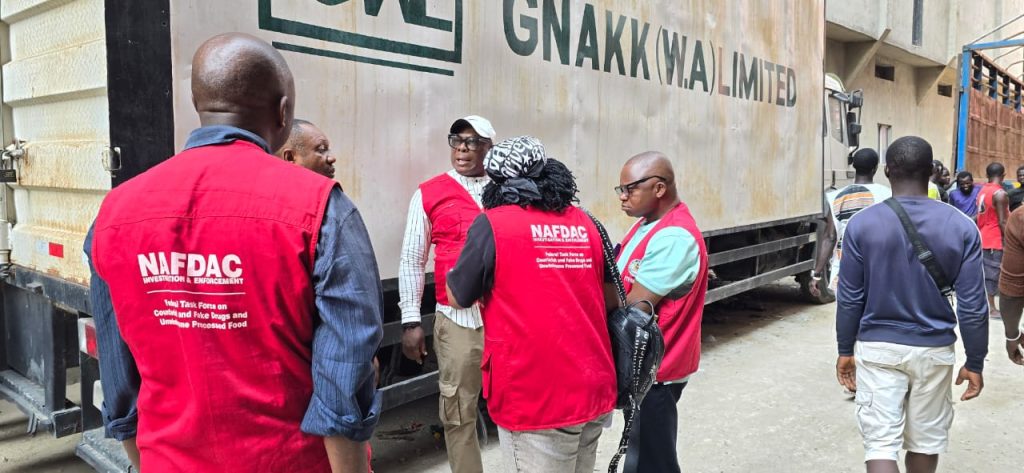
That gap is not merely theoretical. In December 2025, NAFDAC declared a batch of Indomie Vegetable Flavour noodles unsafe and ordered a nationwide mop-up after French authorities found undeclared milk and egg allergens on the packaging. The case illustrated both the value of allergen vigilance and the cost of getting labelling wrong, even though the affected batch was not officially sold within Nigeria.
Could NAFDAC Adopt the New Guidance?
Codex standards are voluntary, yet they carry significant weight. Regulators around the world routinely use them as templates when writing national law, and trading partners often expect exported goods to meet Codex-aligned expectations. Given that NAFDAC has already stated its ambition to align Nigerian food regulations with international best practices, adopting the new PAL guidance would fit a pattern already in motion.
If NAFDAC does align with Codex, Nigerian manufacturers would likely need to move from generic precautionary phrases toward documented, risk-assessed decisions. That would mean investing in allergen testing, tightening production line segregation, and training staff on cross-contact prevention, rather than defaulting to a catch-all disclaimer.
What It Means for Nigerian Manufacturers
For food producers, this is not simply a regulatory compliance issue. It touches product responsibility, supply chain risk management, and brand trust all at once. A manufacturer that can demonstrate a genuine risk assessment behind every allergen warning builds credibility with consumers and regulators alike. Conversely, a business that continues to over-label out of caution, without evidence, risks appearing evasive once global norms shift toward precision.
There is also a competitiveness dimension. Nigerian exporters selling into markets that follow Codex standards, including much of the European Union and other WHO member states, may eventually find that outdated or vague allergen labelling becomes a barrier to market access. Aligning early, therefore, could become a trade advantage rather than merely a defensive move.
Why Consumers Should Care
For Nigerian consumers living with food allergies, precise labelling is not a bureaucratic detail; it is a daily survival tool. Clearer, evidence-based “may contain” statements would help them distinguish between products carrying real risk and those that are simply over-cautious. In turn, that clarity could restore confidence in the labels themselves, since consumers currently have limited means of judging which warnings to trust.
At the same time, unnecessary warnings carry a cost of their own. They shrink the range of foods available to allergic households. Also, over time, they can breed complacency if warnings become so common that people stop reading them carefully.
The Bigger Picture for Responsible Business
Ultimately, this story sits squarely within the wider CSR and ESG conversation. Food safety is consumer protection in its most literal form, and accurate labelling is one of the simplest, most measurable ways a company demonstrates corporate transparency. Investors and ESG analysts increasingly view supply chain and product safety governance as material risk factors, not peripheral concerns.
Responsible manufacturing, in this sense, is not only about what goes into a product. It is also about how honestly a company communicates what might unintentionally be there. As global standards tighten, businesses that treat allergen management as a genuine safety practice rather than a legal formality, will likely be better positioned for both regulatory scrutiny and consumer trust.
Conclusion
Nigeria has already built a reasonably solid foundation for food allergen disclosure. Yet the new Codex guidance highlights an area still worth strengthening. Precautionary labelling should be grounded in science rather than caution alone.
Whether NAFDAC moves quickly or gradually, manufacturers, exporters, and regulators alike have good reason to start preparing now. For a country with growing food export ambitions and a domestic market increasingly attentive to food safety, this is one global shift worth watching closely.
[give_form id="20698"]