Eche Munonye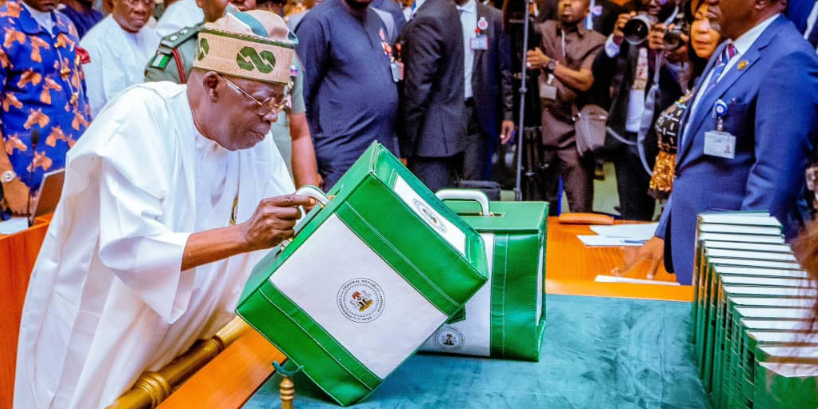
Budgeting for Belief, Starving the Ledger of Truth
Nigeria’s 2026 budget is not merely padded — it is a mirror held up to a governance culture that has learned to dress patronage in the language of faith and public need.
There is a particular kind of dishonesty that dresses itself in reverence. Nigeria’s 2026 Appropriation Act has now given that dishonesty a price tag: ₦8.05 billion set aside for the construction, renovation, and equipping of churches and mosques — ₦1.91 billion for seven church projects, ₦6.14 billion for fifty-two mosque projects — much of it lodged inside the budgets of agencies with no mandate over religious affairs whatsoever. Research institutes. Agricultural boards. An industrial arbitration panel. None of these bodies exist to build worship centres, yet each now carries a line item for one.
This is not an isolated eccentricity. It sits beside the now-notorious case of the Presidential Foreign Intervention Promotion Council — an agency with no legal existence, no statutory basis, and, by its own promoter’s account, no legitimate reason to be in a national budget at all — which nonetheless secured ₦1.3 billion in the same Appropriation Act. A man calling himself its Director-General has since told a national audience that he simply lobbied Budget Office officials into inserting it. If that claim survives scrutiny, it confirms what CSR Reporters has long argued: Nigeria’s budgeting architecture is porous by design, and its guardians treat that porousness as a feature, not a failure.
A budget is a moral document before it is a fiscal one. It tells a nation what its government believes matters enough to fund — and what it believes it can quietly fund without anyone noticing.
Add to this Tracka’s finding of eleven palace projects worth ₦5.85 billion with no identifiable physical locations — funds allocated to structures no one can point to on a map — and a pattern emerges that is less about isolated abuse and more about systemic normalization. This is a budget that carries a fiscal deficit of ₦31.45 trillion, representing 46 percent of total spending, financed overwhelmingly through borrowing that the next generation of Nigerians will service. Every naira diverted into an untraceable palace project or a fictitious council is a naira borrowed against a future that had no say in the decision.
THE ACCOUNTABILITY GAP WIDENS
What should trouble observers most is not the padding itself — Nigeria’s National Assembly has inserted trillions in unexplained projects into successive budgets, from the ₦3 trillion discrepancy alleged in the 2024 cycle to the ₦6.9 trillion in projects BudgIT uncovered in the 2025 budget. What should trouble observers is the institutional response once padding is exposed. Faced with a fictitious agency sitting inside a sovereign appropriation bill, the Senate chose procedural deflection, deferring to an executive-ordered probe rather than exercising its own constitutional oversight duty. The House of Representatives, to its credit, moved to establish an investigative committee. That asymmetry between the two chambers of the same National Assembly is itself a form of institutional failure — a co-equal branch retreating from a duty that exists precisely to catch what the executive misses.
Nor is the religious allocation controversy merely a matter of poor optics. When public officials defend musical instruments for churches in a constituency budget as an exercise in youth reorientation, as has been the case with one legislative defense already offered, they are asking citizens to accept that faith-based patronage is an acceptable substitute for the harder work of funding functional health centres, verifiable infrastructure, and transparent social investment. Faith communities deserve support that is delivered through open, auditable channels — not laundered through agricultural and research budgets where it cannot be properly tracked, questioned, or evaluated against outcomes.
WHAT GENUINE ACCOUNTABILITY WOULD REQUIRE
CSR Reporters holds that responsible governance, like responsible corporate leadership, must be evidence-based, independently verified, and answerable to the public it claims to serve. On that standard, three things must now happen, and civil society, investors, and institutional stakeholders should insist on all three rather than settling for one.
First, the ICPC investigation into the ghost agency must be time-bound, transparent, and its findings published in full — not filed away as so many prior probes have been. Second, the National Assembly, both chambers, must submit to independent, line-by-line budget tracking of the kind Tracka and BudgIT already perform pro bono, and that tracking must carry consequences, not merely headlines. Third, any religious or traditional-institution allocation embedded in the budget of an agency without a religious or cultural mandate should be flagged, re-classified, and subjected to the same open bidding and disbursement scrutiny as any other capital project.
Nigeria does not lack the civic infrastructure to catch this. Tracka’s analysis, BudgIT’s longitudinal tracking, and the House probe committee all demonstrate that the tools and the will exist in pockets of the system. What is missing is the follow-through — the willingness to let scrutiny end in consequence rather than in another news cycle. Until that changes, every budget presented to Nigerians will carry the same quiet warning beneath its official figures: that what is written down is not always what is true, and what is true is not always what gets investigated.
CSR Reporters will continue to track this story as the ICPC probe and the House committee’s findings develop, and will hold both to the same evidentiary standard we apply to the corporate actors we cover. Accountability, to mean anything, cannot be selective.
CSR REPORTERS — Africa’s independent accountability and sustainability intelligence platform.
[give_form id="20698"]