csrreporters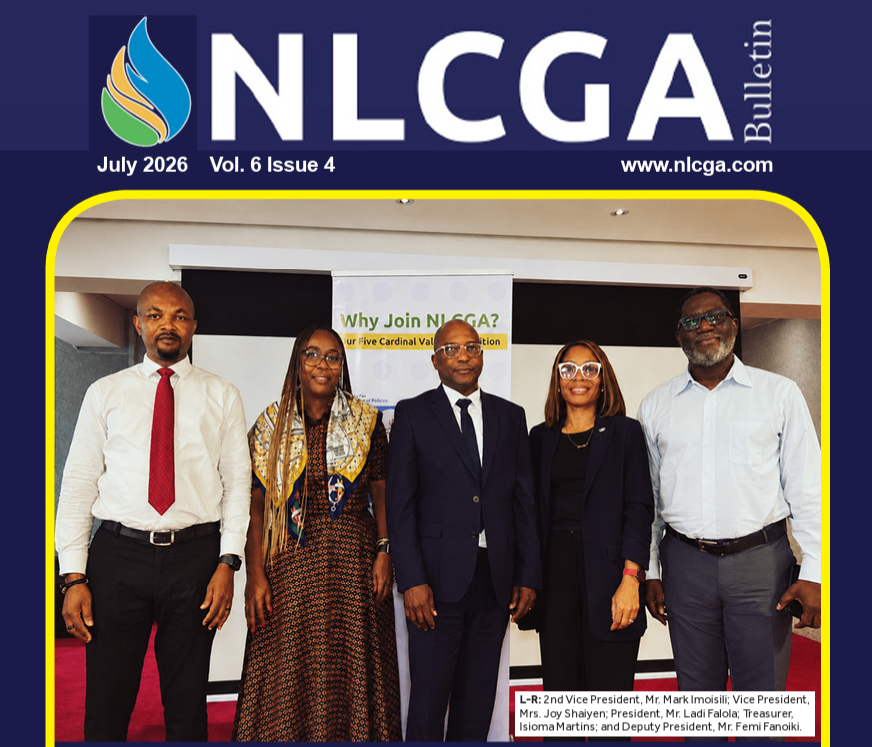
Nigeria’s Liquefied and Compressed Gases Association (NLCGA) used its July member magazine to lay out a clear number attached to its new leadership’s ambitions: 5 million metric tons of domestic LPG consumption. Alongside that target, the issue carries a sustainability feature making the case that the fastest path to real ESG impact in Nigeria’s gas sector may not run through massive infrastructure, but through something as ordinary as a kitchen.
New Leadership, Familiar Mandate
In his inaugural address, published in the magazine, incoming NLCGA President Ladi Falola reflected on the association’s 16th Annual General Meeting. This was held June 9, 2026, and closed out the 2024–2026 Executive Committee led by outgoing President Felix Ekundayo. It also installed a new team for the 2026–2028 term.
Falola credited the outgoing committee with steering the group’s transition from the NLPGA to the NLCGA. This was a repositioning to represent the entire gas value chain rather than LPG alone. He also set out his own priority: aggressively growing adoption of LPG, CNG, and LNG nationwide, anchored by the 5-million-metric-ton LPG target.
According to the magazine, the new Executive Committee is:
- Ladi Falola – President
- Femi Fanoiki – Deputy President
- Joy Shaiyen – Vice President
- Mark Imoisili – 2nd Vice President
- Isioma Martins – Hon. Treasurer
- Titilayo Dada – Deputy Treasurer
Falola wrote that the new administration would focus on removing regulatory bottlenecks and deepening industry collaboration. It will also aim to run a more transparent, member-focused association that keeps its members ahead of industry trends.
A separate write-up on the AGM in the same issue notes that members of the outgoing committee used the meeting to thank the Ministry of Petroleum Resources (Gas) for policy support they credited with encouraging investment, strengthening industry participation, and accelerating domestic gas adoption over the outgoing administration’s tenure.
Read alongside the magazine’s sustainability feature, that consumption target takes on a second dimension. It implies scaling up the kind of household- and institution-level adoption the feature argues for.
The growth the new EXCO is chasing, and the clean-cooking case the magazine makes elsewhere in the issue, turn out to be the same story told at two different altitudes. One in metric tons, the other in kitchens.
The Bigger Lever: What’s Cooking
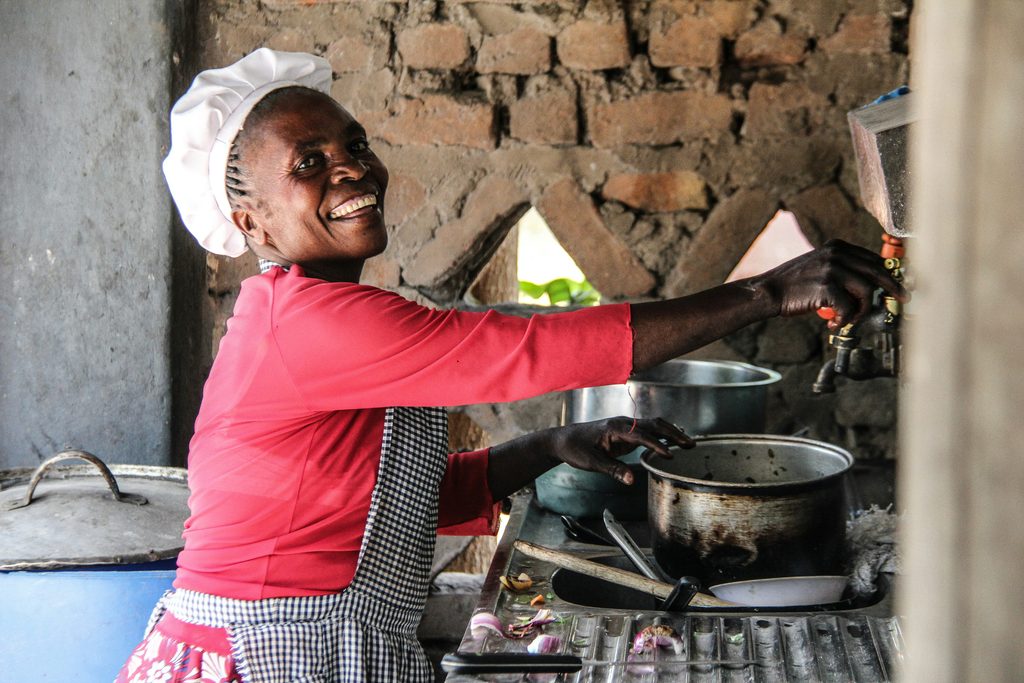
That sustainability feature, authored by Abiola Ibine, opens by pushing back on where the clean-cooking conversation usually goes. Much of the attention, she writes, gravitates toward large-scale infrastructure like national rollouts, long timelines, big capital. This, when one of the most immediate and scalable opportunities sits somewhere smaller and closer to home: the kitchen itself.
Ibine argues that millions of Nigerian households and institutions still cook primarily with firewood, charcoal, and kerosene. These fuels, she points out, have ties to deforestation, greenhouse gas emissions, and heavy indoor air pollution.
LPG, in her framing, burns cleaner and eliminates the smoke that comes with open-flame cooking. This makes it one of the more accessible ways for organizations and government alike to shrink their environmental footprint at scale, without waiting on the kind of infrastructure buildout that clean energy transitions usually require.
On the social side, she points to the health toll of traditional fuels falling disproportionately on women and children. They typically spend the most time near the fire preparing meals. She also cites long-term smoke exposure as a leading driver of respiratory illness in these groups.
Switching to LPG, she writes, doesn’t just clear the air, it removes much of the physical risk tied to open flames. In institutional settings like schools and care facilities, this changes the basic experience of the space itself.
On governance, Ibine’s piece ties LPG adoption to Nigeria’s Decade of Gas initiative and the Nigeria Gas Expansion Program. It also ties it to UN Sustainable Development Goals tied to health, clean energy, and climate action.
For organizations building out ESG strategy, she argues, that alignment offers something rarer than good intentions: a way toward outcomes that are measurable and verifiable, rather than reported in the abstract.
A Program Built On That Idea
The feature points to IBILE Oil & Gas Corporation’s (IOGC) Kitchen Transformation Initiative (KTI) as a working example of that logic. As described in the piece, the program refurbishes cooking spaces in underserved institutions like schools, orphanages, community facilities. It converts them from traditional fuels to LPG systems. These institutions tend to cook at high volume, Ibine notes, which concentrates both the environmental and health risks of dirty fuels in one place, making them a high-leverage starting point.
Each kitchen the initiative touches, per the feature, is fitted out with filled LPG cylinders, upgraded kitchen infrastructure, and essential cooking utensils. These are intended, in Ibine’s words, to deliver cleaner energy access, better health outcomes, and a replicable ESG model other institutions can point to and copy.
Read together, the leadership’s consumption target and the magazine’s sustainability feature point to the same underlying bet: that Nigeria’s gas transition will be won as much in ordinary kitchens as in industry policy rooms.
To see the full issue, go here.
Have a CSR or sustainability story we should cover? Reach out to CSR Reporters at news@csrreporters.com
[give_form id="20698"]