csrreporters
Ekuma Eze, Head of Corporate Affairs and Sustainability at Rite Foods Limited, has built a steady reputation in Nigerian corporate circles. However, that isn’t where his impact ends. He also shows up at schools, stakeholder forums, and award ceremonies with one consistent message: Business only works long-term if it works for people and the planet too.
Rite Foods was incorporated in 2007 and produces some of the most recognisable beverage and food brands on Nigerian shelves. Consequently, when its sustainability chief speaks, the industry tends to listen.
Eze sits at the intersection of communications, government relations, and environmental strategy. Because of that, his job involves translating boardroom commitments into programmes ordinary Nigerians can see and feel. This is a role he is doing admirably well in.
Building On The EYEC Framework
At the centre of Eze’s work sits the EYEC framework. It stands for Environmental Stewardship, Youth Empowerment, Education, and Community Development. Rather than treating sustainability as a public relations exercise, Rite Foods has structured its social investment around these four pillars. Eze has been the one explaining, defending, and expanding that structure in public.
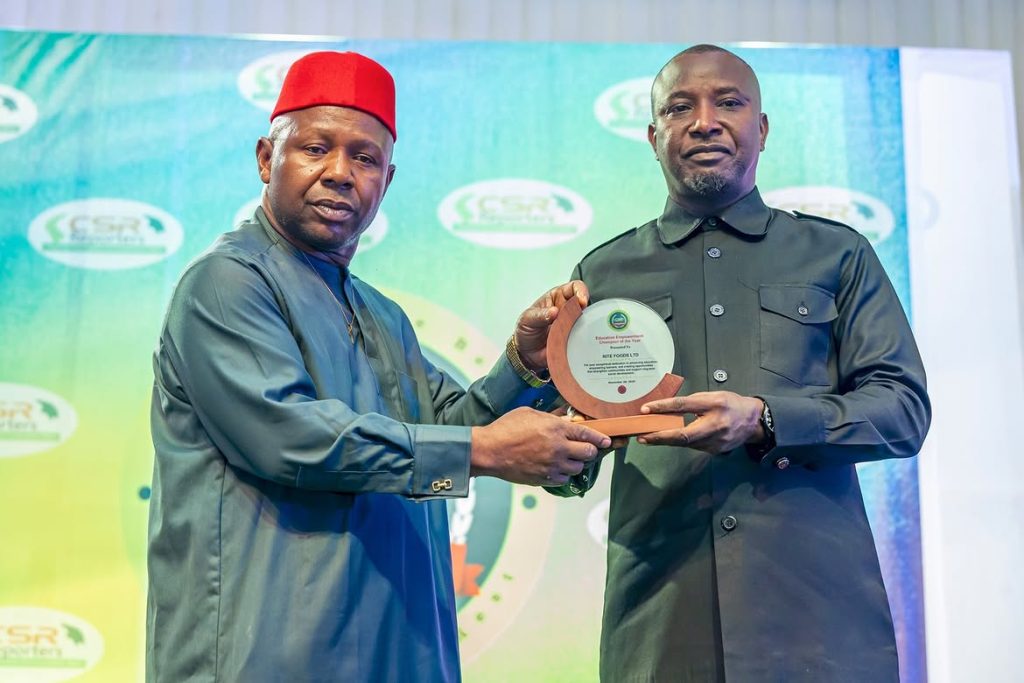
In December 2025, he told reporters that the company’s culture of innovation sets it apart from other fast-moving consumer goods firms in Nigeria. That claim was not made in a vacuum. Rite Foods had just been recognised in multiple categories at CSR Reporters’ 2025 Social Impact and Sustainability Awards (SISA). Rite Foods also won honours, including Best Health-Focused CSR Programme of the Year at other sustainability awards the same year.
For Eze, these wins are never framed as personal accolades. Instead, he repeatedly credits teamwork. He describes recognition as a testament to collaboration across the company.

Turning Numbers Into Accountability
Sustainability talk is cheap unless disclosure backs it up. This is where Eze’s approach becomes more interesting. Rite Foods began publishing an annual sustainability report in 2024. Last week the company presented its second full report. That report covered environmental, social, and governance performance for 2025.
According to figures Eze shared at the Lagos presentation, attended by CSR Reporters, total emissions fell by roughly five percent. The baseline was 567.5 tonnes of carbon equivalent recorded in 2024. Energy intensity also improved during the same period. It dropped from 0.44 megajoules per litre of beverage in 2024 to 0.41 megajoules in 2025. That is a seven percent reduction, achieved even as production volumes grew.

Meanwhile, social investment jumped to N581.92 million in 2025. That figure represents a fifty percent increase from N387.89 million the previous year. Eze explained that the spending reflects a deliberate choice. Rite Foods wanted to expand healthcare and education programming, not simply maintain existing commitments.
Furthermore, the company engaged Ernst & Young for third-party assurance on the social pillar of its report. It did this despite facing no regulatory obligation to do so. On governance, Eze has been equally direct. He insists that Rite Foods complies fully with external regulations, since falling short would put the company on the wrong side of the law.
Rite Foods has also set forward-looking targets. It aims to cut greenhouse gas emissions by a further ten percent in 2026. By 2030, that target rises to forty percent, aligning with Nigeria’s national net-zero goal for 2060. Given how young Nigeria’s corporate disclosure culture still is, that level of specificity stands out.
From The Beach To The Classroom
Numbers aside, much of Eze’s public-facing work happens far from spreadsheets. In 2025, the “Rite on the Beach” initiative recovered more than 42 tonnes of plastic waste from coastal Lagos communities. Monthly clean-ups made that possible.
Additionally, a companion campaign called “Plastic July” encouraged shoppers to return used packaging for recovery. By the time the company tallied its full-year figures, total plastic recovery across all programmes reached 858 tonnes. That scale places Rite Foods among the more active manufacturers in Nigeria’s still-emerging circular economy space.
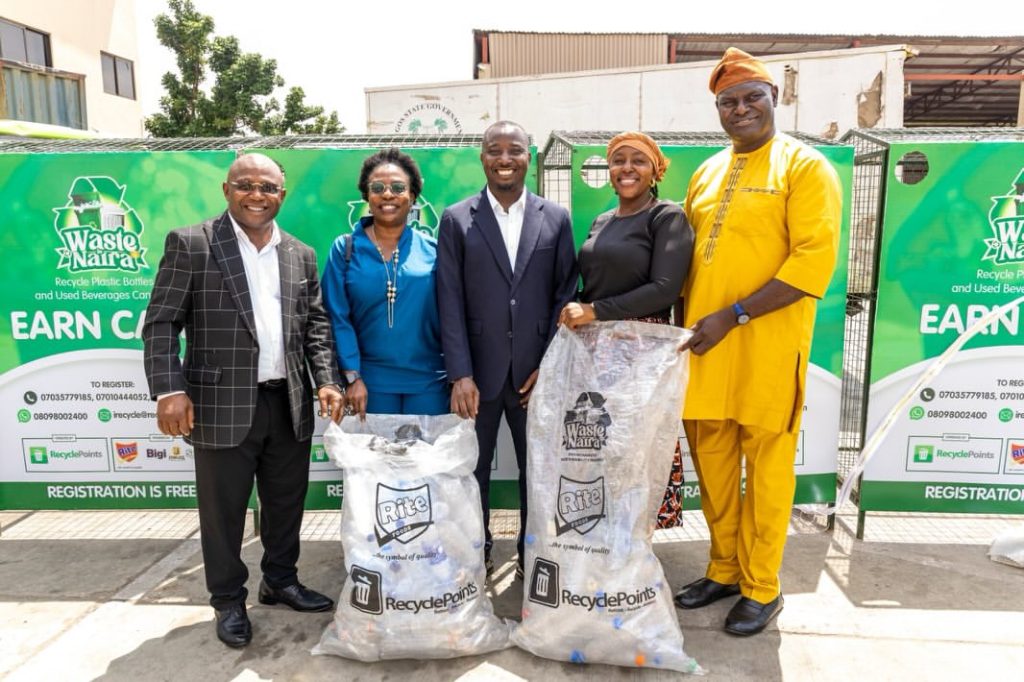
Building on that momentum, the company partnered with RecyclePoints on a new initiative. Waste-Is-Naira allows residents to exchange used plastic bottles and beverage cans for cash. Speaking on the partnership, Eze framed it as a shared responsibility. Manufacturers, he argued, must think about packaging beyond the factory gate.
Education has followed a similar pattern. In June 2026, Eze led World Environment Day outreach tagged “Plant Your Future.” The programme reached Opebi Senior Grammar School in Lagos and Moslem Primary School in Ososa, Ogun State.
At the event, students took part in tree planting and recycling awareness sessions. Eze told them that environmental sustainability begins with awareness and responsibility. Young people who learn to protect the environment early, he said, become ambassadors of change at home.
Similarly, during Children’s Day in May 2026, he argued that investing in children ranks among society’s greatest commitments. Today’s educational choices, after all, shape tomorrow’s national outcomes.
Clean Energy As Strategy, Not Compliance
Energy security has become another consistent theme in Eze’s public portfolio. In February 2026, he opened a high-level stakeholders’ forum on Nigeria’s clean energy transition. He described clean energy as central to business strategy, not a box-ticking exercise.
The forum examined risks, trade-offs, and opportunities for sustainable growth. It brought together regulators, energy experts, manufacturers, and sustainability advocates from across the food and beverage sector.
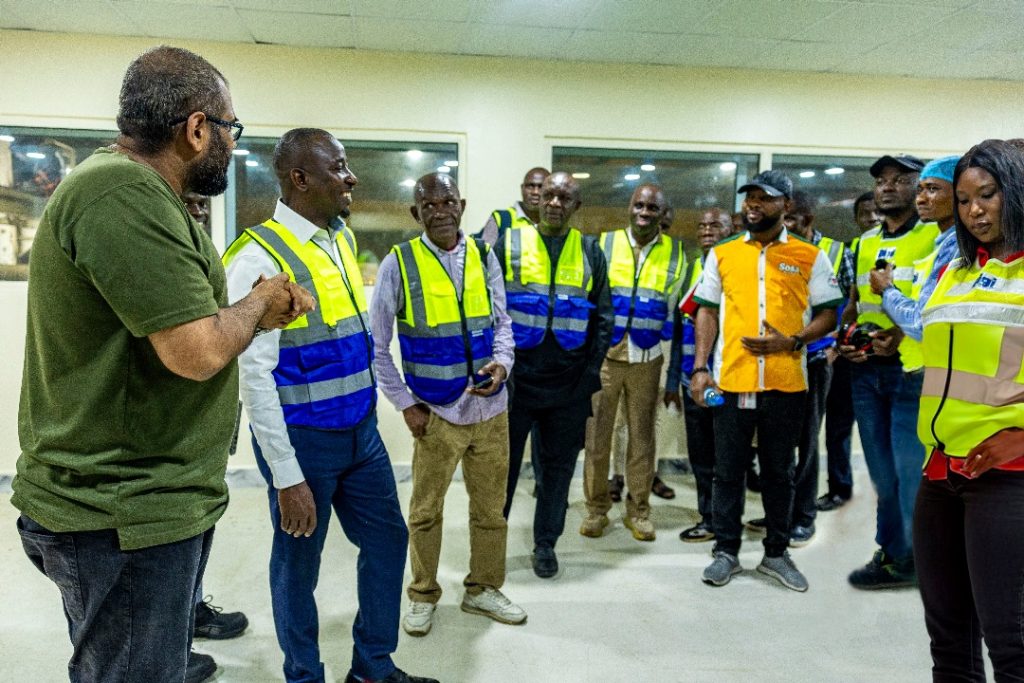
On the ground, Rite Foods pairs a solar farm at its production facility with natural gas. Solar alone cannot meet the demands of round-the-clock manufacturing. Eze has been candid about that limitation. Specifically, the company blends renewable and conventional sources to balance cost, reliability, and environmental impact.
As a result, Rite Foods treats its energy strategy less as an idealistic pursuit. It functions instead as a pragmatic response to Nigeria’s infrastructure realities, an approach other manufacturers recognise well.
A Career Built On Stakeholder Engagement
Before joining Rite Foods, Eze built his career at Coca-Cola Hellenic Bottling Company. His portfolio there spanned government relations, community relations, media relations, events management, and stakeholder engagement. That background shows in how he operates today.
Whether addressing schoolchildren, officials, or journalists, Eze adjusts his message to the audience without diluting its substance. Consequently, he has become one of the more accessible sustainability executives in Nigeria’s FMCG sector, someone reporters can call for a straight answer.

Colleagues describe him as someone who genuinely believes local investment strengthens Nigeria’s economy. He has publicly urged government at all levels to prioritise local investors over foreign ones. Foreign investors, he noted, often repatriate profits rather than reinvest them domestically. That view aligns closely with Rite Foods’ own history as a 100% indigenous company.
Looking Ahead
Rite Foods is working toward its 2030 emissions targets. Because of that, Eze’s role is likely to grow rather than shrink.
Nigeria’s regulatory environment around ESG disclosure remains relatively light-touch. Yet consumer and investor expectations are rising quickly. Therefore, companies that voluntarily publish detailed sustainability reports are positioning themselves ahead of a curve. That curve will eventually tighten.
Ultimately, Eze’s approach suggests something simple about sustainability leadership in Nigerian manufacturing. It rewards consistent, measurable follow-through over grand declarations, one recycling drive and one school visit at a time.
[give_form id="20698"]