CHUKS OLUIGBO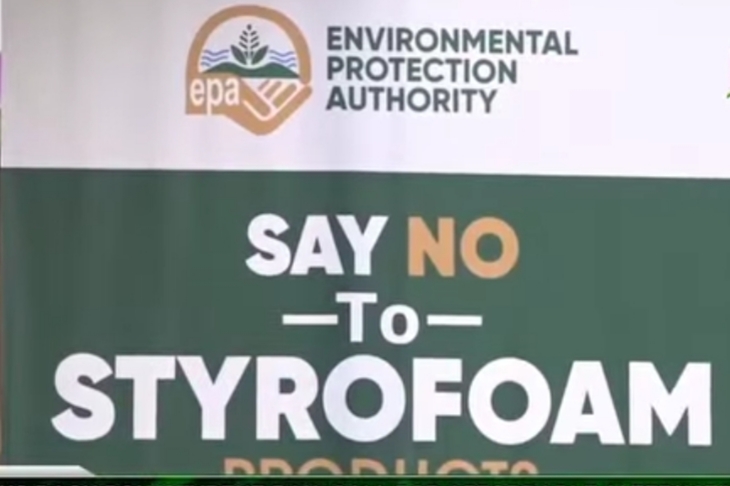
The Ghana Medical Association (GMA) has urged the government to extend its planned ban or phase-out of Styrofoam products to cover all single-use plastics.
The association’s President, Professor Ernest Yorke, said the indiscriminate disposal of such plastics continued to block drains and waterways, thereby worsening flooding during heavy rains.
“Plastic waste is a major contributor to choked drains, and this is obvious for all to see,” Prof. Yorke said at the GMA-organised 26th Annual Public Lecture on Friday, July 24.
He said expanding the ban would offer a more comprehensive solution to the country’s growing waste management challenge.
The lecture came under the theme “Food Safety in Contemporary Ghana: Public Health Concerns for the Consumer”.
The Back Story
In May, the Government of Ghana announced that it would enforce a nationwide ban on the production, importation, sale, distribution, and use of Styrofoam and expanded polystyrene (EPS) packaging starting January 1, 2027.
The ban, according to the country’s Environmental Protection Authority (EPA), would apply to all forms of expanded PS foam products, including food packaging containers used by restaurants, chop bars, and food vendors, as well as disposable cups and plates.
However, it would exclude EPS products intended for medical, scientific, laboratory, and diagnostic purposes.
“This policy directive forms part of national efforts to protect public health, improve environmental sanitation, reduce plastic pollution, promote sustainable development, and ensure compliance with established environmental standards,” the EPA said.
In preparation for the implementation, the EPA asked all manufacturers, importers, distributors, and users of PS foam products to begin transition to safer, reusable, recyclable, and environmentally sustainable alternatives, such as paper packaging and aluminum foil containers.
It said it would support nationwide stakeholder engagement, public education, and technical consultations during the transition period.
Manufacturers Raise Concerns Over Investment Loss
While the policy seems to have been widely accepted, the Ghana Plastic Manufacturers Association raised concerns over the financial impact the policy would have on them.
The association said the EPA’s position that producers can easily repurpose their machinery after the ban was unrealistic. It said the current installed machines cannot easily be retooled for biodegradable alternatives.
The President of the association, Ebbo Botwe, told Channel One News that such a transition would render existing investments worthless and could lead to significant losses within the sector.
The manufacturers urged the government to either extend the implementation timeline to 2030 or consider compensation for affected manufacturers.
A Critical Environmental and Public Health Intervention
Speaking at the 26th Annual Public Lecture on Friday, Prof. Yorke explained that plastic packaging materials, particularly the thin plastic bags often used to serve hot food, posed potential health risks and contributed to environmental degradation when improperly disposed of.
Referring to the recent flooding in Accra, Prof. Yorke said the incident had reignited national discussions on waste management, especially the widespread use of Styrofoam containers and other single-use plastics.
He described the proposed ban as an important environmental and public health intervention, noting, however, that its effectiveness would depend on the availability of affordable alternatives, improved waste collection systems, recycling, public education, and stricter enforcement of environmental regulations.
Final Word
Ghana produces about 840,000 to 1 million tonnes of plastic waste each year, but only less than 10 per cent of this volume is collected for recycling, Amin Hosseinian-Far et al. said in a research publication titled “Macro impacts of plastic pollution in Ghana”.
A large volume of discarded single-use plastics and packaging ends up in open dumps, land, and water bodies. This invariably leads to severe ecosystem degradation, choked urban waterways causing severe seasonal floods, and extensive marine pollution.
Today, coastal cities like Accra are experiencing recurring floods due to clogged storm-water drains. Plus hundreds of thousands of tons of these plastic waste leak into the Atlantic Ocean, harming marine life and breaking down into microplastics in local soil.
So, both the ban by the government and the call for extension to single-use plastics by the GMA are in order. It is in line with a wider African push against single-use plastics as seen in Ethiopia and Egypt, as well as in Nigeria’s commercial city of Lagos.
However, it is important for the government to listen to concerns raised and find a middle ground so that the policy does not end up solving one problem and creating multiples of other problems.
[give_form id="20698"]