ROSEMARY IMOBHIO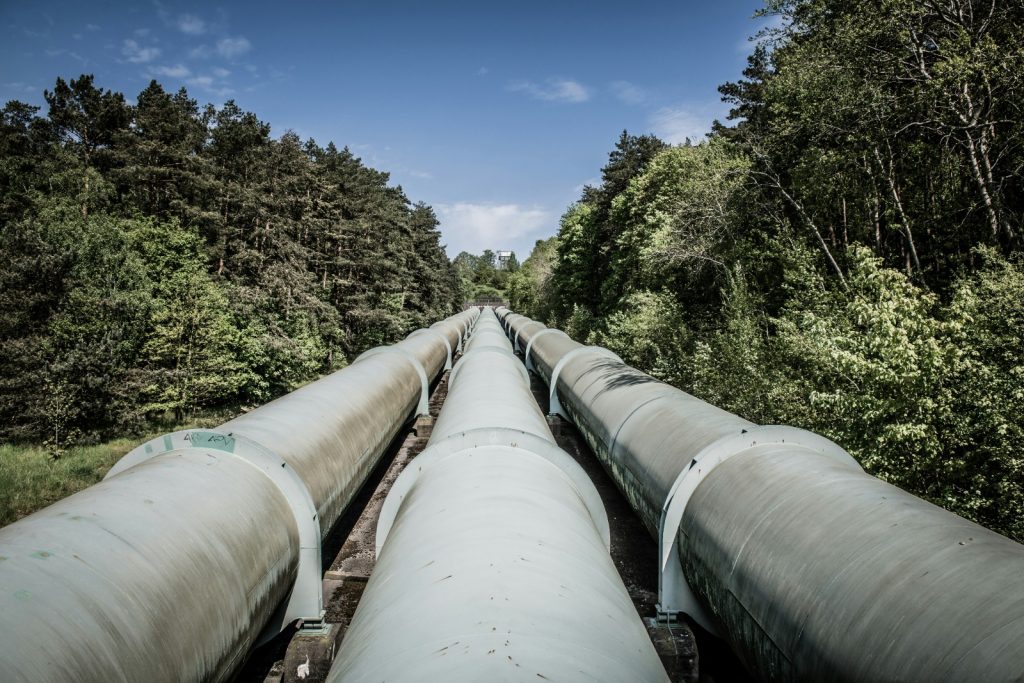
West African leaders have formally approved the Nigeria-Morocco Gas Pipeline. Regional governments call it one of the most consequential energy undertakings in the continent’s history. The decision was sealed at an ECOWAS summit in Freetown, Sierra Leone, on 19 July 2026.
It sets in motion a multi-decade infrastructure programme. The plan is to move Nigerian gas across thirteen West African countries, then onward to Morocco and into European markets. Consequently, the announcement has triggered a wave of reactions across policy, business and climate circles.
For governments in the region, the pipeline is a chance to convert stranded gas reserves into jobs, export revenue and industrial growth. Meanwhile, some energy economists and environmental advocates worry about the cost. Committing tens of billions of dollars to new fossil fuel infrastructure sits uneasily with a global energy system. That system is shifting, however unevenly, toward renewables.
Neither position is without merit. Readers need to understand both to grasp what the pipeline means for West Africa’s development and sustainability path. This article does not take a side. Instead, it lays out the facts, the arguments and the open questions that will shape how the project unfolds.
The Agreement
At the Freetown summit, ECOWAS heads of state signed an intergovernmental agreement. It authorises a new company to develop and operate the pipeline, sometimes called the African Atlantic Gas Pipeline. Reports place the price tag at roughly $25 billion. Several outlets cite figures closer to $27 billion instead. That spread reflects how preliminary the costing still is at this stage.
The idea itself predates this summer’s summit by many years. Morocco’s King Mohammed VI and Nigeria’s late President Muhammadu Buhari originally championed it. Current Nigerian President Bola Tinubu has since kept up that backing.
Notably, Nigeria holds the continent’s largest proven natural gas reserves. Indeed, the country has pursued this particular route to Morocco for nearly a decade. A rival corridor, Algeria’s Trans-Sahara Gas Pipeline, separately competes for some of that same Nigerian supply.
NNPC, Nigeria’s state oil company, and ONHYM, Morocco’s hydrocarbons agency, jointly describe the pipeline as a new development corridor. Its purpose, they say, is tighter energy market integration across the continent.
Route and Scale
The planned route is expansive by any measure. Nigerian gas will travel through thirteen countries along Africa’s Atlantic coast. It then reaches Morocco, where the line connects into the existing Maghreb-Europe pipeline network.
Length estimates vary depending on how branch lines are counted. Figures range from around 6,000 kilometres to nearly 6,900 kilometres. Three landlocked Sahel nations, Niger, Burkina Faso and Mali, will receive gas through dedicated spur lines rather than the main coastal route.
Total planned capacity sits at roughly 30 billion cubic metres a year. Of that, about half is destined for Morocco and European buyers. The rest goes to markets within West Africa itself. Project partners plan a commercial operating company in Casablanca. A separate pipeline authority in Abuja will oversee cross-border coordination. Officials have so far offered only broad timeline markers. Commissioning of the earliest segments is not expected before the start of the next decade.
Why Governments Support the Project
Regional leaders anchor their support in several overlapping economic and strategic arguments. Foremost among them is energy security. Sub-Saharan Africa continues to grapple with limited and unreliable power access.
Gas is frequently framed as the fastest bridge between today’s shortfalls and a more diversified energy mix. Nigerian officials argue that supply gaps must close first. Only then, they say, can questions of transition be meaningfully addressed. A large share of the population still lacks consistent access to modern energy, including basic clean cooking fuel.
Economic integration forms another central pillar. The pipeline threads through thirteen countries. It is designed to knit together national gas markets that have historically operated in isolation. It gives landlocked states such as Niger, Burkina Faso and Mali a route to supply they currently lack.
Supporters also point to job creation across construction, operations and downstream industries. Wider infrastructure development typically accompanies projects of this scale, from roads and ports to power connections built along the corridor.
Export earnings and industrialisation round out the case for many officials. Proponents argue that gas sold into European markets generates foreign exchange. That revenue, they say, can be reinvested domestically.
Gas retained for regional use can power industrial clusters, fertiliser production and manufacturing long constrained by unreliable electricity. Advocates also frame gas as a transition fuel, one that burns cleaner than coal or heavy fuel oil. They argue it can help Nigeria pursue climate commitments while still expanding energy access at home and abroad.
Financing and Delivery Concerns
Not everyone is convinced the pipeline is the right vehicle for the region’s development goals. Critics raise concerns grounded in project economics as much as environmental principle. Financing sits at the centre of the debate.
An energy analyst CSR Reporters spoke to, points out that the project still lacks a dedicated operating company. It also lacks confirmed investors and a final investment decision. This despite the political fanfare surrounding its approval. Another flags what she calls significant project vulnerabilities. She cites security risks, uncertain funding, an undefined delivery timeline, diplomatic sensitivities and regional instability. All of these, she says, could complicate execution across so many African states.
She also questions the underlying project logic. Is an extensive undersea pipeline genuinely more cost effective than alternatives, she asks, such as regasification terminals paired with liquefied natural gas shipments?
Cost escalation is, similarly, a recurring worry. Early on, estimates for the pipeline hovered closer to $20 billion. Some analysts believe the eventual bill could climb well beyond current projections.
Additionally, construction will proceed across politically and geographically varied terrain, which tends to push costs upward. A long construction runway, potentially stretching past 2030 for the earliest segments, adds further risk. It exposes the project to shifting global energy conditions quite unlike those in place when the idea first took shape roughly a decade ago.
Climate and Environmental Questions
Beyond financing, a broader structural concern persists among analysts. Does new, long-lived gas infrastructure fit comfortably within a world trying to curb fossil fuel expansion? Nigeria’s own gas ambitions, this pipeline included, have previously drawn caution from the Natural Resources Governance Institute. The institute has warned that the global appetite for fossil fuel financing is shrinking. That trend could leave planned gas assets stranded if demand assumptions fail to materialise.
Environmental researchers echo related concerns about ecological and social impact along the route. Authorities must rigorously test compliance with environmental impact assessment standards. There is also the need for meaningful consultation with coastal communities. Their livelihoods depend on the areas the pipeline will cross. Ultimately, environmental costs could outweigh economic benefits if these steps are treated superficially. Civil society groups have tracked the project since its earliest iterations nearly a decade ago. They frequently raise community and land-use concerns, alongside worries about biodiversity in the marine and coastal zones the corridor will traverse.
Environmental Stewardship and Governance
The Nigeria-Morocco Gas Pipeline sits squarely at the intersection of development ambition and sustainability responsibility. That is precisely why it deserves close attention from businesses and investors, not governments alone.
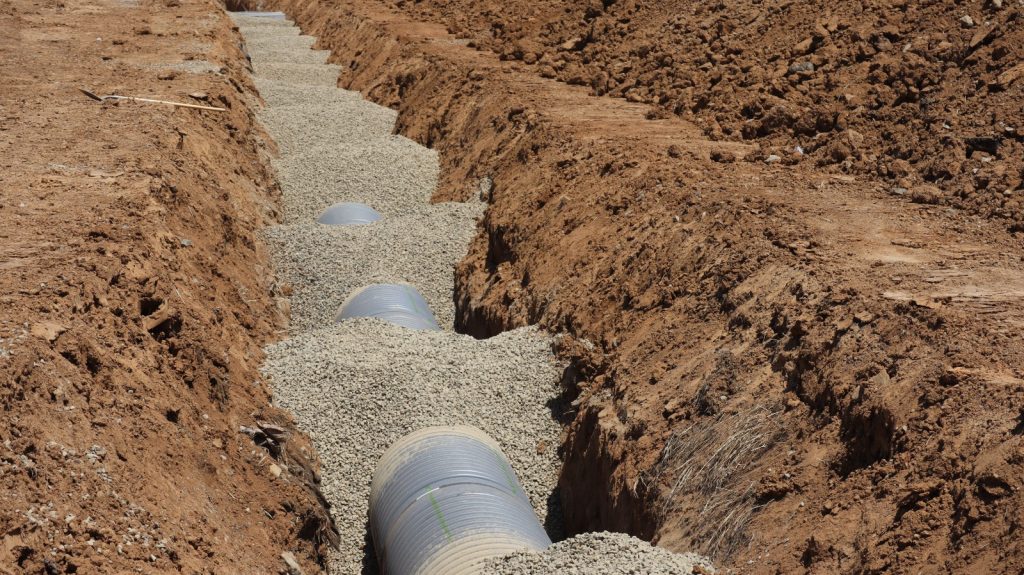
The undertaking is vast in scale: an offshore and onshore corridor stretching thousands of kilometres through sensitive coastal ecosystems. That means impact assessments will need to be thorough, transparent and independently verifiable, not procedural formalities.
West Africa’s Atlantic coastline carries significant marine and terrestrial biodiversity. Credible baseline studies and ongoing monitoring will matter just as much as the political approvals secured in Freetown.
Social impact and stakeholder engagement carry similar weight. Thirteen countries bring thirteen distinct land rights frameworks, consultation norms and compensation practices. A project of this magnitude cannot rely on one uniform approach to community relations.
Communities along the corridor depend on land, water and fishing livelihoods. Meaningful consultation with them will be central to avoiding the grievances that have historically dogged large African infrastructure projects. Human rights considerations tied to land acquisition and fair compensation will likewise demand careful, well-documented processes. Otherwise, the project risks reputational and legal exposure later.
Governance and transparency questions extend to the institutional architecture itself. A commercial entity sits in Casablanca, and a separate authority sits in Abuja. Coordinating procurement standards and public disclosure across so many jurisdictions will test regional governance capacity in ways few prior projects have.
Investors are weighing participation through sovereign development finance or private capital. They will increasingly expect ESG-aligned financing structures and disclosure practices that meet international benchmarks. That expectation grows sharper as sustainable finance rules tighten across Europe, itself a key destination market for the gas.
The Transition Fuel Debate
Perhaps the most consequential debate concerns the role of natural gas as a transition fuel in Africa. Proponents make an argument with some empirical support. Africa’s cumulative emissions remain a small fraction of the global total, they note. Gas, in their view, offers a lower carbon alternative to coal and heavy fuel oil for power generation and industry.
Critics counter that locking in multi-decade fossil fuel infrastructure carries its own risk. Renewable costs keep falling, and international climate finance is shifting away from gas, they argue, raising the risk of stranded assets. Methane leakage across a pipeline of this length also carries warming consequences. These are frequently underweighted in project economics.
Balancing these positions, rather than resolving them outright, is likely to remain the defining sustainability question here. Corporate boards, ESG analysts and policymakers across the region will need to keep revisiting it. Fresh evidence and financing terms will continue to emerge for years to come.
The Road Ahead
Several milestones will determine whether this pipeline moves from political agreement toward physical reality. Financing remains the most immediate hurdle. No final investment decision has been reached, and the project still lacks confirmed anchor investors.
Independent environmental and social impact assessments matter too. Particularly along the offshore and coastal segments. They should offer an early signal of how seriously environmental stewardship is being treated in practice, beyond the language used in official statements.
Regional cooperation among thirteen governments will also need to hold together. Each carries its own regulatory and fiscal priorities across a construction timeline likely to extend well into the next decade.
Readers should equally watch how stakeholder engagement unfolds on the ground. This matters especially in communities along the coastal corridor. After all, it is there that livelihoods intersect directly with construction activity.
The pipeline’s long-term significance will be measured by more than kilometres built or gas volumes transported. What ultimately matters is whether it can reconcile West Africa’s legitimate development needs with the region’s exposure to a global energy transition that shows little sign of slowing. Striking that balance, between ambition and responsibility, will likely define how history judges this project long after the ribbon-cutting ceremonies conclude.
[give_form id="20698"]