When the West Steps Back: What Britain’s Net Zero Retreat Means for Africa’s Climate Bet
 CSR Reporters Editorial Team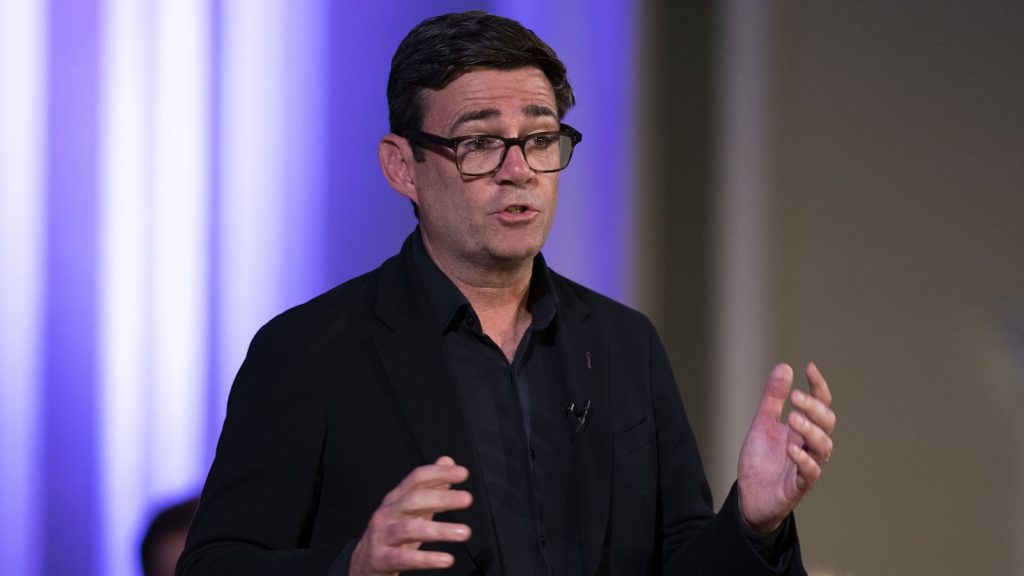
When the West Steps Back: What Britain's Net Zero Retreat Means for Africa's Climate Bet
As the UK strips net zero out of public procurement, Nigeria and the rest of Africa are left holding a commitment the world’s largest economies increasingly treat as optional.
In Westminster, the language was administrative, almost bureaucratic. Louise Haigh, standing in for Prime Minister Andy Burnham, told the Financial Times that UK public procurement had “tried to tick too many boxes” for too long, and that a system trying to prioritise everything ends up prioritising nothing. On the back of that reasoning, the UK government is preparing to strip environmental conditions, including net zero requirements, out of the rules governing taxpayer-funded contracts, replacing them with a leaner “social value” model built around jobs, skills, and domestic economic benefit.
It is a domestic policy decision, framed in the vocabulary of efficiency rather than ideology. But for a continent whose own climate strategy has been built, in part, on the assumption that the world’s wealthiest economies would keep pulling in the same direction, it lands very differently.
A Retreat Dressed as Pragmatism
The UK is not alone. Council authorities in Durham and West Northamptonshire, both Reform UK-led, have already scrapped local net zero targets outright, citing affordability rather than climate scepticism. The pattern across these decisions is consistent: net zero is not being renounced as false, it is being deprioritised as unaffordable, or administratively unworkable, at precisely the moment global economies are under strain.
That distinction matters. It would be easier, in some ways, if this were open climate denial. It is not. It is something more corrosive for accountability: a quiet reordering of priorities in which sustainability commitments survive on paper while the mechanisms built to enforce them are dismantled one procurement clause, one council resolution, at a time.
Governments are not walking away from net zero targets. They are walking away from the machinery that made those targets mean something.
Nigeria’s Bet Was Never Really on the West
Nigeria committed to net zero emissions by 2060 at COP26 in 2021, embedding the target in its Climate Change Act and building an Energy Transition Plan around it. That commitment was always going to require capital Nigeria does not yet have. The country faces an estimated $171 billion climate financing gap, according to figures presented at the 2026 FITC Sustainability and ESG Conference in Lagos, and multilateral climate funds currently cover less than two per cent of Africa’s total climate finance need.
What is notable, and what should reframe how CSR Reporters and its stakeholders read the UK story, is that Nigerian policymakers had already begun adjusting to this reality before Britain’s procurement rollback made headlines. At the same Lagos conference, Central Bank of Nigeria Deputy Governor Philip Ikeazor argued that external funding alone cannot drive Africa’s sustainability ambitions, and that the continent must look inward through sovereign green bonds, the National Climate Change Fund, and blended public-private capital to close its own gap.
In other words, Nigeria’s climate finance strategy was already being built on the assumption that the West would underdeliver. The UK’s procurement retreat does not create that risk. It confirms it.
The Danger of Borrowed Excuses
The more immediate risk for Nigeria and Africa is not financial. It is rhetorical. Haigh’s justification for scrapping the UK’s rules, that compliance regimes had become “amorphous” and unworkable, is a legitimate critique of a genuinely over-engineered system built over years of expanding mandates. But that critique does not travel well across borders, because the underlying conditions are not the same.
In much of Nigeria’s corporate landscape, sustainability and ESG reporting obligations are not over-built. They are, in many sectors, barely enforced at all. Importing the language of “regulatory fatigue” into an environment where the regulation was never rigorous to begin with risks giving cover to exactly the kind of box-ticking, disclosure-light CSR that CSR Reporters was built to challenge. A company citing “global net zero fatigue” to justify quietly shelving a sustainability commitment in Lagos is not responding to the same pressures Whitehall was responding to. It is borrowing an excuse.
This is the distinction accountability journalism has to hold onto in the months ahead: genuine fiscal recalibration by capital-constrained economies is different from opportunistic retreat by companies and institutions using global headlines as permission structures.
Exposure Without Leverage
The sharper asymmetry sits in physical risk. The countries currently scaling back net zero commitments are, for the most part, not the ones facing existential climate exposure. Britain can afford, politically, to deprioritise net zero in procurement because its climate vulnerability, while real, is not civilisational.
Africa does not have that room. Ikeazor has pointed to the continent’s worst climate crisis in more than a decade, citing the floods that swept through Lagos and other West African coastal cities this year as evidence that climate risk is no longer a distant concern but an active disruption to economies, financial systems, and livelihoods. Africa contributes a small fraction of global greenhouse gas emissions, yet carries a disproportionate share of the consequences, with none of the fiscal cushion wealthier economies use to justify their own pullback.
What This Should Mean for African Accountability
For institutions like CSR Reporters, the UK story is not a distant policy footnote. It is a signal to sharpen scrutiny at home in three specific ways.
First, distinguish self-funded resilience from rollback dressed as pragmatism. Nigeria’s pivot toward local capital markets and green bonds is a legitimate, arguably overdue, strategic adjustment. It should be reported as resilience, not confused with the West’s retreat.
Second, hold corporates accountable for the excuses they borrow. When a company cites global net zero fatigue to soften its own commitments, the question worth asking publicly is whether that company was ever held to a rigorous standard in the first place, or whether it is using a UK headline to avoid scrutiny it was never really under.
Third, keep the exposure gap visible. Every retreat by a wealthier, less climate-exposed economy should be measured against the flood damage, agricultural losses, and infrastructure risk facing African cities that have no comparable margin for error.
The Telegraph’s headline reads, at first glance, like a story about British procurement policy. Read from Lagos, it is a reminder that the world’s climate commitments were never evenly distributed in risk, and they are proving even less evenly distributed in resolve. Africa’s task now is not to follow the retreat. It is to make sure its own commitments, self-funded and increasingly self-defined, are not judged by a standard the world’s wealthiest economies are actively lowering.
CSR REPORTERS
Where Responsibility Is Reported, Measured, and Built.
CSR Reporters works with corporates, investors, and institutions across Africa on:
— Community needs assessments
— CSR impact tracking and measurement
— Social investment documentation and reporting
— Transparent and independent CSR communication
— Structured responsible business practice
[give_form id="20698"]