ROSEMARY IMOBHIO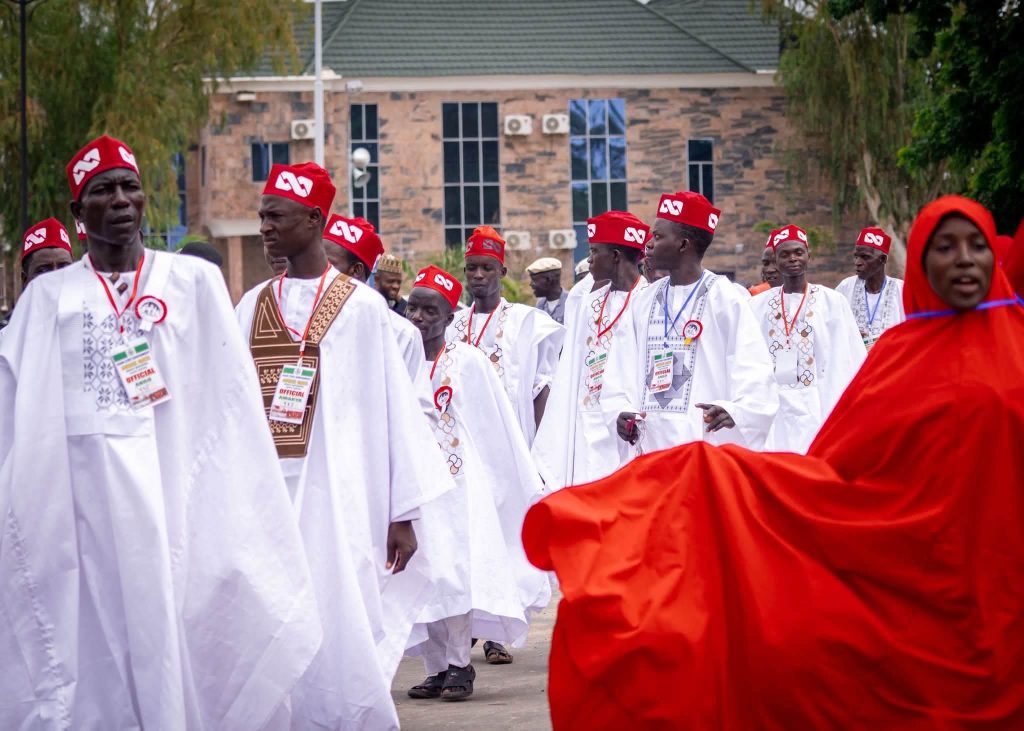
For more than a decade, some Nigerian state governments have played an unusual role in helping citizens get married. Rather than leaving wedding expenses entirely to families, governments have sponsored mass weddings for selected couples. The most recent generating conversations, a wedding of 1500 couples on Friday 7th August, 2026 in Kano State.
The practice has become particularly visible across northern Nigeria. However, it is no longer associated with one state or one administration. Kano provides perhaps the clearest starting point for understanding the trend.
In May 2012, the Kano State Government sponsored a mass wedding involving 100 widows and divorcees. The programme was organised through the state Hisbah Board and the Kano Emirate Council.
At the time, the intervention was presented as a response to the difficulties faced by widows and divorcees. It also reflected concerns about marriage, divorce and social stability. Later that year, reports indicated that the Hisbah Board was preparing another programme involving 1,000 widows and divorcees.
Therefore, state-sponsored mass weddings are not a recent development. They have been part of Nigeria’s social intervention landscape for more than 14 years.
From Kano to Other States
Kano’s approach continued through successive administrations and gradually became larger. The profile of beneficiaries also changed. While early programmes focused heavily on widows and divorcees, later initiatives included young women, orphans, people with disabilities and other economically vulnerable citizens.
Moreover, the assistance provided has expanded beyond the ceremony. Some programmes now include dowry payments, household items, medical screening, counselling and business or agricultural support. Kebbi offers one example.
In February 2025, the state government sponsored a mass wedding involving 300 couples from its 21 local government areas. Each couple received ₦180,000 as dowry. The beneficiaries also received household and economic support.
Importantly, Kebbi said it screened prospective grooms for their employment or trade status. The stated objective was to establish whether they could provide for their wives. That detail becomes important when examining the wider question of social impact.
A Growing National Pattern
The spread of these programmes has recently attracted renewed attention. A visual circulating on X maps states that have conducted or supported mass weddings. The graphic offers a useful snapshot of how widespread the practice has become.
However, the map should not be treated as a substitute for independent verification. Not every mass wedding in Nigeria is sponsored by a state government. Religious organisations, traditional institutions, charities and private groups have also organised such ceremonies.
Furthermore, state programmes do not all operate in the same way. Some focus on widows and divorcees. Others target vulnerable young people or low-income families. As a result, the country’s mass wedding story is better understood as a collection of related government interventions rather than one national policy.
Still, the growing number of programmes raises an important question. Why are governments increasingly stepping into an area that has traditionally been handled by families, communities and religious institutions?
Why Are States Funding Weddings?
Government explanations generally centre on social welfare. For many beneficiaries, the cost of getting married can be significant. Dowry, clothing, furniture, accommodation and other household requirements can create substantial financial pressure.
Consequently, governments argue that intervention can remove some of the economic barriers preventing vulnerable citizens from marrying. Kano’s latest programme illustrates the scale of this approach. In 2026, the state allocated ₦1.5 billion for its mass wedding programme. The programme was planned around 3,000 beneficiaries, with the government providing dowry, furniture, food items, clothing and financial support.
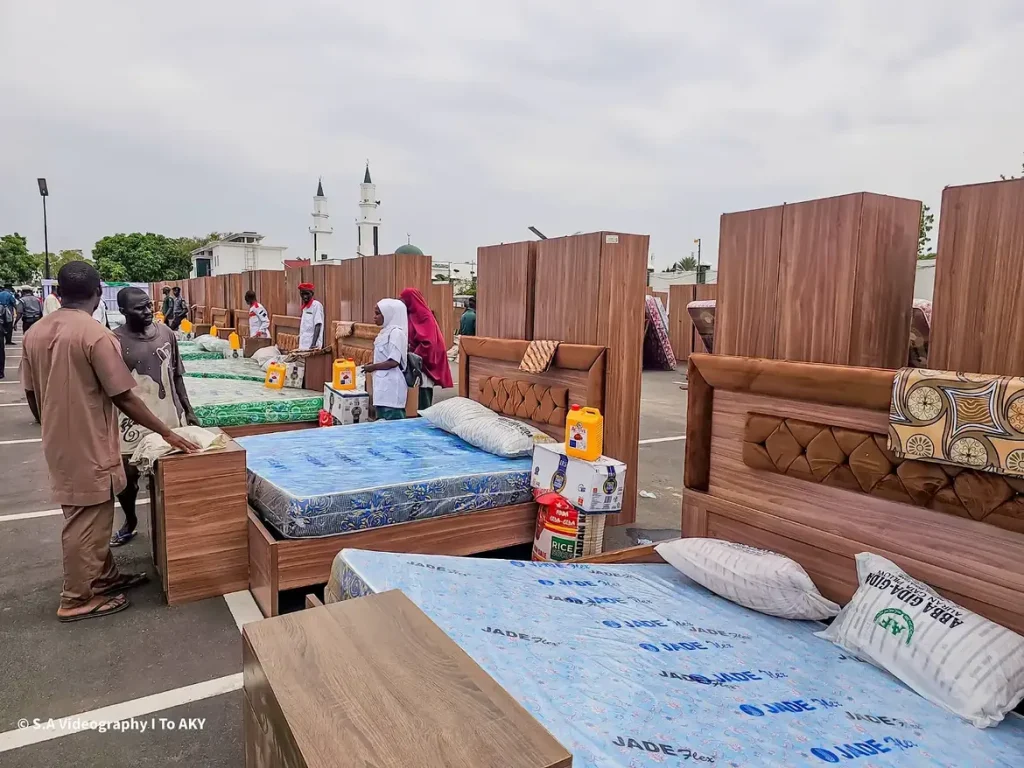
The final ceremony involved 1,500 couples across Kano’s 44 local government areas. The beneficiaries included widows and young women. They also underwent medical screening and counselling. Each bride was reportedly to receive ₦200,000 as dowry and startup capital, alongside household items.
Therefore, the government presents the intervention as more than a wedding ceremony. It is positioning it as a social welfare programme aimed at helping vulnerable citizens establish households. In fact, at a speech during the event, the Governor lists it as a promise kept from his campaign to become governor.
The Groom With Another Question
Yet, there is another side to the conversation. Among the beneficiaries was a groom who already had several wives and chose to marry another woman through the programme. The case raises an uncomfortable but legitimate question about the purpose of state support.
The issue is not whether polygamous marriage is acceptable within the religious or cultural context where the programme operates. Instead, the question is about financial capacity. If a government programme is designed to help people overcome the economic barriers to marriage, should it also consider whether a prospective groom can sustainably support another household?
That question becomes particularly relevant because some state programmes already recognise financial capacity as an important consideration. Kebbi, for example, said its screening process assessed a groom’s employment or trade status before approval. Officials said the assessment was intended to ensure that the groom could provide for his wife.
The example of a groom with existing wives therefore opens a wider conversation. A person may meet the basic requirements for marriage while still facing serious economic limitations. Moreover, the responsibilities of a new household do not end when government assistance is distributed.
Food, housing, healthcare, education and other household expenses continue long after the ceremony.
Consequently, the question is not simply whether someone can get married. It is whether the household created through the intervention can remain sustainable.
Beyond the Wedding Day
This may be the most important CSR question surrounding state-sponsored mass weddings. A wedding marks the beginning of a household. It does not, by itself, guarantee financial stability, emotional wellbeing or family sustainability.
Therefore, the success of these programmes could arguably be measured beyond the number of couples married. How many beneficiaries remain economically stable after one year? How many businesses created through the programme survive?
Do couples remain together? Do beneficiaries gain sustainable employment? Are women able to generate independent income? Do families have access to housing?
These questions do not mean that mass wedding programmes are unsuccessful. Instead, they provide a framework for measuring their actual social impact.
Kebbi’s programme already demonstrates an attempt to go beyond the ceremony. In 2025, couples received farming equipment and other support intended to strengthen their economic position.
Kano has similarly incorporated startup capital and household items into its intervention. However, without long-term monitoring, it remains difficult to determine how much these benefits change household outcomes.
The Cost to the Public
There is also the question of public expenditure. Kano’s 2026 programme was allocated ₦1.5 billion. The money was earmarked for several components, including dowry, furniture, food, clothing and financial support.
Such spending naturally invites questions about priorities. Governments operate with limited resources. Consequently, social interventions compete with other needs, including healthcare, education, housing, employment and social protection.
That does not automatically make mass weddings an inappropriate use of public funds. However, it does make transparency important. Citizens should be able to understand how much is spent, who qualifies, how beneficiaries are selected and what support they receive.
Furthermore, governments can strengthen these programmes by publishing follow-up reports. Such reports could provide evidence about household stability, economic outcomes and the survival of businesses established through the intervention.
Where Culture Meets Public Policy
Mass weddings also sit at the intersection of government policy, culture and religion. Marriage carries significant social importance across Nigeria. In many communities, it is also closely connected to religious and traditional expectations. Therefore, government involvement can be welcomed by some communities while attracting questions from others. Those questions become particularly important when vulnerable people are involved.
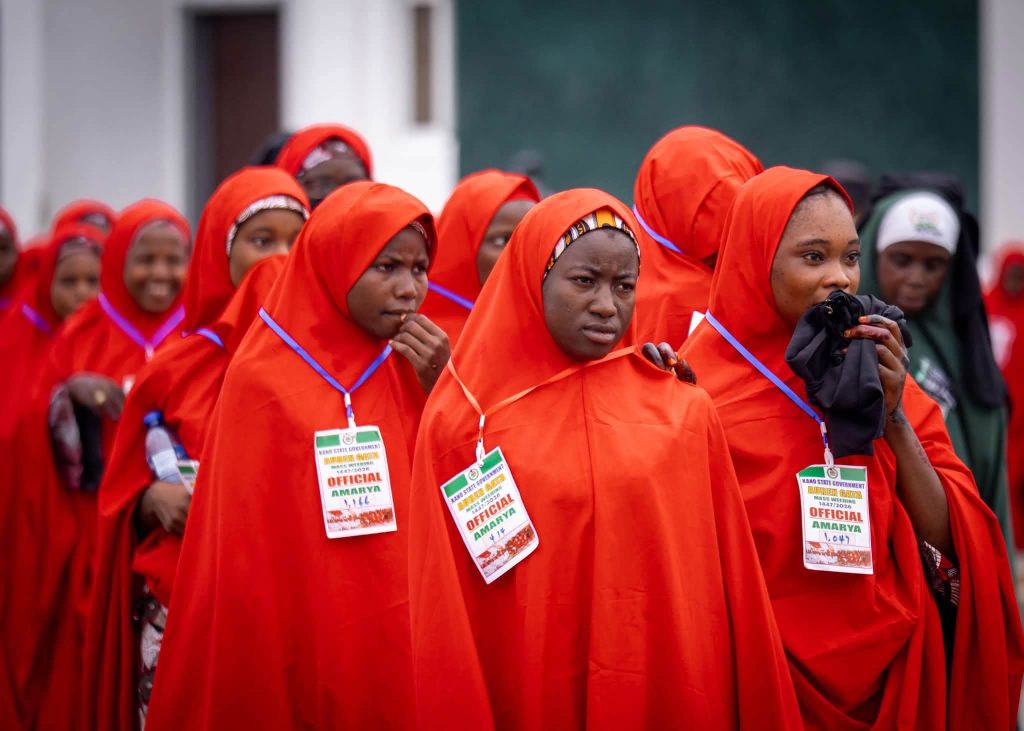
In 2024, a proposed mass wedding involving 100 girls and young women in Niger State generated national controversy over the ages of some prospective brides. The programme was suspended while the government carried out verification. In fact, outrage is currently happening over one of the grooms at the most recent Kano event, stating in an interview, that his bride is 17 years of age. The legal age of consent for marriage in Nigeria is officially 18 years under the federal Child Rights Act of 2003.
This shows why safeguards matter. Age verification, informed consent, health screening and premarital counselling can help protect beneficiaries. Similarly, clear financial eligibility requirements can help ensure that support reaches people who genuinely need it.
What Should Social Impact Look Like?
After more than a decade, state-sponsored mass weddings have become a recognisable form of social intervention in parts of Nigeria. Kano remains the most prominent example. Other states, including Kebbi and Katsina, have developed their own approaches.
Yet, the expansion of the model does not automatically prove its success. Likewise, criticism of public spending does not automatically mean that the programmes lack social value. The more useful question is what happens after the ceremony.
If a government helps a vulnerable couple marry, provides economic support and follows their progress, the intervention can be assessed as a broader social investment. If the programme ends when the wedding ceremony ends, its long-term impact becomes much harder to establish. That distinction matters.
A government can help remove the immediate financial barrier to marriage. However, it cannot remove every economic challenge that a family will face. Therefore, the future of state-sponsored mass weddings may depend less on how many couples are married and more on how effectively those couples are supported afterwards.
The Bigger Picture
Nigeria’s state-sponsored mass wedding story is ultimately about more than weddings. It is about poverty, family formation, social welfare and the role of government in people’s private lives. It is also about how governments define social investment.
For some beneficiaries, these programmes can provide an opportunity that might otherwise have been financially difficult to achieve. For governments in certain Nigerian states, they offer a visible form of social intervention. However, for taxpayers, they raise questions about cost, transparency and measurable outcomes.
Those perspectives can exist simultaneously. The challenge is therefore not to label the programmes simply as good or bad. Instead, the conversation should examine what they are designed to achieve and whether the evidence supports those objectives.
The groom with existing wives illustrates why that conversation matters. His case raises questions about financial capacity, household responsibility and beneficiary selection without requiring a judgment about his personal decision to marry again.
Ultimately, the real measure of a state-sponsored mass wedding may not be the number of couples standing together on the wedding day. It may be what their homes look like months and years later.
When the ceremony ends, the photographs disappear from social media and the government officials leave, the actual social intervention begins. That is where the long-term impact of Nigeria’s mass wedding experiment should be measured.
[give_form id="20698"]