Nigeria Belongs to All of Us: CSR Reporters Condemns Sheikh Jingir’s ‘Infidels’ Remark and the Silence of the Governors Who Cheered
 CSR Reporters Editorial Team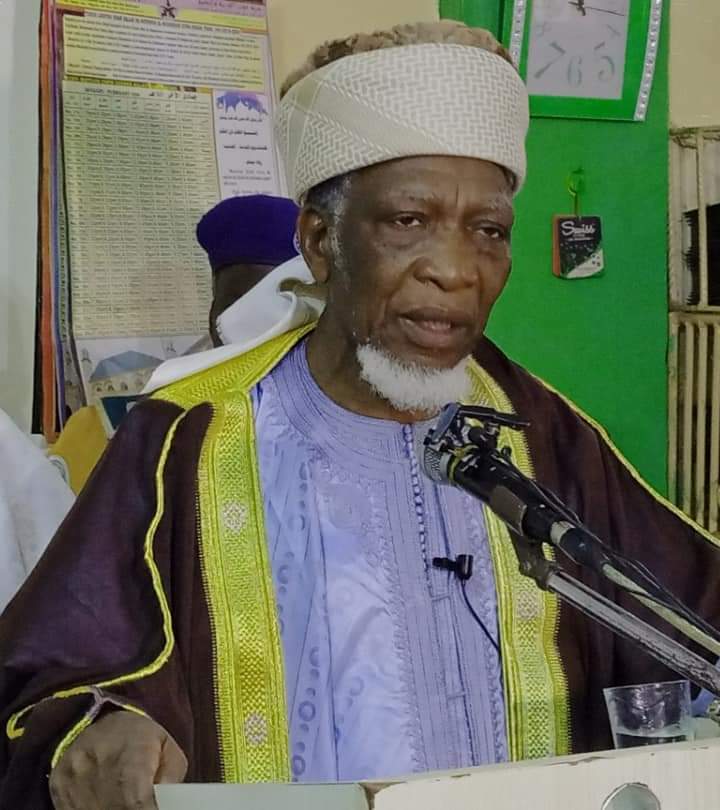
Nigeria Belongs to All of Us: CSR Reporters Condemns Sheikh Jingir's ‘Infidels’ Remark and the Silence of the Governors Who Cheered
A cleric called Christians infidels. Three sitting governors reportedly sat and smiled. In a nation still burying its dead from communal and sectarian violence, silence from public office is not neutrality — it is complicity.
CSR Reporters exists to hold power to account, wherever it hides — in a boardroom, a budget line, or a pulpit borrowed for political ends. This week, that mandate takes us beyond corporate disclosure and into the fragile architecture of national unity, because what was said in Kano over the weekend, and who sat silently applauding it, is an accountability failure of the first order.
What Was Said
At a political gathering in Kano organised by the Jos faction of the Jama’atu Izalatil Bid’ah Wa Iqamatus Sunnah (JIBWIS), Sheikh Sani Yahaya Jingir, the group’s National Chairman of the Council of Ulama, renewed his advocacy for a Muslim-Muslim political ticket ahead of the 2027 general elections. He commended President Bola Ahmed Tinubu for adopting the arrangement in 2023 and urged his audience to obtain their Permanent Voter Cards to demonstrate Muslim numerical dominance at the polls.
In the course of those remarks, Jingir referred to Christians as “infidels,” telling his audience to show them their limit and disputing their claims to being more populous in Nigeria. He is further reported to have argued that Nigeria belongs to Muslims, and that those unwilling to accept a Muslim-Muslim ticket were free to leave the country.
The event was attended by Kano State Governor Abba Kabir Yusuf and Jigawa State Governor Umar Namadi, both of the All Progressives Congress. The Christian Association of Nigeria’s northern chapter, through its chairman Rev. Yunusa Nmadu Hayab, has stated that the remarks were made in the presence of three governors, all of whom appeared to smile through the comments. As of this writing, only two governors have been named on the record by multiple outlets; CSR Reporters has not independently confirmed the identity of a third and will update this record if verified.
“The man did not just say it in his room. He said it in the presence of governors, and they were all smiling.” — Rev. Hayab, CAN Northern chapter
Why This Is Not a Religious Squabble
It would be a category error, and a convenient one, to file this under interfaith bickering. The Muslim-Muslim ticket is a legitimate, if contested, political arrangement, and Nigerians of every faith are entitled to debate its merits. That is not what CSR Reporters is condemning.
What we condemn is a religious leader, speaking from a platform of considerable influence, using dehumanising language against fellow citizens on the basis of faith, in a country that has spent decades negotiating fragile coexistence across the Middle Belt, the North East, and the North West. “Infidel” is not a neutral theological term deployed in a private sermon. Used publicly, before a political crowd, to justify demographic dominance, it is an act of incitement dressed as piety.
Nigeria’s Constitution guarantees freedom of religion and prohibits the state from adopting any religion as its own. A cleric is entitled to his theology. He is not entitled to declare, from a stage shared with sitting governors, that the country belongs to one faith and that citizens of another should leave it. That claim is false as a matter of law, and dangerous as a matter of fact.
The Governors’ Silence Is the Bigger Story
Clerics say inflammatory things in Nigeria with depressing regularity. What distinguishes this episode, and what makes it a governance and accountability matter rather than a purely religious one, is who sat and watched. Public office carries a duty of restraint and a duty of correction. A governor who occupies a dais while a speaker calls a portion of his own constituents infidels, and who does not immediately and publicly repudiate the remark, has made a choice. Silence in that seat is not passivity; it is tacit endorsement, amplified by the authority of the office.
Reactions have poured in from across Nigeria’s political and religious spectrum — from CAN’s northern leadership, from the former Kano governor and 2027 vice-presidential aspirant Rabi’u Kwankwaso, from Femi Fani-Kayode, from Prophet Isa El-Buba, and from rights advocates including Deji Adeyanju. Kwankwaso has stated plainly that Kano does not endorse the remarks. That is welcome. It is also not enough. Condemnation from politicians positioning for 2027 is not a substitute for accountability from the governors who were physically present and visibly unbothered.
CSR Reporters’ Position
CSR Reporters unequivocally condemns Sheikh Sani Yahaya Jingir’s characterisation of Christians as infidels and his assertion that Nigeria belongs exclusively to one faith. We regard this language as a direct threat to the social cohesion that underwrites every claim of “responsible leadership” and “national development” that Nigerian public officials routinely make in front of investors, donors, and multilateral partners. A country cannot credibly market itself as an investment destination and a stable democracy while its public square tolerates open calls for religious dominance and expulsion.
We further hold that public officials who share a platform with agents of division bear a responsibility that does not evaporate when the microphone moves on. Governors Abba Kabir Yusuf and Umar Namadi, and any other government official confirmed to have been present, owe the Nigerian public an unambiguous, individual, on-the-record repudiation of these remarks — not a shared communiqué, not silence, and not a proxy statement issued by a party spokesperson weeks later.
Our Call to Action
CSR Reporters calls on the following:
To Nigeria’s federal and state authorities: Investigate the remarks under existing hate speech and public order statutes, consistent with due process, and make the outcome public. Selective enforcement of incitement laws — vigorous against government critics, absent against clerics with political patronage — is itself a form of institutional bias that CSR Reporters will continue to track and report.
To Governors Yusuf and Namadi, and any other officials confirmed present: Issue individual, specific, public statements condemning the “infidels” remark and the claim that Nigeria belongs to one religion. Silence at this point is itself a statement.
To religious institutions on all sides: Discipline and restrain clerics and preachers, of every faith, who trade in dehumanising language for political advantage. Moderate voices within JIBWIS and similar bodies have a particular responsibility to act now.
To the international community, multilateral partners, and foreign missions engaged with Nigeria on democracy, human rights, and religious freedom: Treat this incident as a live indicator of the environment in which the 2027 elections will be contested, and factor it into ongoing assessments of religious freedom and electoral risk in Nigeria.
To the Nigerian public: Reject the framing that citizenship and belonging are conditional on faith. Nigeria is, by its own founding compact, a secular republic of over 200 million people practising Christianity, Islam, traditional religions, and none. No cleric, and no governor’s silence, can rewrite that.
A Closing Word
CSR Reporters was built on the premise that the gap between what leaders say and what they do is where accountability must live. That gap is not only fiscal or environmental. It is moral. A governor who will not say, in his own voice, that his fellow citizens are not infidels and that his country does not belong to one religion, has failed a basic test of the office he holds. We will continue to track the response — or the absence of one — from every official named in this matter.
MOVE FROM RHETORIC TO ACCOUNTABILITY
CSR Reporters works with institutions and leaders ready to move from statements to structured, measurable accountability, through: independent ESG and impact ranking · sustainability and governance advisory · executive convenings on ethical leadership · the Social Impact and Sustainability Awards (SISA) · and evidence-anchored editorial coverage. Contact CSR Reporters to engage.
[give_form id="20698"]