CSR Personality of the Week: How Nana Maidugu Is Building Africa’s Sovereign ESG Blueprint
 csrreporters
Sovereign wealth funds rarely make headlines for anything beyond returns and reserves. At the Nigeria Sovereign Investment Authority, though, one executive has spent nearly a decade changing that story. Nana Skari Maidugu is NSIA’s first Head of Sustainability and ESG. Quietly, she has rebuilt the institution’s approach to responsible investment from the ground up. What began as a single officer’s mandate has become a framework guiding a portfolio worth 2.8 billion dollars.
Meanwhile, her name has started appearing well beyond Abuja’s policy circles. Most notably, she was named Personality of the Year at Environmental Finance’s 2025 Sustainable Investment Awards, an award NSIA followed up by also winning Sovereign Wealth Fund of the Year.
That recognition did not arrive by accident. Instead, it capped years of methodical work. She translated global sustainability standards into something a Nigerian sovereign fund could actually use, and the results are now visible well beyond her own institution.
From Infrastructure to ESG
Maidugu’s path into sustainability leadership was not a straight line. She trained first as an engineer. She earned a first-class bachelor’s degree in Computer Systems Engineering from the University of Kent.
Afterward, she pursued a master’s degree in International Oil and Gas Management at the University of Dundee. Following that, she returned to Nigeria, first doing her National Service (NYSC) at the National Oil Spill Detection and Response Agency (NOSDRA), before going to work at KPMG, advising public and private sector clients on strategy and policy.
When she joined NSIA, her early focus sat in infrastructure investment, particularly motorways and agriculture. During that period, though, she noticed a gap. The Authority had no formal ESG framework governing how it evaluated risk or measured impact.
Rather than wait for someone else to fill it, she took the lead herself. That quiet decision within an infrastructure team eventually reshaped how an entire sovereign fund does business. It is a reminder that sustainability leadership does not always begin in a sustainability department.
Building NSIA’s ESG Architecture
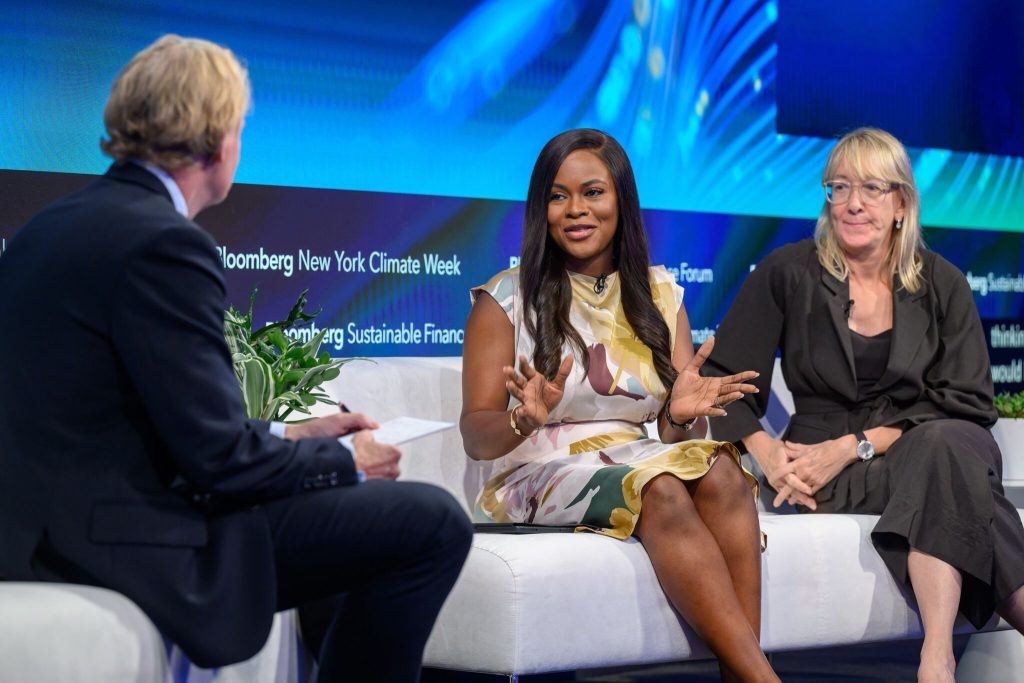
Once she moved into the role full time, Maidugu designed an Environmental and Social Management System built to withstand international scrutiny. The system draws on IFC Performance Standards and the 2X Criteria for gender-lens investing. It also incorporates the UN Principles for Responsible Investment, the Global Reporting Initiative, and the Sustainable Development Goals.
As a result, ESG integration now touches every stage of NSIA’s investment process, from risk assessment through to disclosure. Under her leadership, the Authority published its first Impact Report in 2023. It followed with an inaugural Sustainability Report in 2024. Both are considered landmark achievements among sovereign wealth funds on the continent.
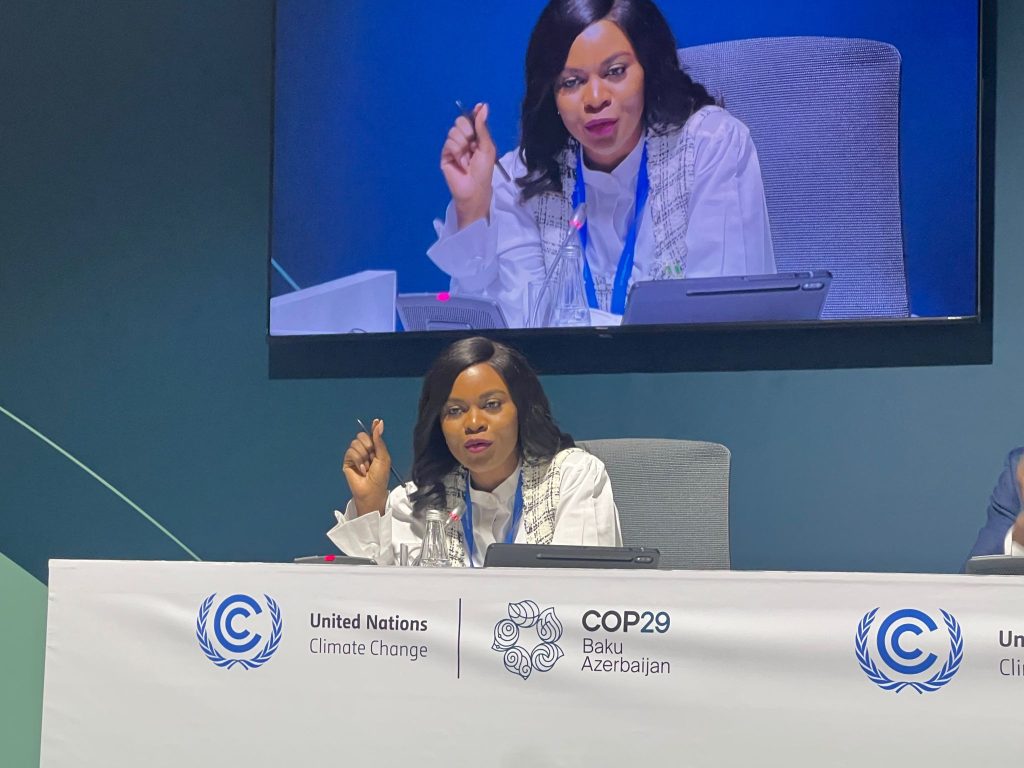
Since then, NSIA has climbed to second place globally on the Global SWF Governance, Sustainability and Resilience Index. It holds the same ranking on the Linaburg-Maduell Transparency Index, an index widely used to measure how openly sovereign funds disclose their activities.
Reflecting on the pace of that transformation, Maidugu has said the Authority mainstreamed ESG across its portfolio in just three years. Few three-year windows in African finance can claim that kind of structural shift, and fewer still can point to independent rankings that back the claim up.
Carbon Markets and Climate Finance
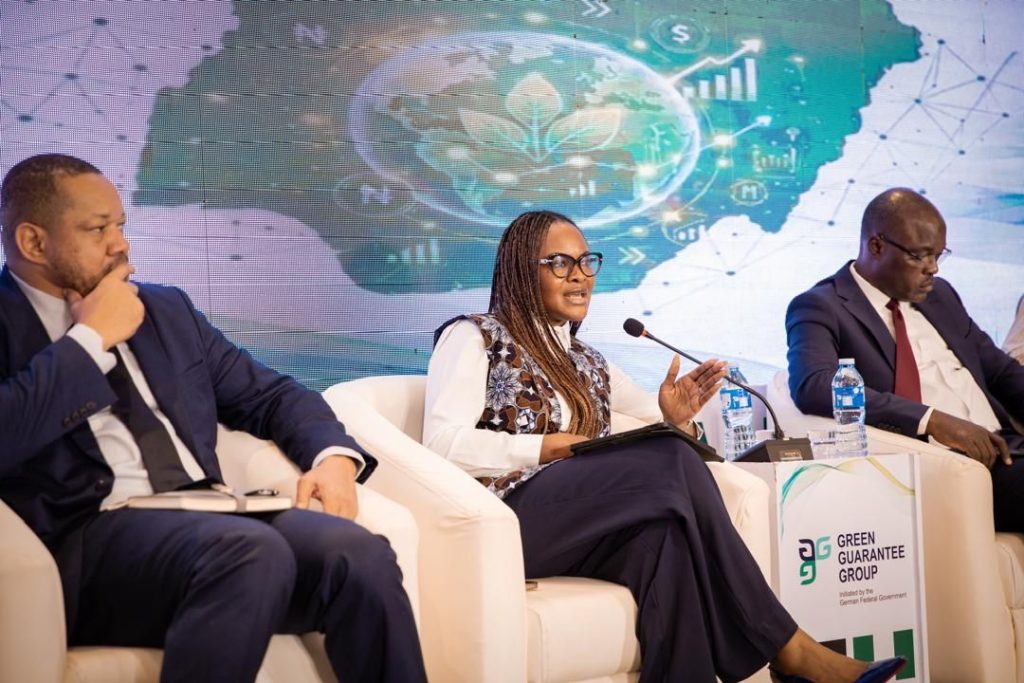
Beyond frameworks and disclosures, Maidugu’s fingerprints show up in some of NSIA’s most tangible climate initiatives. She helped launch the Green Guarantee Company, developed with the Green Climate Fund, the UK’s Foreign and Commonwealth Development Office, and USAID.
It now stands as the world’s first climate-focused guarantee institution built to mobilise private capital for green projects in emerging markets. Additionally, she co-designed the Climate Finance Warehouse Facility with InfraCredit. That facility opens a financing pathway for climate infrastructure projects seeking access to green bond markets.
More recently, she has championed RIPLE, a renewable energy platform aimed at expanding access and efficiency across Nigeria. Alongside that, there is Carbon Vista, a joint venture with commodities trader Vitol that finances and develops carbon credit projects while supporting project origination and engagement with international buyers.
Writing for the Official Monetary and Financial Institutions Forum, an independent forum for central banking, economic policy and public investment, in June 2026, Maidugu argued that industrial decarbonisation, the blue economy, and digital climate infrastructure represent the next frontier for African markets navigating global climate uncertainty. She pointed specifically to carbon registries and measurement systems as areas where market integrity will be won or lost.
Through these initiatives combined, NSIA reports it has mobilised more than 1.8 billion dollars in additional capital. It has also catalysed over 120 impact-driven projects across the country.
Policy Influence and Recognition
Maidugu’s reach extends into government policymaking too. She represents NSIA on the intergovernmental committee steering the Nigeria Carbon Market Activation Plan. That national initiative is projected to generate between 0.7 and 2.5 billion dollars by 2030.
She also sits on the Presidential Committee on Project Evergreen and the Nigeria Climate Change Fund Steering Committee. Through these roles, she helps shape national climate finance frameworks rather than simply implementing them. Meanwhile, her published thought leadership on climate resilience and sustainable finance has appeared across several sustainability journals and industry platforms.

Maidugu was also part of the officials at the recent London Climate Week, and many praise her leadership and impact within national policies and programmes. She carries out impactful advocacy across many market players, showing an influence that clearly extends past NSIA’s own balance sheet.
Earlier this year, the Guardian Woman Festival named her among its Seven Wonder Women for her contribution to sustainability in Nigerian finance. That honour further cemented a reputation built on substance rather than visibility alone, even as her public profile continues to grow.
A Blueprint Still Being Written
What stands out about Maidugu’s trajectory is how deliberately unglamorous much of the groundwork has been. Frameworks, disclosure standards, and committee memberships rarely generate applause on their own. Yet those are the exact instruments through which sustainable finance becomes durable rather than decorative.
Today, Nigeria is working to activate its carbon markets and attract climate capital at scale. Consequently, the systems Maidugu built inside NSIA may end up shaping how the rest of the country’s financial sector approaches the same challenge. Other institutions across the continent are already watching how NSIA’s model performs. For a sector often defined by short-term returns, that is no small legacy to be building.
[give_form id="20698"]