Oil, Gas, and the Cost of Community Silence in Nigeria
 Eche Munonye, Founder and Chief Strategist, CSR Reporters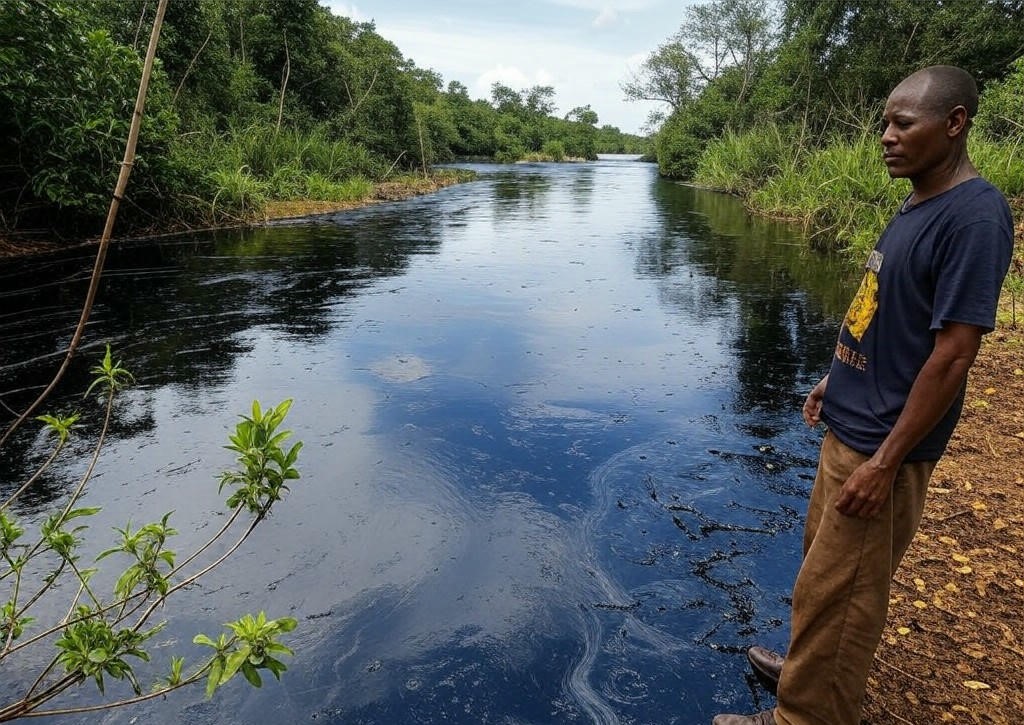
Oil, Gas, and the Cost of Community Silence in Nigeria
Silence is not consent. In the Niger Delta, it is the most expensive thing the industry has ever pretended to own.
For more than six decades, Nigeria’s oil and gas sector has told a story about itself: investment, jobs, scholarships, boreholes, empowerment schemes. Annual reports carry the photographs. Press releases carry the superlatives. What those documents rarely carry is the thing that actually determines whether an extractive operation is legitimate, which is whether the people who live beside it would say so themselves.
Too often, they are not asked. And when they speak anyway, through protest, litigation, or blocked access roads, the industry calls it disruption rather than information.
Silence is manufactured
Community silence is often read as acceptance. That reading is convenient, and it is wrong.
Silence in host communities is frequently produced. It comes from agreements negotiated with a handful of designated “stakeholders” while the wider community is left outside the room. It comes from consultation held after decisions are made. It comes from grievance channels that exist on paper but never close a case. It comes from the plain arithmetic of power: a village with no lawyer, no regulator that answers its calls, and no alternative livelihood cannot afford to be a difficult neighbour.
When people are denied a credible way to be heard, they stop using the channels built for hearing them. The company records this as stability. It is closer to a pressure gauge that has been painted over.
The evidence of what silence hides
The record is long, and it is not ambiguous.
The 2011 UNEP assessment of Ogoniland found contamination of soil and groundwater far deeper and more widespread than had been acknowledged, and warned that restoration could take decades. More than a decade later, the credibility of the cleanup effort remains a live question in the communities it was meant to serve.
In the Bodo community, repeated spills devastated fishing waters. It took litigation in London, and a settlement in 2015, before the affected people secured compensation and a cleanup commitment. That is the process working, if it can be called that. A community should not need a foreign courtroom to be taken seriously by an operator on its own land.
In 2021, a Dutch appeals court held Shell’s Nigerian subsidiary liable for spills affecting the Oruma and Goi communities. The significance was not only the ruling. It was what the ruling implied about how long those communities had been ignored at home.
Our own coverage points the same way. In The Verdict, we called out Oando over the contrast between its self-described host-community trust and the allegations from Ndokwa communities that millions in obligations remain unpaid. We have tracked the ₦87bn ground-rent dispute involving Renaissance Africa Energy Company, Shell’s onshore successor, and the community protest of 24 September 2026. We have documented the Shell Bille gas leaks. We reviewed Seplat’s record after finding protests in three different Delta State communities, in November 2024, December 2025 and March 2026, each alleging exclusion from decisions despite a Global Memorandum of Understanding framework. We corrected Seplat’s placement in our own RANKED list as a result, and we say so openly, because accountability that exempts the people doing the counting is not accountability.
Different companies, different communities, one pattern: the paperwork says partnership; the community says exclusion.
The law was supposed to end the argument
The Petroleum Industry Act 2021 was meant to change this. It requires operators to fund Host Community Development Trusts with 3 percent of their actual annual operating expenditure from the preceding year. For the first time, community entitlement was written into statute and not left to corporate goodwill.
That is a significant shift in principle. In practice, a trust is only as good as its governance. The questions that matter are simple, and rarely answered in public:
- Who sits on the board, and who chose them?
- Are contributions published, and can anyone verify the calculation?
- Do ordinary community members have a route to challenge a decision?
- What happens when a trust is captured by local elites, or deadlocked by disputes?
A law that creates a fund does not create trust. Where the fund is opaque, it simply moves the silence from the negotiating table to the bank account.
Who pays when communities are silenced
The cost is not abstract, and it is not borne only by communities.
Communities pay first and longest. They bear the contaminated water, the lost fishing grounds, the gas flares, the health uncertainty, and the slow erosion of livelihoods. They bear it without the information needed to quantify it or the leverage needed to demand redress.
Companies pay later, and more than they budget for. Shut-in production, blocked access, vandalised assets, litigation abroad, reputational damage with investors and lenders, and the rising cost of securing sites against people who feel they have no other option. Every one of these is a line item that honest engagement would have reduced. Firms that treat community relations as a communications task are underwriting a risk they refuse to price.
The state pays through lost revenue and lost legitimacy. Every barrel not produced because a community has shut a facility is revenue the country does not collect. Every unresolved grievance reinforces the perception that regulation is a formality.
Investors are increasingly exposed. ESG frameworks now ask for evidence of stakeholder engagement and social licence, not just spend. A company that cannot demonstrate community consent is carrying a material risk that its balance sheet does not show.
Spend is not trust
Much of the industry’s defence rests on volume: how much was spent, how many projects were delivered, how many beneficiaries were reached. These are inputs. They tell us what the company did, not whether the people on the receiving end believe it was fair, adequate, or even wanted.
Social licence is an outcome. It is measured by whether grievances are resolved, whether conflict recurs, and whether independent civil-society assessments back the company’s account. A firm that spends heavily and is still met with protest has not bought legitimacy. It has bought time.
This is the gap CSR Reporters exists to expose: the distance between what is announced and what is lived.
What accountability would actually look like
Nothing here requires new law. It requires the discipline to apply the law and the standards already in place.
- Publish Host Community Development Trust data. That means contributions, calculation basis, board composition, project spend, and audited accounts, in a form communities can read.
- Make grievance mechanisms real. Log every complaint, set resolution timelines, report outcomes publicly, and allow independent review when the company is also the judge.
- Consult before deciding, not after. Meaningful consultation changes a decision. If it never has, it is not consultation.
- Submit social claims to independent assurance. If a report says a programme delivered impact, a named third party should be willing to stand behind it.
- Settle old judgments. Where courts have ruled and obligations remain unfulfilled, delay is itself a statement about how seriously a company takes the people it affects.
- Treat protest as data. A protest is a community telling you that every other channel failed. Learn from it before it escalates.
The reckoning
Nigeria does not lack oil. It does not lack policy. What it lacks, in too many host communities, is the experience of being heard by those who profit from the land beneath their feet.
An industry that mistakes silence for consent is not managing risk. It is accumulating it, quietly, until it is called in all at once, in the form of a shutdown, a verdict, or a generation that no longer believes a word it is told.
The companies that will earn the right to operate in the decades ahead will not be the ones with the best photographs. They will be the ones whose communities can speak freely, disagree openly, and still say: we were asked, we were heard, and we were respected.
Everything short of that is just silence, and silence has a price.
CSR Reporters works with corporates, investors, and institutions to build credible, context-aware sustainability strategies, community engagement frameworks, and impact intelligence grounded in Africa’s realities. Get in touch to find out how your organisation can move from announcement to accountability.
Want to talk to us? Email: enquiries@csrreporters.com
Call or WhatsApp: +234 803 401 2198, +234 803 209 8499, +234 903 329 6374, +234 903 254 1168
[give_form id="20698"]