Nigeria’s Gas-Flare Paradox: When Do ‘Enabling Environment’ Arguments Become Excuses?
 EUNICE NZE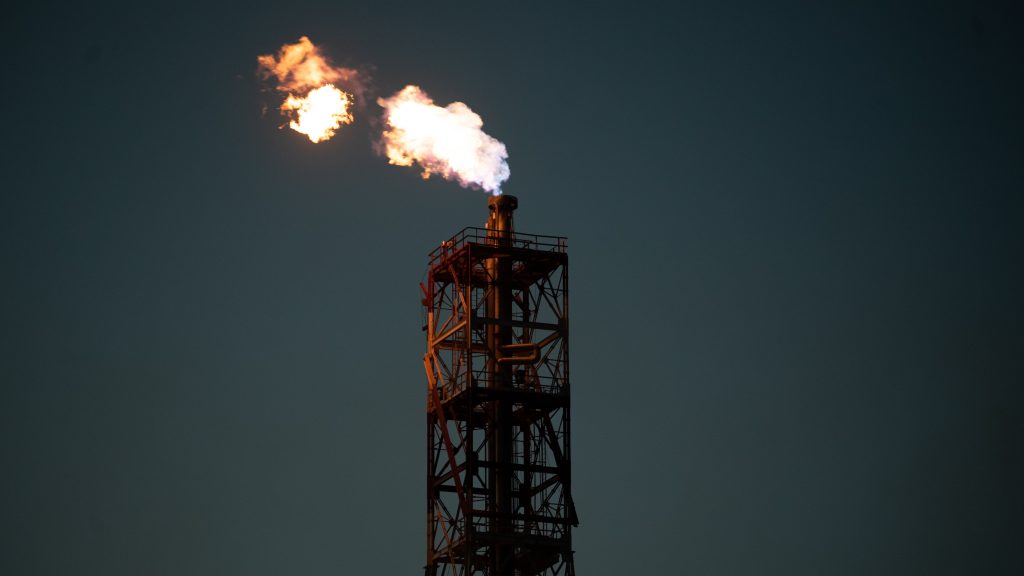
For decades, Nigeria has been caught in a peculiar contradiction. The country possesses vast natural gas resources, yet enormous quantities of that gas have been routinely burned at oil-production sites, releasing greenhouse gases into the atmosphere while a country facing persistent energy shortages watches a potentially valuable resource go up in flames.
The argument from the oil industry has never been as simple as “we don’t want to stop flaring.” The reality, operators say, is considerably more complicated.
Eliminating routine gas flaring requires billions of naira in infrastructure, gas-gathering systems, processing facilities and associated investments. Those projects must also operate in an environment where oil theft, pipeline vandalism, community tensions, regulatory uncertainty and delays in approvals have historically complicated upstream operations.
However, there is an uncomfortable question that Nigeria’s sustainability conversation cannot avoid: At what point do legitimate operational challenges stop being explanations and start becoming excuses?
The industry’s case
Oil majors operating in Nigeria have repeatedly pointed to the difficult environment in which they operate.
Shell, in its 2024 annual filing, identified security incidents, sabotage, crude-oil theft, limited infrastructure and delayed government and partner funding among the challenges affecting its Nigerian operations.
The company said security issues, sabotage and crude-oil theft in the Niger Delta continued to pose significant challenges to its onshore operations.
These are not insignificant obstacles. A company cannot build a sustainable gas-gathering infrastructure network in an environment where pipelines are repeatedly vandalised or where crude theft and insecurity threaten personnel and assets.
By he way, security is only one part of the equation. The economics of capturing associated gas also matter.
Gas that would otherwise be flared has to be gathered, transported, processed and put to productive use. That requires infrastructure, as well as capital and then the commercial case becomes more complicated where gas markets, transportation networks and supporting infrastructure are underdeveloped.
Chevron Nigeria already pointed to precisely this kind of investment. The company has said that investments in gathering and processing associated gas have helped it significantly reduce routine gas flaring over the years.
In September 2024, Chevron Nigeria’s General Manager, Policy, Government and Public Affairs, Olusoga Oduselu, said:
“We are committed to lowering carbon emission and reducing gas flaring in Nigeria.”
The company has also emphasised the role of investments in associated-gas gathering and processing infrastructure in achieving those reductions. The message is clear: flare reduction requires more than a regulatory directive. It requires infrastructure and investment.
TotalEnergies offers another piece of the puzzle. The company provides an interesting example of what investment can achieve when it announced that it had become the first Nigerian exploration and production company to eliminate routine flaring from its operations.
Its Managing Director and Country Chair, Matthieu Bouyer, acknowledged the scale of the investment involved.
“It took a lot of efforts from the company. We invested some money.”
Bouyer also made a point that goes to the heart of Nigeria’s investment debate. He said:
“Those investments need fiscal support from our partners and the authorities to develop them successfully.”
In other words, even when companies are willing to invest in emissions reduction, they want the broader operating and fiscal environment to make those investments commercially viable.
That argument is difficult to dismiss outright, it also creates another question:
If the right environment is a prerequisite for corporate climate action, who is responsible for creating that environment, and who should bear responsibility when it does not exist?
And then, the regulator admits the problem
The Nigerian Upstream Regulatory Commission has itself acknowledged that Nigeria’s oil and gas investment environment has historically been hampered by security and regulatory challenges.
In its Upstream Gaze publication, the Nigerian Upstream Regulatory Commission (NUPRC) the agency responsible for regulating Nigeria’s upstream oil and gas sector, including exploration, drilling, production, field development, licensing, environmental compliance and related upstream activities, identified crude-oil theft, pipeline vandalism and insecurity in oil-producing areas as significant deterrents to investors.
The Commission also acknowledged the role of regulatory uncertainty. Historically, it said, securing exploration and production licences could be opaque and subject to delays, creating uncertainty for investors. That admission is important.
It means the industry’s complaints about the operating environment cannot simply be dismissed as corporate excuses.
There is documented evidence that Nigeria’s upstream sector has struggled with security, infrastructure, regulatory uncertainty and investment constraints.
NUPRC Chief Executive Officer Gbenga Komolafe has also spoken about prolonged project approval cycles and the need for a globally competitive regulatory framework to unlock Nigeria’s petroleum resources.
NNPC Ltd, meanwhile, identified strengthening security across its operating environment and deepening upstream investment as key priorities for improving production.
So, on one side, there is an industry operating in a genuinely difficult environment. On the other is a country that cannot afford to wait indefinitely for that environment to become perfect. And then there is the gas still being burned
This is where the argument becomes uncomfortable.
Nigeria has had policies aimed at ending routine gas flaring for years. The country has also introduced financial penalties and regulatory measures designed to discourage the practice. Yet gas continues to be flared.
NUPRC’s 2024 data showed that approximately 0.193 trillion cubic feet of gas; about 7.64 per cent of total gas produced; was flared during the year.
However, NUPRC recorded that in May 2026, Nigeria produced 7.93 billion cubic feet per day, of which approximately 0.57 Bcf/d (6.9%) was flared. These numbers matters for more than environmental accounting.
Every cubic foot of gas burned represents a resource that could potentially have been used for electricity generation, industrial production, domestic consumption or other economic purposes.
It also represents emissions released into an atmosphere already under increasing pressure from climate change.
For communities in the Niger Delta, meanwhile, the consequences of oil and gas operations are not abstract ESG metrics. They are environmental, economic and social realities. This is why the debate cannot remain confined to boardrooms and sustainability reports.
The ESG contradiction
This creates one of Nigeria’s most uncomfortable ESG contradictions. Companies increasingly publish sustainability reports, announce emissions-reduction targets and make commitments aligned with global climate ambitions.
Governments increasingly speak about energy transition, decarbonisation and sustainable development. Nigeria itself has made international climate commitments. Yet the country continues to burn gas that could potentially contribute to its energy security and economic development.
The question is therefore no longer simply whether oil companies want to reduce flaring.
The more important question is: Are the incentives, investments, regulations and accountability mechanisms strong enough to make continued routine flaring commercially and operationally unacceptable?
And perhaps an even more uncomfortable one:
“How much longer should Nigerians accept “security challenges”, “investment requirements”, “infrastructure limitations” and “regulatory constraints” as explanations when the environmental and economic costs continue to accumulate?
It is not simply an oil-company problem. There is a danger in turning the debate into a simplistic “Big Oil versus the environment” narrative. That would ignore the structural realities of Nigeria’s petroleum industry.
If regulators delay approvals, they must answer for those delays.
If communities experience insecurity and infrastructure is vandalised, those responsible must be held accountable.
If government and joint-venture partners delay funding, that needs to be addressed.
If gas infrastructure is commercially unattractive, policymakers need to examine the fiscal and market incentives.
And if oil companies have the technology and capital to reduce flaring but fail to deploy them within reasonable timelines, they too must answer difficult questions.
Sustainability is ultimately about accountability across the entire value chain.
From excuses to measurable accountability. Nigeria does not necessarily need another sustainability pledge. It needs measurable milestones.
How much gas is each major operator still flaring?
How much has each company reduced its flaring over the past five years?
How much capital has been invested in flare-reduction infrastructure?
Which projects are delayed?
Why are they delayed?
Who is responsible?
What are the deadlines?
And what happens when those deadlines are missed?
Those are the questions that can move the conversation beyond corporate promises, because the real test of ESG is not what appears in a sustainability report. It is what changes on the ground.
The uncomfortable question
There is little doubt that Nigeria’s oil and gas industry faces serious security, infrastructure, investment and regulatory challenges.
The companies have a legitimate case to make, the regulator has reforms to defend and government has an enabling environment to build but then, Nigerians also have a legitimate question to ask.
If everyone agrees that gas flaring must end, and everyone agrees that the technology and investments exist to reduce it, then who ultimately bears responsibility for the gas that continues to be burned? At some point, explanations have to give way to results.
In this climate era, “we are working on it” is no longer the same thing as “we have fixed it.”
For a country that desperately needs the energy, revenue and economic value locked inside its natural gas resources, continuing to burn that value into the atmosphere is more than an environmental problem. It is an accountability problem.
[give_form id="20698"]