ONYINYECHI NWAIGBA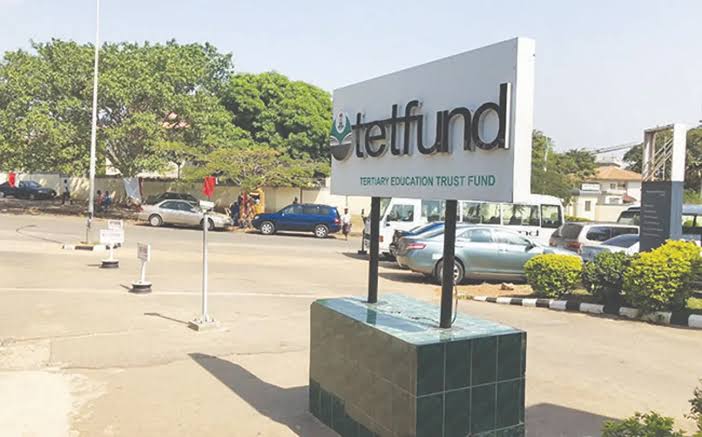
The Federal Government has approved ₦10 billion for the 2026 National Research Fund (NRF) Grant Cycle of the Tertiary Education Trust Fund (TETFund), reinforcing its investment in research and innovation as tools for addressing some of Nigeria’s most pressing development challenges.
The funding is expected to support research across 30 priority thematic areas, covering fields from education, health and agriculture to energy, technology, infrastructure, environmental sustainability and governance.
For researchers in Nigeria’s public tertiary institutions, the National Research Fund provides an opportunity to turn research ideas into projects capable of contributing to policy, innovation, economic development and improved public services.
But beyond the size of the allocation, the bigger question is what happens when research funding reaches the people and institutions working to solve real problems.
What is the TETFund National Research Fund?
The National Research Fund is a competitive research funding programme administered by TETFund to support cutting-edge research in Nigeria’s tertiary institutions.
The fund is designed to strengthen research capacity while encouraging studies that can contribute to national development.
TETFund’s intervention framework identifies the NRF as an important mechanism for supporting research that addresses national priorities and generates knowledge that can be applied beyond academic institutions.
The 2026 cycle builds on previous rounds of funding. In the 2025 cycle, more than ₦6.09 billion was awarded to 174 research projects, according to details published on the 2026 funding opportunity.
With the 2026 allocation increasing to ₦10 billion, the programme represents a significant injection of funding into Nigeria’s research ecosystem.
Who Can Apply for the TETFund NRF Grant?
The National Research Fund is targeted at lecturers in Nigeria’s public tertiary institutions.
Eligible institutions include public universities, polytechnics and colleges of education.
Researchers applying for the fund participate as Principal Investigators (PIs), with responsibility for leading their research teams and overseeing the implementation of approved projects.
TETFund also encourages multidisciplinary and interdisciplinary research. This means researchers from different academic backgrounds can work together on complex problems that cannot easily be addressed from a single discipline.
For universities, the Principal Investigator must not be below the rank of Senior Lecturer. For polytechnics and colleges of education, the PI must not be below the rank of Principal Lecturer.
The applicant’s institution also serves as the coordinating institution and guarantor for the project.
What Areas Does the 2026 Fund Cover?
The 2026 National Research Fund is structured around 30 priority thematic areas grouped broadly into Humanities and Social Sciences, Science, Engineering, Technology and Innovation, and Cross-Cutting Areas.
These priorities are significant because they connect academic research with issues affecting everyday life and Nigeria’s development.
Humanities and Social Sciences
The areas include research into citizenship and national integration, conflict and security, economic development, education and human capital, gender and social inclusion, governance, politics, law and ethics, culture and identity, media, population and migration, social development and tourism.
These areas recognise that development is not only about physical infrastructure or technological advancement.
How societies are governed, how people access education, how communities interact and how citizens participate in development can have just as much impact on national progress.
Science, Engineering, Technology and Innovation
The science and technology priorities include agriculture and food security, health, industry and innovation, information technology, power and energy, science and engineering, space science, natural resources, transport and infrastructure, as well as water and sanitation.
These are areas where research can potentially translate directly into solutions.
For example, research into agricultural productivity can support food security, while studies in energy and technology can contribute to improved access to reliable power and digital services.
Research into water and sanitation can equally have significant public-health and environmental implications.
Cross-Cutting Areas
The cross-cutting priorities address issues that require collaboration between multiple sectors and disciplines.
They include areas such as the blue economy, clean and affordable energy, entrepreneurship and wealth creation, environmental sustainability, housing, urban and regional development, resource governance and innovation.
The emphasis on cross-cutting research is particularly relevant to Nigeria because many of the country’s biggest challenges are interconnected.
Climate change, for example, can affect agriculture, water resources, livelihoods, migration and public health at the same time.
How to Apply for the TETFund National Research Fund
The NRF application process is conducted online through the official TETFund research funding platform.
Researchers are expected to review the relevant Research Brief and Application Guidelines before developing their submissions.
The process begins with the submission of a research concept note.
Concept notes are reviewed by the National Research Fund Screening and Monitoring Committee (NRFS&MC).
Researchers whose concept notes successfully progress through the screening process are invited to submit full research proposals.
The full proposal is then evaluated as part of the next stage of the process, with selected researchers potentially required to defend their proposals before the relevant committee.
Projects that successfully pass the assessment process are subsequently presented to the TETFund Board of Trustees for approval before funding is awarded.
Important: What Researchers Need to Know About the 2026 Cycle
Researchers should note that the 2026 NRF cycle has already progressed beyond the initial application stage.
A January 2026 notice from the University of Lagos informed researchers whose concept notes had progressed to the full-proposal stage that submissions were due by February 10, 2026.
This means the 2026 opportunity should not be treated as an application window that is currently open in August 2026.
Instead, researchers interested in the NRF should use the 2026 cycle as a guide to prepare for future calls and monitor official TETFund announcements for new application windows.
This is particularly important because the NRF process involves multiple stages, beginning with concept-note submission before selected applicants move on to full proposals.
What Makes a Strong NRF Proposal?
For researchers preparing for future cycles, having an interesting research topic may not be enough.
A strong proposal should begin with a clearly defined problem and explain why the problem matters.
Researchers should be able to demonstrate how their proposed study could contribute to knowledge, policy, innovation or practical solutions.
The methodology should also be realistic, while the research team should have the expertise required to deliver the project.
TETFund’s emphasis on multidisciplinary and interdisciplinary research also means researchers should consider opportunities for collaboration across academic fields.
Most importantly, proposed research should clearly connect with one of the identified priority areas.
Why the ₦10 Billion Matters Beyond the University
The significance of the NRF goes beyond academics.
Nigeria faces challenges that require locally generated knowledge and evidence-based solutions.
Food insecurity, unreliable energy, unemployment, inadequate infrastructure, climate pressures, healthcare gaps and digital inequality all require research that can help policymakers and practitioners understand what works and where resources should be directed.
This is where research funding becomes a development issue.
A well-funded research project can produce evidence that influences government policy, support the development of new technologies, improve public services or create opportunities for businesses and communities.
The potential impact therefore extends from universities into government, industry and society.
For Nigeria, strengthening the connection between research and real-world outcomes could be just as important as increasing the amount of money committed to research.
The Bigger Opportunity for Nigeria
The ₦10 billion allocation sends a signal that research remains an important part of the country’s development agenda.
However, funding alone will not guarantee impact.
The real value will come from whether research findings are translated into solutions, policies, innovations and interventions that improve people’s lives.
That will require stronger collaboration between researchers, government institutions, businesses, development organisations and communities.
It will also require researchers to think beyond producing academic papers and consider how their findings can be applied in the real world.
Final Note for Researchers
The Federal Government’s ₦10 billion allocation for the 2026 TETFund National Research Fund represents a significant opportunity to strengthen Nigeria’s research and innovation ecosystem.
The fund covers 30 priority areas and encourages multidisciplinary research that addresses national development challenges.
While the 2026 application process has already progressed through the concept-note and full-proposal stages, researchers can use the cycle to understand the requirements and prepare for future calls.
For researchers interested in participating in subsequent cycles, the next step is to monitor official TETFund announcements, understand the priority areas and begin developing research ideas that respond to clearly defined challenges.
Because ultimately, the value of research funding is not measured only by how much money is awarded, but by what that research makes possible.
[give_form id="20698"]