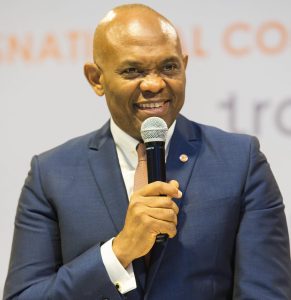
ONYINYECHI NWAIGBA
As families across Nigeria prepare for a new academic session, the return to school comes with more than the excitement of new classes, uniforms and books. For many households, it also brings the familiar pressure of tuition fees, examination costs, textbooks, uniforms, transportation and other education-related expenses.
Against this backdrop, Keystone Bank has renewed attention on a range of financial products designed to help parents, students and privately owned schools manage education-related costs.
The bank’s education-focused offerings include its EduFinance loan, Future Account, Evolve Savings Account and School Support Loan. While these are commercial financial products rather than charitable interventions, they raise an important question for the wider sustainability conversation: Can financial inclusion become part of the solution to the cost barriers limiting access to education?
When school fees become a financial inclusion issue
Education is often discussed primarily as a social development issue. But for families struggling to meet rising household expenses, access to education can also depend on access to appropriate financial services.
A parent may have a stable income but still struggle to pay a large school bill at once. A student may have an income or allowance but lack the financial tools to manage it effectively. Similarly, a private school may need additional working capital to maintain its operations and provide quality learning facilities.
This is where financial products designed around the education ecosystem can play a role.
Keystone Bank’s EduFinance product, for instance, is designed to provide financing for tuition fees and related educational expenses for salaried customers, covering education from early learning through tertiary education. The bank says the product can provide up to ₦5 million, with repayment of up to 12 months.
The distinction is important. This is not free education support or a scholarship. It is credit that customers are expected to repay.
However, when responsibly designed and accessed by people who can afford the repayment terms, such financing can provide households with another option for managing significant education expenses without having to make the entire payment at once.
Building a savings culture from an early age
Beyond lending, the bank’s approach also includes savings products targeted at younger people.
The Keystone Future Account is designed for children and teenagers, with variants for children aged 0–10 and teenagers aged 11–17. The product is positioned as a way for parents and guardians to plan for their children’s education while introducing young people to saving.
For students in tertiary institutions and members of the National Youth Service Corps, the Evolve Savings Account is designed to help them manage their funds and begin developing greater financial independence.
This part of the conversation is particularly relevant to financial inclusion.
Financial inclusion is not simply about having a bank account. It is also about having the knowledge, tools and appropriate financial services to make informed decisions about money.
Keystone Bank’s sustainability reporting shows that financial literacy has formed part of its education-related community initiatives. In 2023, the bank reported conducting financial literacy sessions across all six geopolitical zones, reaching schools in the 36 states and the Federal Capital Territory. The sessions focused, among other things, on the importance of saving from an early age.
Its 2024 Sustainability Report also identifies financial literacy, EduFinance and financing for private schools among the bank’s contributions under SDG 4, Quality Education.
That creates a broader picture than simply a bank launching products ahead of a new school year.
Supporting the schools behind the students
The education financing conversation also extends beyond parents and students.
Keystone Bank’s School Support Loan is designed to provide financing to privately owned and registered educational institutions, covering schools from crèches and nurseries to primary, secondary and tertiary institutions.
This matters because education access is influenced not only by whether families can pay school fees, but also by the capacity of schools to operate effectively.
Schools require infrastructure, equipment, learning materials, staff and working capital. Where financing is accessible and responsibly managed, it can potentially help educational institutions address some of these needs and maintain their operations.
Again, this should not be confused with philanthropy. A school support loan remains a financial product. But from a sustainability perspective, financing that strengthens the education ecosystem can still contribute to broader social outcomes.
Where CSR and commercial banking meet
This is perhaps the most interesting part of Keystone Bank’s latest education push.
Not every initiative that produces a social benefit should automatically be labelled CSR.
A loan is not a scholarship simply because it helps someone pay school fees. A savings account is not automatically a CSR programme because it is targeted at young people. And a commercial product should not be presented as philanthropy simply because it addresses a social challenge.
The real CSR question is what happens beyond the product.
In Keystone Bank’s case, the bank has a longer history of education-focused community interventions. Its stated CSR pillars include education, alongside health, women and youth empowerment and employee volunteering.
The bank has also reported direct educational interventions, including financial literacy programmes and support for students who could not afford WAEC examination fees. In one initiative across Kano, Kebbi, Kaduna and Katsina, the bank reported paying WAEC fees for 160 students while also providing financial literacy training.
Its education scheme has also included scholarships, school libraries, learning materials, mentoring and ICT-related interventions.
Taken together, these activities show two different sides of the bank’s role: commercial financial solutions that help customers manage education costs, and community interventions aimed directly at improving educational opportunities.
Keeping those two categories distinct is important for credible CSR reporting.
The bigger question: Can finance make education more accessible?
Nigeria’s education challenges cannot be solved by banks alone.
Families still face broader economic pressures, while schools need stronger infrastructure, teachers need better support, and policymakers continue to grapple with questions around affordability, quality and access.
But financial inclusion can form part of the wider response.
For households with predictable income, responsible education financing may provide short-term flexibility. For parents planning ahead, structured savings can encourage earlier preparation for school expenses. For young people, financial literacy can help develop money-management skills that extend beyond their years in school. And for schools, access to appropriate financing can support operational needs.
The effectiveness of such interventions, however, depends on affordability, transparency and responsible lending.
The question should not simply be whether a financial product exists. It should be whether the people it is designed for can understand it, afford it and use it without creating a deeper financial burden.
That is where the financial inclusion conversation becomes a sustainability conversation.
As another academic session approaches, Keystone Bank’s education-focused offerings provide an example of how the financial sector can participate in addressing a social challenge without blurring the line between business and philanthropy.
For CSR leaders and other financial institutions, the bigger opportunity may lie in combining both: building products that respond responsibly to real social needs while continuing to invest directly in the communities those businesses serve.
Because when financial inclusion is designed around real-life challenges, access to finance can become more than a banking issue. It can become part of the infrastructure that helps people access opportunity.
[give_form id="20698"]