Eche Munonye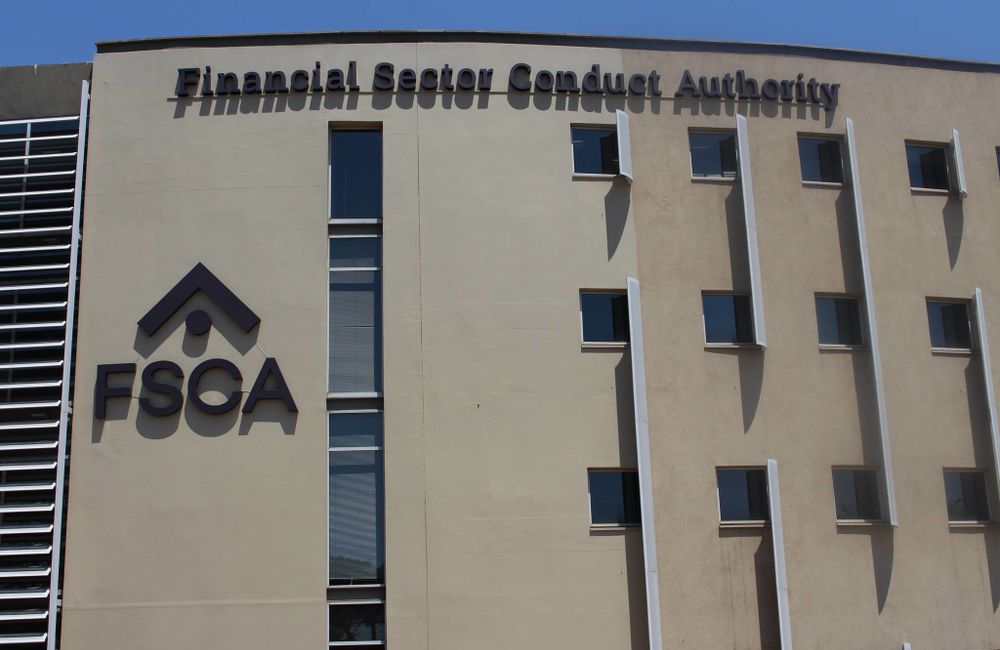
What South Africa's Regulator Is Doing That Nigeria Isn't — Yet
In April 2026, South Africa’s Financial Sector Conduct Authority (FSCA) published a report that quietly reset the terms of engagement for sustainability claims made by the country’s financial institutions. The headline change was straightforward to state and significant in consequence: any ESG-related claim — in advertising, in an advisor’s conversation with a client, in a fund’s product documentation — must now meet the same legal threshold as a financial disclosure. It must be factually correct, not misleading, and presented in plain language. The FSCA’s own language was unambiguous about the stakes: weak or inconsistent sustainability claims, the regulator warned, can “undermine confidence and increase the risk of greenwashing, social washing, and impact washing.”
From guidance to enforceable conduct
What makes the FSCA’s shift notable is not the sentiment — regulators worldwide have been warning about greenwashing for years — but the mechanism. The FSCA’s 2026 Sustainable Finance Update Report moves ESG oversight out of the realm of voluntary, high-level principle and into enforceable conduct regulation, sitting alongside existing financial-disclosure law rather than beside it as a separate, softer track. The regulator is also preparing mandatory climate disclosure requirements for large listed companies, aligned initially to the International Sustainability Standards Board’s IFRS S1 and S2 frameworks — a global baseline already gaining traction from the EU to parts of Asia. The FSCA has explicitly framed the underlying issue as one of market integrity and investor protection, not merely reputational housekeeping: “complete, accurate, timely, and comparable information is essential,” the regulator noted, for efficient capital allocation. South Africa is not alone in this direction, even as the FSCA itself has observed a contrasting retreat from ESG imperatives within parts of the US investment industry amid the Trump administration’s hostility to what it terms “woke capitalism.” Where the US chills, South Africa is doubling down.
Where Nigeria’s framework stops short
Nigeria has meaningful sustainability-adjacent regulation of its own. The Nigerian Code of Corporate Governance encourages ESG and CSR disclosure. The Nigerian Exchange has sustainability reporting guidance for listed companies, and various sectoral frameworks — the Petroleum Industry Act’s Host Community Fund regime chief among them — impose specific, enforceable obligations tied to environmental and social outcomes in particular industries. What Nigeria does not yet have is a cross-sectoral conduct standard that treats a misleading sustainability claim, wherever it appears — in a company’s annual report, in its marketing materials, in a press statement issued around a community trust ceremony — with the same evidentiary weight as a misleading financial statement. There is no single regulator with a mandate comparable to the FSCA’s newly asserted role: an entity positioned to ask not just whether a company disclosed something, but whether what it disclosed was true, complete, and not selectively presented.
Why this gap is not abstract
CSR Reporters’ own recent accountability reviews illustrate why that gap has real consequences rather than theoretical ones. In one case reviewed this month, a company was publicly commended at a formal ceremony for “exceeding” its statutory Petroleum Industry Act host-community obligations in one part of Delta State, while, weeks later, a related host community elsewhere in the same state alleged three consecutive years of non-payment of the same category of statutory fund. In another, a company’s public shut-in statements during a spill event committed to management “in line with regulatory standards,” while community accounts and environmental groups described unresolved contamination lasting months, in one instance requiring a Federal High Court order to compel a halt to ongoing discharge. Under an FSCA-style conduct standard, a sustainability claim that a company is exceeding its statutory community obligations — made while a related statutory obligation sits unmet elsewhere — would itself be a reportable, investigable inconsistency, independent of whichever underlying operational dispute eventually gets resolved. In Nigeria’s current framework, such a discrepancy is left largely to journalists, civil society, and community advocacy groups to surface, with no dedicated regulatory mechanism obligated to test the claim against the fact.
What would not, and should not, simply transfer
It would be a mistake to suggest South Africa’s retail-financial-products framework should be imported wholesale into Nigeria’s context. The FSCA’s mandate covers financial institutions and investment products; Nigeria’s most consequential sustainability accountability gaps sit heavily in extractive-sector operations, host-community fund administration, and environmental remediation — governed by a different set of regulators (NUPRC, NOSDRA, state environmental agencies) with different statutory tools already available to them, including the PIA’s own enforcement powers. The lesson worth transplanting is not the specific rulebook but the underlying principle: that a sustainability or compliance claim should carry the same evidentiary burden, and the same consequence for being wrong, as a financial one. Nigeria’s regulators already have several of the pieces — NUPRC’s Host Community Fund compliance authority, NOSDRA’s spill-reporting mandate, the Nigerian Exchange’s disclosure guidance — but no single body currently treats a false or misleading sustainability claim, on its own, as an enforcement matter with teeth comparable to a securities-disclosure violation.
The test ahead
As Nigerian companies increasingly compete for the same climate finance, green bonds, and ESG-linked capital that FSCA’s tightened framework is explicitly designed to protect the credibility of, the absence of an equivalent domestic conduct standard becomes a competitiveness question as much as an accountability one. International investors weighing Nigerian and South African opportunities side by side will increasingly be able to trust the latter’s sustainability disclosures under a regime with real enforcement behind it. Whether Nigerian regulators close that gap — through NUPRC, the SEC, the Nigerian Exchange, or a dedicated future authority — will shape not only how communities like Ndokwa, Uzere and Nembe Creek fare, but how much external capital Nigeria’s sustainability claims can credibly attract.
[give_form id="20698"]