The Trust That Praised Itself, Then Went Quiet: Oando and the Ndokwa Communities’ Unpaid Millions
 Eche Munonye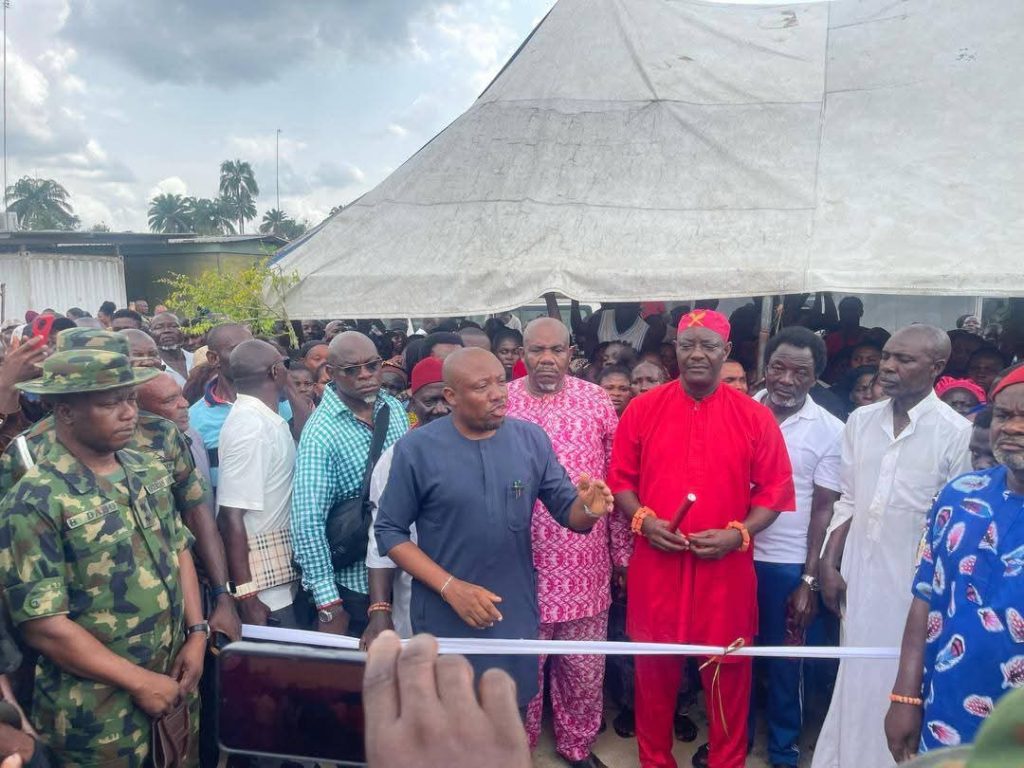
The Trust That Praised Itself, Then Went Quiet: Oando and the Ndokwa Communities' Unpaid Millions
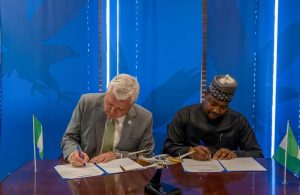
On 3 July 2026, in a hall in Asaba dressed for the occasion, Delta State’s Solicitor-General stood before traditional rulers, oil executives and federal regulators and commended Energia Limited for “contributing beyond the statutory requirement” of Nigeria’s Petroleum Industry Act. The company being praised was inaugurating the Ndokwa West-1 Host Community Development Trust alongside its joint venture partner, Oando Plc, formalising a governance structure for seven Delta State communities under a Memorandum of Understanding signed the same day. The Nigerian Upstream Petroleum Regulatory Commission’s representative called it a milestone in host-community participation. Delta State’s governor, represented by his deputy chief of staff, urged the newly sworn-in trustees to act with “transparency, accountability and fairness.” It was, by every account filed that week, a successful ceremony.
Five weeks later, a different letter emerged from a different set of Ndokwa communities. On 11 August 2026, host communities in Okpai, Beneku and Umusadege — under the Ndokwa Host Community Development Trust, a related but distinct trust structure tied to Oando Energy Resources Limited’s own operations — staged separate peaceful protests. Their grievance was not about governance ceremony or MoU language. It was about money that, by their account, had not arrived for three straight years.
What the communities are owed, and why
The instrument at issue is the Host Community Development Fund, one of the signature reforms of the Petroleum Industry Act 2021. Under the Act, every oil and gas company operating a licence or lease must establish a trust for the communities within or adjacent to its operational area and fund it annually with an amount equivalent to 3% of its actual operating expenditure for the preceding calendar year in that area. Unlike the voluntary General Memoranda of Understanding that preceded it, the Host Community Fund is not a matter of corporate discretion. It is a statutory obligation, enforceable by the Nigerian Upstream Petroleum Regulatory Commission, with the explicit legislative intent of converting oil-producing communities from petitioners for goodwill into stakeholders with an enforceable entitlement.
According to a letter addressed to the General Manager of Oando Energy Resources Limited in Port Harcourt, and signed by the chairman and secretary of the Okpai Oando Committee, the company had not released the outstanding 3% OPEX Development Funds for 2024, 2025 or 2026 despite “repeated engagements and reminders.” The letter’s language was pointed: “It is unacceptable and disappointing that despite repeated engagements and reminders to your company by members of the Ndokwa Host Community Development Trust, these funds remain unpaid.” The committee said the delay had stalled development projects and caused what it described as avoidable hardship and economic losses across the affected communities. Similar letters and separate protests came from the Umusadege and Beneku community leadership.
The fiscal lens
CSR Reporters’ standard practice in reviewing corporate community-fund claims is to ask two questions: was the legal obligation actually met, and does the company’s own public disclosure square with what the affected community reports. On the first question, a three-year arrears claim spanning 2024 through 2026 — if accurate — represents a sustained compliance failure under a specific, named federal law, not an ambiguous or judgment-dependent shortfall. The Petroleum Industry Act does not treat the 3% fund as aspirational; it is calculated, mandatory, and subject to regulatory enforcement by NUPRC. A company that has not remitted three years of a legally mandated fund is not behind on a courtesy. It is out of compliance with an Act of the National Assembly.
On the second question, the timing does the reputational damage that the substance alone might not. The same corporate family that stood on a stage in July being commended for exceeding its Host Community Fund obligations in one part of Delta State was, weeks later, the subject of protest letters over three years of non-payment in another part of the same state. Both trusts sit under the same PIA framework; both involve Oando as joint venture partner. Whether the discrepancy reflects two genuinely different operational histories, an internal reporting gap, or simply two audiences receiving two different stories depends on facts CSR Reporters does not yet have — which is precisely why a right-of-reply process matters here rather than a rush to verdict.
The impact lens
Beyond the statutory question sits the lived one. The Ndokwa communities describe stalled infrastructure and livelihood projects as the direct, tangible consequence of the funding gap — not an abstract compliance statistic but school blocks, roads, or health posts that do not get built on schedule because a legally earmarked fund did not arrive. The Host Community Fund was designed, in part, to reduce exactly this kind of instability, the sort that has historically pushed frustrated communities in the Niger Delta toward facility shutdowns and pipeline vandalism when formal channels for grievance appear to fail. A three-year non-payment claim, left unresolved, tests the very theory the PIA reform was built on: that formalising community entitlement into statute would end the cycle of unmet promises that voluntary GMoUs were criticised for producing.
What CSR Reporters is watching
Three things will determine how this story develops. First, whether Oando Energy Resources issues a public accounting of the 2024–2026 OPEX fund disbursements specific to the Ndokwa communities, ideally with figures a community trust board can independently verify. Second, whether NUPRC, as the statutory enforcer of Host Community Fund compliance, takes any visible regulatory action — an audit, a compliance notice, or a public statement — given that this is precisely the class of dispute the PIA framework was built to prevent from escalating into shutdowns. Third, whether the gap between the July ceremony’s language and the August protest’s substance gets publicly reconciled, or simply left to stand as two separate news cycles that never speak to each other.
[give_form id="20698"]