


 ONYINYECHI NWAIGBA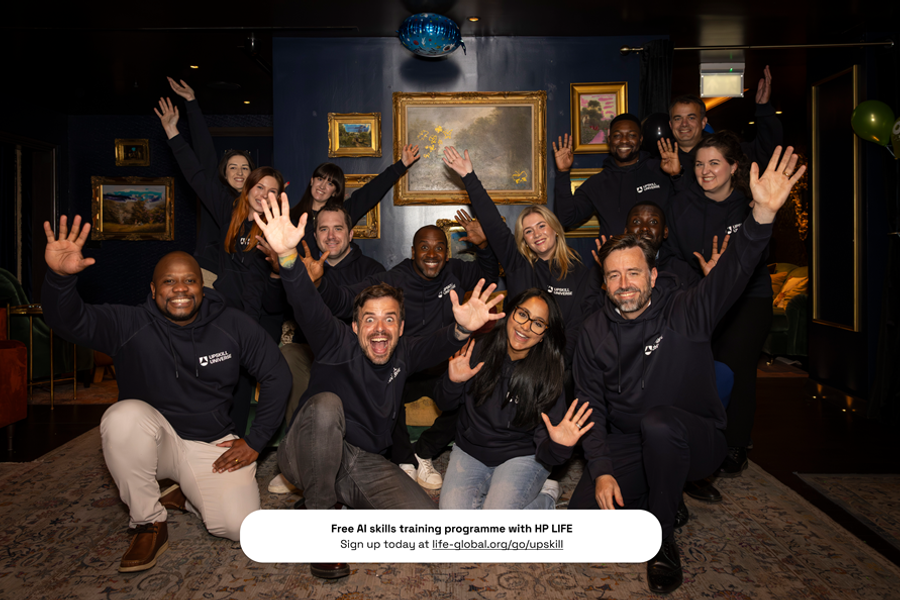
The new AI Skills for Business programme will provide practical artificial intelligence training to small businesses in Nigeria and South Africa, with a focus on moving entrepreneurs from AI awareness to real-world adoption.
HP and UpSkill Universe have launched a new programme aimed at equipping 55,000 small and medium-sized enterprises (SMEs) in Nigeria and South Africa with free artificial intelligence skills, as businesses increasingly explore AI to improve productivity, customer experience and decision-making.
The AI Skills for Business Programme, powered by HP LIFE, HP Foundation’s free training platform, and delivered by UpSkill Universe, is designed to address a growing gap between awareness of artificial intelligence and its practical use within small businesses.
According to the programme partners, nearly 70 per cent of SMEs remain at the early stages of AI maturity, while only 9 per cent have integrated AI into their daily operations, strategy and decision-making.
The initiative therefore seeks to move beyond simply introducing entrepreneurs to AI tools by helping them identify where the technology can be applied to actual business challenges.
UpSkill Universe Founder and CEO, Gori Yahaya, said many African entrepreneurs are interested in using AI but often lack access to quality training and guidance tailored to their businesses.
“Small businesses across Nigeria and South Africa already have the ambition to deploy AI in their day-to-day operations. What they lack is access to quality training tailored to their needs, and guidance on how to deploy it consistently,” Yahaya said.
From AI Awareness to Business Application
The programme will use a staged approach intended to take participating SMEs from basic AI skills to implementation.
Beginning this month, 55,000 SMEs will be onboarded onto HP LIFE and expected to complete at least three courses as part of the initial learning phase.
The training will cover practical applications of AI in areas including reporting, decision-making, risk management, customer experience and business operations.
A further 5,000 SMEs will participate in live, 90-minute facilitator-led virtual sessions, where the training will focus on applying AI to real-world business challenges.
Participants in the live sessions will also be expected to test an AI tool within their businesses over a 30-day period, introducing an implementation component that goes beyond conventional online training.
The programme will culminate in an intensive Build Your Business with AI Bootcamp for 50 top-performing SMEs.
Those selected will receive business audits, mentorship and support to develop 90-day AI action plans aimed at integrating AI into their operations.
HP employees will also participate as mentors, providing guidance to selected businesses as they work through their AI adoption plans.
Youth- and women-led businesses are being prioritised, with the programme targeting 40 per cent participation from these groups.
Why SME AI Adoption Matters
For many small businesses, artificial intelligence is increasingly being presented as a tool for doing more with limited resources.
AI can help entrepreneurs automate repetitive tasks, analyse information, respond to customers, develop marketing content and make faster decisions. But access to the technology alone does not guarantee meaningful adoption.
For SMEs operating under tight financial and human-resource constraints, the bigger challenge can be knowing which AI tools are useful, how to integrate them into existing workflows and how to measure whether they are actually improving the business.
That makes the practical component of the HP and UpSkill Universe initiative particularly significant.
Rather than measuring success solely by the number of entrepreneurs who complete a course, the programme’s longer-term value will depend on whether participants continue using the skills and tools after the training ends.
The Bigger Question: What Happens After Training?
The scale of the program is significant, but the 55,000 SME target should ultimately be viewed as a starting point rather than the final measure of impact.
Training participation and course completion can demonstrate reach. They do not necessarily demonstrate that businesses have become more productive, reduced costs, improved customer service or increased revenue.
For an initiative of this scale to demonstrate meaningful social and economic impact, follow-up measurement will be critical.
Questions around the program’s long term impact will include: How many of the 55,000 SMEs actually adopt AI after completing the training? How many continue using the tools six or twelve months later? What measurable improvements do participating businesses record? And how will the program partners distinguish between AI awareness and genuine AI adoption?
These questions are particularly important as organisations across Africa increasingly launch digital-skills programmes in response to the rapid development of artificial intelligence.
The real test is not simply whether entrepreneurs can use an AI chatbot or complete an online course. It is whether those skills translate into better businesses and stronger economic opportunities.
Building on Earlier SME Skills Programmes
The latest initiative builds on an earlier Skills for Business Program involving HP, Google and UpSkill Universe, which focused on helping African SMEs strengthen capabilities in areas including AI, digital marketing and e-commerce.
That programme was designed to directly train 10,000 SMEs and indirectly reach an additional 59,000 individuals by the end of 2025.
The new AI-focused programme represents a further shift towards helping businesses navigate the practical implications of artificial intelligence.
HP has also positioned digital skills and access to technology as part of its broader digital-equity agenda, including initiatives aimed at preparing workers and entrepreneurs for an increasingly digital economy.
UpSkill Universe, meanwhile, describes itself as a learning and skills partner working with organisations to develop digital and business capabilities.
A Test for Responsible Corporate Impact
Corporate investment in digital skills can play an important role in widening access to emerging technologies, particularly for small businesses that may not have the resources to pay for specialised training.
However, programmes such as AI Skills for Business also highlight an important principle in measuring corporate social impact: scale should be matched by evidence.
Reaching tens of thousands of SMEs is a strong starting point. Ensuring that those businesses can translate new knowledge into sustainable improvements is the harder and ultimately more meaningful—measure.
For the 55,000 businesses targeted in Nigeria and South Africa, the opportunity is clear: move from hearing about artificial intelligence to understanding where it can genuinely create value.
For HP and UpSkill Universe, the next challenge will be demonstrating just how much that transition changes the businesses involved.
[give_form id="20698"]



1 thought on “HP, UpSkill Universe Target 55,000 African SMEs With Free AI Training”