admin
admin 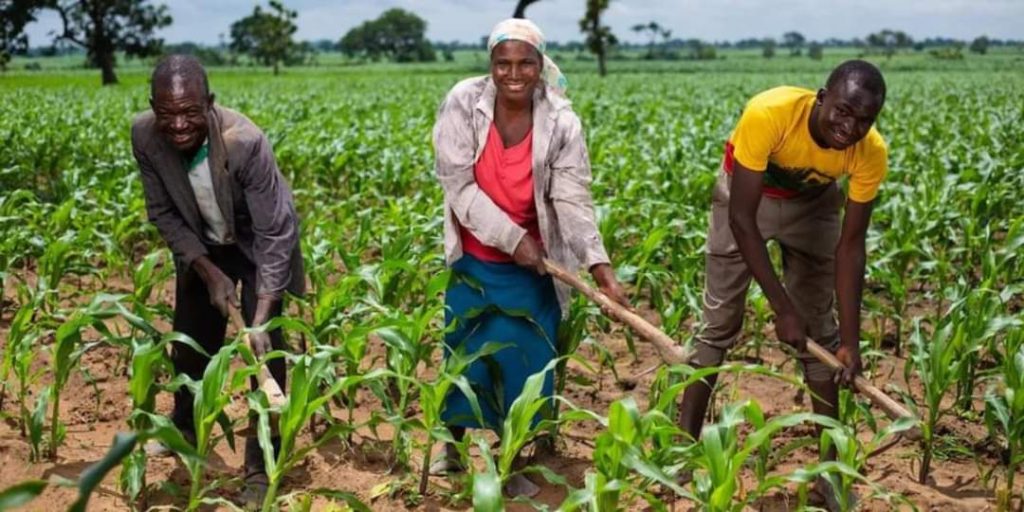
The programme will provide tailored business development, market access, certification, financial readiness and growth support to selected agribusinesses in five African countries.
The future of Africa’s agricultural economy will not be shaped by farmers alone. It will also depend on the strength of the businesses building value around agriculture — from food processors and aggregators to input providers, distributors, technology companies and enterprises connecting farmers to larger markets.
Yet for many young and women-led businesses operating within Africa’s agricultural value chains, the challenge is no longer simply having a viable idea. The bigger challenge is building the systems, capacity and market connections required to grow.
It is against this backdrop that the Alliance for a Green Revolution in Africa (AGRA), in collaboration with IACL, has opened applications for the 2026 Agri SME Enterprise Support Program, an initiative designed to strengthen commercially active agribusinesses across five African countries.
The programme will select 100 businesses from Nigeria, Ghana, Kenya, Rwanda and Tanzania, with 20 enterprises expected to be selected from each country.
But unlike programmes that focus primarily on providing funding, the initiative takes a broader approach to enterprise development. Its focus is on helping businesses understand where their weaknesses are, strengthen their internal systems and become better positioned to access markets, investment and long-term growth.
Beyond Funding: Building Businesses That Can Scale
Access to capital remains one of the most visible challenges facing businesses across Africa. However, capital alone does not necessarily make a business investment-ready or sustainable.
A business can receive funding and still struggle with poor financial management, weak supply chains, inadequate quality systems, limited market access or a lack of regulatory preparedness.
AGRA’s programme recognises this gap.
Selected businesses will first undergo a structured diagnostic assessment designed to examine different aspects of their operations. This will include their business models, financial management systems, production and aggregation capacity, supplier relationships, quality management processes, certification readiness, market access, employment practices, inclusion, digital systems and overall growth potential.
The assessment is significant because it means support will not follow a one-size-fits-all model.
Instead, businesses will receive assistance based on the specific challenges and opportunities identified within their operations.
For one business, that could mean strengthening its financial management. For another, it could involve improving supply chain systems or preparing for certification. Others may require support with market positioning, quality and food safety, business strategy or investor readiness.
The programme will also provide coaching and technical assistance to participating enterprises.
This approach reflects an increasingly important lesson in development: sustainable impact is not only about putting resources into businesses. It is also about giving entrepreneurs the knowledge, systems and networks required to use those resources effectively.
Creating Pathways to Jobs and Market Access
The programme’s focus on growth and job creation is another important dimension.
Selected businesses will be supported to develop practical 12- to 18-month growth and job-creation plans, giving them a clearer framework for translating business support into measurable economic outcomes.
This matters because the growth of agricultural businesses can have an impact far beyond the entrepreneurs who own them.
When an agribusiness expands, it can create demand for farmers, transporters, processors, distributors, suppliers and other service providers operating within the surrounding value chain.
For businesses sourcing directly from smallholder farmers, growth can potentially create more reliable markets for producers. For processors, expansion can increase demand for agricultural raw materials. For businesses providing agricultural services, stronger commercial activity can create opportunities to reach more producers.
In this sense, supporting an agribusiness can have a multiplier effect across an entire community and value chain.
The programme is open not only to traditional agricultural producers but also to businesses working across agricultural value chains, including enterprises that source from farmers, provide services to agricultural actors or work directly with smallholder producers.
A Stronger Focus on Women and Young Entrepreneurs
The decision to specifically target youth- and women-led agribusinesses also speaks to a broader development priority across Africa.
Young people make up a significant share of the continent’s population, yet many continue to face limited access to decent employment and opportunities to build sustainable businesses.
Women, meanwhile, play significant roles across agricultural value chains but can face barriers to finance, markets, business networks and formal economic opportunities.
Creating stronger pathways for both groups to build commercially viable enterprises is therefore not only an entrepreneurship issue. It is also connected to economic inclusion and the broader question of who gets to participate meaningfully in Africa’s economic growth.
By targeting commercially active businesses rather than only early-stage ideas, the programme is also placing emphasis on enterprises that already have some level of market activity and demonstrate potential for further growth, market expansion and job creation.
That distinction is important.
The objective is not simply to create more businesses. It is to help existing businesses become stronger, more competitive and better equipped to create value over time.
Connecting Agribusinesses to Future Capital
Another notable component of the programme is its focus on investor readiness and financial linkages.
For many African businesses, accessing finance is not simply about whether money exists. It is also about whether the business is prepared to attract it.
Investors and financial institutions typically require businesses to demonstrate clear financial records, credible growth plans, strong governance, market potential and the ability to manage capital effectively.
The programme’s diagnostic, coaching and investor-readiness components could therefore help participating businesses address some of the gaps that make it difficult for otherwise promising enterprises to secure external capital.
This could become particularly important as African agribusinesses seek to move from small-scale operations into more structured and scalable enterprises.
Why This Matters for Africa’s Food Systems
Africa’s food systems are under pressure from several directions, including climate change, rising production costs, market inefficiencies, limited infrastructure and the need to feed a growing population.
Strengthening the businesses operating within these systems is therefore an important part of building more resilient agricultural economies.
Farmers need markets. Processors need reliable supply. Consumers need affordable and safe food. Businesses need access to finance and customers. And young people need opportunities to participate in the agricultural economy beyond traditional farming.
These challenges are interconnected.
A stronger agribusiness ecosystem can help connect some of these gaps by creating more efficient links between production, processing, distribution and consumption.
AGRA’s latest programme is therefore more than an entrepreneurship support initiative. At its core, it reflects the need to build stronger economic systems around agriculture — systems where businesses can grow, farmers can access markets and more value can remain within local economies.
For the 100 businesses eventually selected, the immediate benefit may be coaching, technical assistance, market support or investor preparation.
The bigger opportunity, however, is the possibility of building enterprises that can survive beyond the programme, create jobs, strengthen agricultural value chains and contribute to more inclusive economic growth.
That is where the real measure of impact will ultimately lie: not simply in how many businesses receive support, but in how many are able to turn that support into sustainable growth, stronger livelihoods and lasting value within their communities.
[give_form id="20698"]