GLORYANN OSANG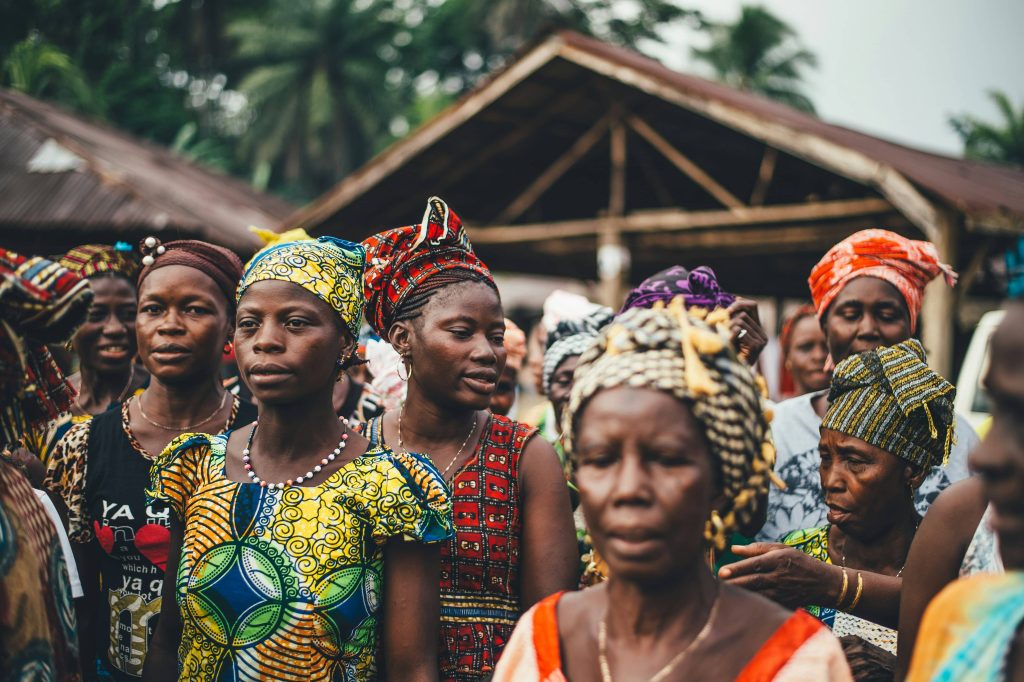
A growing push to place women’s health at the centre of Nigeria’s development agenda gained fresh momentum in Abuja as policymakers, healthcare professionals, development experts and business leaders converged to examine how healthier women can drive stronger families, more productive communities and a more sustainable African economy.
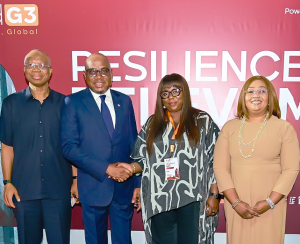
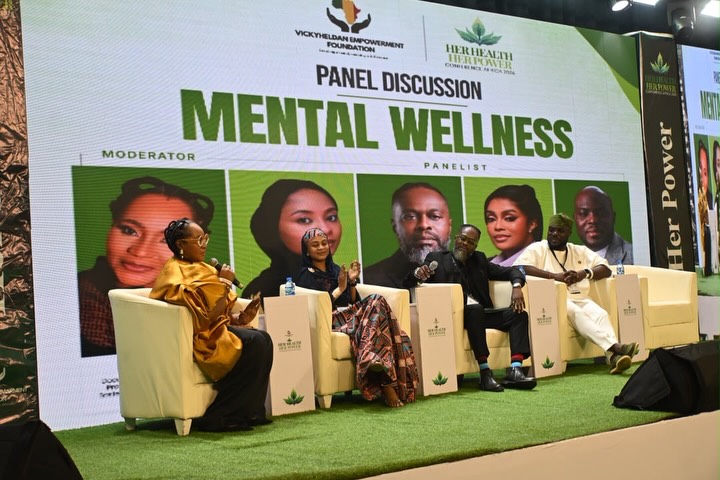
The conversation took centre stage at the maiden Her Health, Her Power Conference Africa 2026, organised by the VickyHeldan Empowerment Foundation on August 21 at the Shehu Musa Yar’Adua Centre, Abuja.
Held under the theme “Leading with Wellness for a Sustainable Africa,” the conference placed women’s health beyond the boundaries of healthcare, framing it as a critical pillar of economic participation, leadership, social development and national resilience.
At the heart of the gathering was a simple but consequential message: Africa cannot build sustainable societies while the health and wellbeing of its women remain an afterthought.
Women’s Health as an Economic Imperative
The Federal Government strongly endorsed the message, with the Minister of Women Affairs and Social Development, Imaan Sulaiman-Ibrahim, describing investment in women’s health as fundamental to Nigeria’s economic ambitions.
Represented at the conference by the Director-General and Chief Executive Officer of the Maryam Babangida National Centre for Women’s Development, Dr Adedayo Benjamins-Laniyi, the minister stressed that Nigeria’s aspiration to become a $1 trillion economy cannot be separated from the wellbeing of its women.
“If we are serious about a $1 trillion Nigerian economy, then investing in women’s health is not optional. It is foundational,” the minister said.
The statement captures a reality often overlooked in development conversations: when women are healthy, they are better positioned to work, run businesses, care for their families, participate in education and assume leadership responsibilities.
When access to healthcare is limited, however, the consequences extend beyond individual women, affecting households, workplaces and the wider economy.
Taking the Conversation Beyond Healthcare
For the VickyHeldan Empowerment Foundation, the conference was designed to challenge the tendency to treat women’s health as a narrow medical concern.
The Foundation’s vision connects women’s wellness with education, economic opportunity, gender equality, public policy and human rights, while advocating stronger systems around maternal and reproductive health, mental wellness and equitable access to quality healthcare.
Founder of the Foundation, Dr Victory Njoku, has consistently argued that a sustainable Africa cannot be built without healthy women.
That philosophy shaped the conference’s broader agenda, which brought together stakeholders from healthcare, government, business, development, humanitarian and civil society sectors to explore practical pathways for improving women’s wellbeing and strengthening their participation in leadership.
The event featured discussions around maternal healthcare, reproductive health, mental wellness, leadership, innovation and access to quality healthcare, creating a platform for different sectors to consider how their actions can contribute to better outcomes for women and girls.
Connecting Wellness to Leadership
The conference also highlighted an important dimension of women’s empowerment: leadership cannot be separated from wellbeing.
Women who are excluded from quality healthcare face barriers that can affect their education, careers, economic independence and ability to participate fully in decision-making.
The Foundation therefore seeks to place women at the centre of conversations about both their health and their role in shaping society.
Its conference platform is designed to amplify women’s voices, encourage policy action, mobilise partnerships and promote innovation capable of strengthening healthcare systems across Africa.
Former Rivers State Governor Rotimi Amaechi, who also spoke at the gathering, reinforced the connection between women’s health and economic growth.
He argued that policymakers must recognise that women’s wellbeing directly affects the strength of the national economy and called for greater investment in healthcare and education.
A Wider Public Health Challenge
The urgency of the conversation was further underscored by concerns about Nigeria’s broader healthcare challenges.
At the conference, Dr Saad Abdulmumin, a Senior Programme Officer with the Gates Foundation, said Nigeria accounts for around 30 per cent of Africa’s zero-dose children, representing more than two million children who have not received their first vaccine dose.
He described the situation as a national emergency requiring urgent action.
While the figure relates specifically to childhood immunisation, it reinforces the wider challenge facing Nigeria’s health system and the need for stronger preventive and community-based healthcare interventions.
For women, the gaps are particularly significant across maternal, reproductive and mental health, areas that can have lifelong consequences for individuals, families and communities.
From Conversation to Action
Perhaps the most important test for the movement emerging from the conference will be what happens after the speeches and panel discussions.
The Federal Government has called on stakeholders to translate ideas generated at the gathering into measurable action and tangible results, while encouraging stronger collaboration among government, private-sector organisations, civil society groups and healthcare professionals.
That call aligns closely with the Foundation’s own ambition for the conference to become more than an annual gathering.
Its stated objectives include mobilising resources and partnerships for sustainable impact, advancing knowledge on women’s health, breaking stigma around sensitive health issues and encouraging systems that protect women’s dignity, wellbeing and access to care.
Building a Sustainable Africa, One Woman at a Time
The emerging message from Abuja is clear: women’s health is not simply a social welfare issue—it is an investment in Africa’s human capital.
Every woman who receives timely maternal care, every girl who gains access to accurate reproductive-health information, every woman who receives mental-health support and every female leader able to participate fully because her health needs are recognised represents more than an individual success.
It strengthens a family. It improves a community. And collectively, it strengthens a nation.
Through Her Health, Her Power Conference Africa, the VickyHeldan Empowerment Foundation is pushing that message into the national and continental development conversation: healthy women are not beneficiaries of development alone—they are among its most important drivers.
For Nigeria and the wider African continent, putting women’s wellness at the centre of policy, investment and leadership could therefore be one of the most consequential steps towards building healthier, more inclusive and genuinely sustainable societies.
[give_form id="20698"]