Beyond the ₦6 Billion: What Women’s Savings Groups Could Mean for Local Economies
 ONYINYECHI NWAIGBA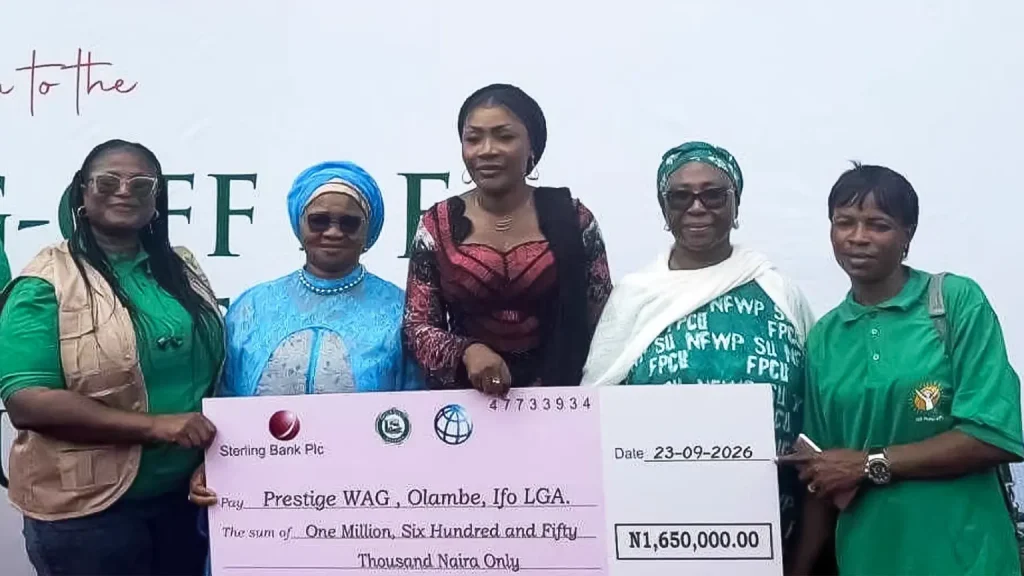
Ogun State has begun disbursing a ₦6 billion Community Investment Fund to 3,855 Women Affinity Groups, building on a savings-and-lending model designed to help women expand businesses, strengthen household incomes and participate more fully in local economies.
When conversations about financing women-owned businesses begin, the discussion often focuses on one question: how much money is available?
But access to capital is only part of the story.
For many women running businesses, especially in communities where formal financial services may be difficult to access, the ability to save regularly, borrow responsibly, build financial confidence and operate within a trusted network can be just as important.
That is the model behind the Women Affinity Groups being supported under Nigeria’s Women for Women Programme Scale-Up.
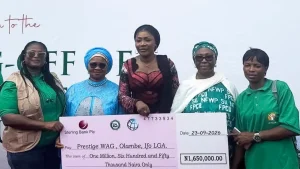
In Ogun State, the Federal Government, Ogun State Government and World Bank have begun the disbursement of a ₦6 billion Community Investment Fund to 3,855 Women Affinity Groups across four local government areas. The financing is designed to help women expand businesses, establish sustainable enterprises, create employment and strengthen household incomes.
But the fund is not simply a pot of money being handed out.
It is a revolving financing facility, and the groups receiving it have already been participating in savings, internal lending and other financial activities.
That distinction tells a bigger story about what economic empowerment can look like when women are organised around more than access to funding.
The Money Is Only One Part of the Story
The ₦6 billion Community Investment Fund is intended to provide capital for women to establish or expand businesses.
However, the Women Affinity Group model was designed to go beyond financing.
The groups provide a structure through which women can save collectively, access loans, receive financial education and build business skills.
In Ogun State, participating groups had already collectively saved about ₦2.69 billion and disbursed more than ₦4 billion in loans among their members, according to the Federal Ministry of Information.
Those figures are important because they show that the women are not simply waiting for external funding.
There is already a financial system operating within the groups.
Members contribute savings.
Those savings can be used for internal lending.
Women gain experience managing money and borrowing within a structured environment.
The Community Investment Fund is therefore being introduced into a system where collective financial activity already exists.
Why Savings Groups Matter
A woman who wants to expand a business may not always have the collateral, financial history or formal documentation required by a conventional lender.
A community-based savings group can provide another route.
Women who regularly save together can build trust and financial discipline while creating a pool of money that can circulate among members.
The World Bank’s Nigeria for Women Programme was built around this principle.
The programme describes Women Affinity Groups as platforms that can help women access financial services, training, mentorship, markets and other forms of support.
The idea is that financial inclusion should not only mean opening a bank account.
It should also mean giving people the ability to use financial services productively.
That includes saving, borrowing, investing and planning for the future.
Ogun’s Scale Is Significant
The current Community Investment Fund is being disbursed to 3,855 Women Affinity Groups.
But the broader Scale-Up programme in Ogun is larger.
As of September 21, 2026, Ogun had established 5,394 Women Affinity Groups reaching more than 124,000 women across 3,489 communities, according to figures presented at the programme’s flag-off. The Federal Ministry of Information separately reports 127,105 members across those groups, reflecting a slight difference in the figures reported by officials.
The programme now covers seven local government areas in Ogun: Ifo, Ado-Odo/Ota, Ijebu-Ode, Sagamu, Abeokuta North, Ipokia and Remo North.
That scale means the initiative is no longer simply about individual entrepreneurs.
It is about networks of women operating across communities.
And when those networks become stronger, the potential economic effects can extend beyond the individual members.
What Happens When Businesses Grow?
Consider a woman running a small food-processing business.
Additional capital could allow her to buy more raw materials, acquire equipment, improve packaging or increase production.
If demand follows, she may need additional workers.
Those workers earn incomes.
The business buys more raw materials from suppliers.
Transporters may benefit from moving more goods.
Retailers may have more products to sell.
The same principle can apply to tailoring, farming, food trading, livestock, agricultural processing and other small businesses.
This is why enterprise financing can have a wider community impact.
The money does not necessarily stop with the person who receives it.
It can circulate through a local economy.
That is one of the reasons the Community Investment Fund is intended to support not just business expansion but also job creation, household welfare and local economic development.
It Is Not an Outright Grant
There is an important distinction that should not get lost in the ₦6 billion headline.
The Community Investment Fund is not an outright grant.
It is a revolving financing facility designed to provide capital for establishing and expanding businesses.
That means sustainability is built into the model.
The financing is expected to revolve rather than function as a one-time cash transfer.
For beneficiaries, that also means responsible borrowing matters.
A woman taking financing to expand a business needs to understand what the money will be used for, how the investment is expected to generate additional income and how repayment will work.
This is why the programme’s emphasis on savings, financial literacy, responsible borrowing and business skills is significant.
Capital without financial knowledge can create new problems.
Capital combined with planning and accountability has a different potential.
Building Financial Discipline Before Bigger Financing
The existing savings and lending figures provide an important part of the context.
The women participating in the groups had collectively saved about ₦2.6 billion over seven months, while loans accessed through the groups had exceeded ₦4 billion, according to the state government’s figures.
The groups were also required to meet programme conditions including regular participation, savings and internal lending, bank account ownership and preparation of Micro-Investment Plans before the Community Investment Fund intervention.
That process effectively means that financing is being introduced alongside a structure for accountability.
The women are not only being asked what they need money for.
They are also being encouraged to understand their businesses, manage resources and plan investments.
The Wider Programme Goes Beyond Business
Another interesting feature of the Nigeria for Women Programme is that economic empowerment is not treated as an isolated issue.
The World Bank says Women Affinity Groups can also serve as platforms through which women connect to other interventions and services.
The programme has incorporated areas including health insurance, behaviour-change communication, skills development and market connections.
In Ogun, officials also highlighted opportunities around climate adaptation, digital skills, agriculture and value chains, clean energy and enterprise development.
This broader approach recognises that the ability to earn an income is connected to other parts of a person’s life.
A woman may have a profitable business but still face challenges accessing healthcare, digital services, markets or useful information.
Economic resilience therefore requires more than money.
Why Community Matters
There is also a social dimension to the Women Affinity Group model.
Women operating alone may have limited access to business networks or people who understand the challenges they face.
A group creates a space for members to share experiences, learn from one another and build relationships.
That social capital can become useful when members need information, referrals, financial support or business connections.
The World Bank has described the WAG model as a way of building social capital that can then be leveraged to access financial, economic and other forms of opportunity.
In that sense, the group itself becomes an asset.
The money matters.
But so does the network around it.
What Will Determine Whether the Fund Makes a Difference?
The launch of a financing programme is only the beginning.
The more important question is what happens after the money reaches the businesses.
Do businesses increase their revenues?
Do they become more productive?
Are new jobs created?
Are household incomes strengthened?
Do women continue saving after the programme?
Can businesses survive economic shocks?
And can the revolving fund continue supporting other women in the future?
These are the questions that will ultimately determine the long-term value of the intervention.
The World Bank’s experience with the earlier Nigeria for Women Project provides some context. Between 2018 and 2024, the project supported more than 458,000 women through 22,094 Women Affinity Groups, with the groups collectively building savings and managing loans among members.
The Scale-Up phase is now attempting to take the model further.
The Importance of Keeping the Focus on Sustainable Businesses
There is a difference between helping someone meet an immediate financial need and helping them build a business that can continue generating income.
Both can matter.
But sustainable enterprise development requires attention to customers, costs, production, skills, markets, infrastructure and financial management.
That is why the combination of financing and capacity building is important.
A business owner may receive money to expand but still need support understanding pricing, bookkeeping, marketing, supply chains or market access.
If the goal is long-term economic empowerment, those factors cannot be ignored.
A Bigger Question for Women’s Economic Empowerment
The Ogun intervention raises a broader question about how women can participate more fully in local economies.
Should empowerment simply mean providing capital?
Or should it mean creating financial structures that allow women to save, borrow, invest, learn, build businesses and support one another over time?
The Women Affinity Group model is built around the second approach.
It combines collective organisation with savings, lending, business development and access to wider support systems.
The ₦6 billion Community Investment Fund adds another layer of financing to that structure.
Its impact will ultimately depend on how effectively the money is converted into productive business activity and whether the revolving model remains sustainable.
Beyond the ₦6 Billion
The headline figure is ₦6 billion.
But the more interesting story may be everything surrounding it.
Thousands of women are organised into groups.
Those groups have already saved billions of naira.
They have circulated billions more through internal loans.
They are building financial and business skills.
And now, selected groups are gaining access to a larger pool of revolving capital.
If the businesses supported through the programme grow, the effects could extend beyond the women who receive financing directly.
More businesses can mean more suppliers.
More production can mean more jobs.
Higher household incomes can mean greater economic stability.
And stronger community businesses can contribute to more resilient local economies.
For that reason, the real test of the Community Investment Fund will not simply be how much money is disbursed.
It will be what happens after the disbursement.
If women can turn collective savings, responsible financing, skills and business networks into sustainable enterprises, the programme will demonstrate something larger than the value of a single fund:
that financial empowerment can become more powerful when women do not have to build alone.
[give_form id="20698"]