ROSEMARY IMOBHIO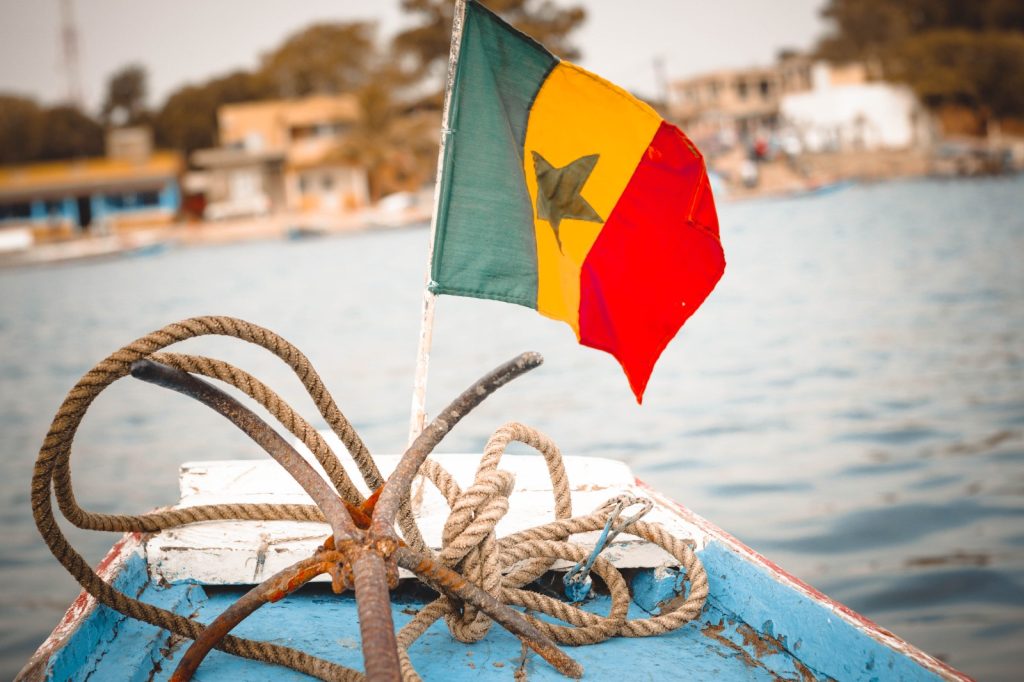
Senegal is taking a major step toward reshaping its seafood economy. Its first offshore aquaculture project is moving from pilot stage into a broader national push. The project, based in Palmarin also signals wider efforts around food security, job creation, private investment and international cooperation.
Most recently, Senegal and Egypt identified potential areas of cooperation around the Palmarin aquaculture site. This was highlighted in talks following a September mission by Senegal’s Ministry of Fisheries and Maritime Economy. The talks explored ways to strengthen Senegal’s aquaculture capacity and draw on Egypt’s experience in the sector.
That development adds a new dimension to a project that began as a relatively small experiment in offshore fish farming. It also raises a bigger question.
Can Senegal build a productive blue economy without placing new pressure on the communities and ecosystems already dependent on its waters?
From Pilot Project to Open-Sea Farming
In April Senegal’s National Aquaculture Agency (ANA) announced plans to test marine aquaculture. It was to do this using floating cages in Diakhanor, within the Palmarin municipality. At the time, the agency estimated the project would cost more than CFA350 million.
Officials presented it as a potential alternative to pressure on conventional fishing and a way to increase domestic fish production. By August, the experiment had become a physical reality. Two floating cages were installed between three and five kilometres offshore, near the waterways of the Sine-Saloum Delta.
The cages measure 25 metres and 30 metres in diameter and are designed to withstand Atlantic conditions. The pilot, developed with Senegalese aquaculture company Atlantic Mariculture, will focus on species including sea bass and sea bream. A further 28 cages are planned for the next phase, according to reporting from Palmarin.
The significance goes beyond the cages themselves. Senegal is testing whether marine aquaculture can become a commercially viable part of its seafood system. The goal being to do this while reducing some of its dependence on wild fish stocks.
That is a particularly important question for a country where fishing supports food supplies, livelihoods and coastal economies.
Senegal Has Bigger Plans
Palmarin is only one part of a much larger strategy. In May, the ANA unveiled its 2026–2030 Strategic Development Plan for Aquaculture. It is an ambition to raise national aquaculture production from about 3,049 tonnes in 2025 to 20,000 tonnes by 2030. The plan also targets 6,000 jobs and a portfolio of about CFA36.5 billion in investment. Public-private partnerships are expected to play an important role.
That target represents more than a sixfold increase in production. It also signals a deliberate attempt to make aquaculture a stronger contributor to Senegal’s food security and economic development. The agency’s strategy identifies job creation, territorial development, investment and technical capacity as key pillars.
Consequently, the offshore project should be viewed as part of a wider attempt to build an industry rather than as a standalone fish farm.
Building the Industry Behind the Fish
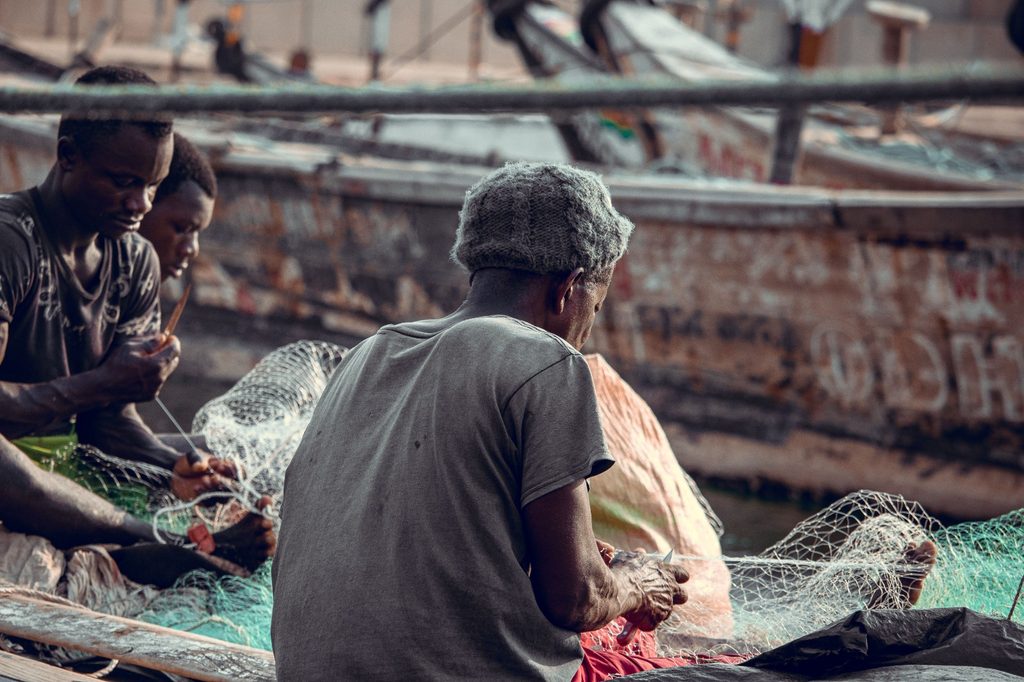
Senegal has also begun developing some of the infrastructure needed to support that ambition. In August, the government inaugurated an aquaculture-feed manufacturing facility in Bokhol.
The CFA380 million facility occupies 5,000 square metres and can produce up to 3,600 tonnes of aquaculture feed annually. It is operated by Atlantic Mariculture and is expected to create 64 jobs, including 28 permanent positions.
That matters because feed can be one of the biggest costs facing fish farmers. Local production could therefore help reduce supply constraints while supporting a more integrated domestic value chain. Senegal has also launched Aqua Jëf 360, a programme designed to support young people and women entering aquaculture.
The initiative includes training and support for activities ranging from freshwater fish farming to marine aquaculture. Meanwhile, the ANA has been training beneficiaries to operate floating cages, including instruction on production systems. They also learn feeding, stock management and cage maintenance.
In August, 20 beneficiaries took part in training connected to the programme. Taken together, these developments suggest a more deliberate approach. Senegal is not only trying to produce more fish. It is trying to build the skills, inputs, infrastructure and investment channels required to make aquaculture commercially sustainable.
Egypt Adds a New Layer
The latest development brings Egypt into that picture. During a September mission, Senegalese officials visited several Egyptian aquaculture facilities. These included the Diba Triangle Fish Farm, WorldFish Centre facilities and the Ghalyoun aquaculture complex. The delegation also discussed potential cooperation with Egypt’s National Company for Fishery and Aquaculture.
Those discussions included prospects for establishing a structured marine aquaculture project in Senegal. Technical capacity building and other forms of sector cooperation were also on the table.
Separately, Senegal’s fisheries ministry said the two countries had identified cooperation opportunities around the Palmarin site. The ministry said such cooperation could strengthen national capacity and help Senegal make greater use of its aquaculture potential. The details of any eventual agreement remain important.
For now, Senegal has described the relationship as prospects for cooperation, rather than announcing a completed investment or operational partnership. Still, the development is significant. Egypt is Africa’s largest aquaculture producer, and Senegal is actively studying models that could help it scale its own sector.
For Senegal, the attraction is clear. The country wants to move from a relatively small aquaculture base to a sector capable of producing 20,000 tonnes of fish annually within four years. International technical knowledge could help close some of the gaps along that journey.
Read Also: What Nigeria Can Learn From Ghana’s First Marine Protected Area
But Growth Comes With Questions
The blue-economy opportunity also comes with environmental and social questions. The Palmarin project is located close to the Saloum Delta, an ecologically important wetland area. Artisanal fishing and environmental stakeholders have raised concerns about what larger-scale offshore aquaculture could mean for marine space, ecosystems and existing fishing livelihoods.
There is also the question of fish feed. If expanding aquaculture increases demand for fishmeal and fish oil made from wild-caught fish, some of the environmental pressure that aquaculture is meant to ease could simply shift elsewhere. That concern becomes particularly relevant in Senegal, where wild fisheries remain far larger than aquaculture.
The Palmarin pilot therefore has an important job beyond producing fish. It must demonstrate that offshore farming can work economically, environmentally and socially. That means measuring more than harvest volumes.
The long-term test will include impacts on marine ecosystems, interactions with fishing communities, local employment, feed sourcing and the distribution of economic benefits.
Senegal’s Bigger Blue-Economy Test
There is little doubt that Senegal sees aquaculture as an important part of its economic future. The government is investing in infrastructure. The ANA is developing a national strategy. Private companies are entering the value chain. Young people and women are being brought into training programmes. Now, international cooperation is entering the conversation.
Yet the success of the strategy will depend on what happens when those ambitions meet the realities of Senegal’s coastal communities and marine ecosystems. Palmarin offers a useful place to watch that process unfold.
The two cages currently represent a modest operation compared with Senegal’s broader fishing industry. However, they could become an important test of whether offshore aquaculture can deliver on its promise of additional food, jobs and investment without creating a new set of environmental and social costs.
For now, Senegal is taking its aquaculture ambitions further into the Atlantic. The next challenge is proving that its blue-economy ambitions can grow without leaving the people and ecosystems that sustain the country’s existing fisheries behind.
Stay with CSR Reporters for more stories on the businesses, policies and innovations shaping Africa’s sustainability and impact landscape.
[give_form id="20698"]