ROSEMARY IMOBHIO
Most business owners will never read a Monetary Policy Committee communiqué. Many will still feel what it says. The Central Bank of Nigeria (CBN) has cut its benchmark interest rate. For a factory owner, a payroll manager or a sustainability lead, the question is simple: does money get cheaper for me, and what could I do with it?
The honest answer is “possibly, but not automatically.” The cut opens a door. Whether firms can walk through it depends on banks, markets and the wider economy.
The Number That Moved, And The One That May Not
The CBN cut the Monetary Policy Rate (MPR) from 26.5 per cent to 23 per cent. This is a reduction of 350 basis points, after its MPC meeting on 21 and 22 September. That is 3.5 percentage points. The MPR is the CBN’s benchmark rate, and it signals where borrowing costs across the financial system should head.
Here is where many readers slip. The cut does not mean your bank will lower your loan rate by 3.5 percentage points. Lenders price loans using their own funding costs, risk assessments and margins. Some existing loans also carry rates fixed at signing. As a result, a change at the top can take weeks or months to reach a borrower, if it arrives in full at all.
Think Of The MPR As The Price Of Money
Picture a wholesale yam market. When the wholesale price falls, retailers may cut their prices. However, they do not have to, and they rarely move together. Some are still selling stock bought at the old price. Others face higher transport costs. A few simply enjoy the wider margin.
The MPR works like that wholesale price, and banks are the retailers. Economists call the journey from policy rate to loan offer the transmission mechanism. Plenty can slow it down. The CBN kept the Cash Reserve Ratio at 45 per cent for deposit money banks, for example. That means a large share of deposits stays with the central bank instead of being lent out.
Why The CBN Moved Now
Inflation gave the committee room. The National Bureau of Statistics (NBS) reported headline inflation of 15.39 per cent for August 2026. It was down from 15.43 per cent in July, and it was the third straight monthly decline.
A year earlier, the figure was 23.14 per cent. The committee also cited sustained exchange-rate stability and improved inflation expectations. Second-quarter GDP growth was reported at 4.43 per cent.
There is a twist, though. Governor Olayemi Cardoso described the move as an operational realignment, not a change in the bank’s underlying stance. The CBN said a gap between the MPR and prevailing market rates had weakened the policy rate’s effectiveness.
So part of the aim was to make the MPR matter again. The committee also set the standing facilities corridor at +50 and -300 basis points around the new rate.
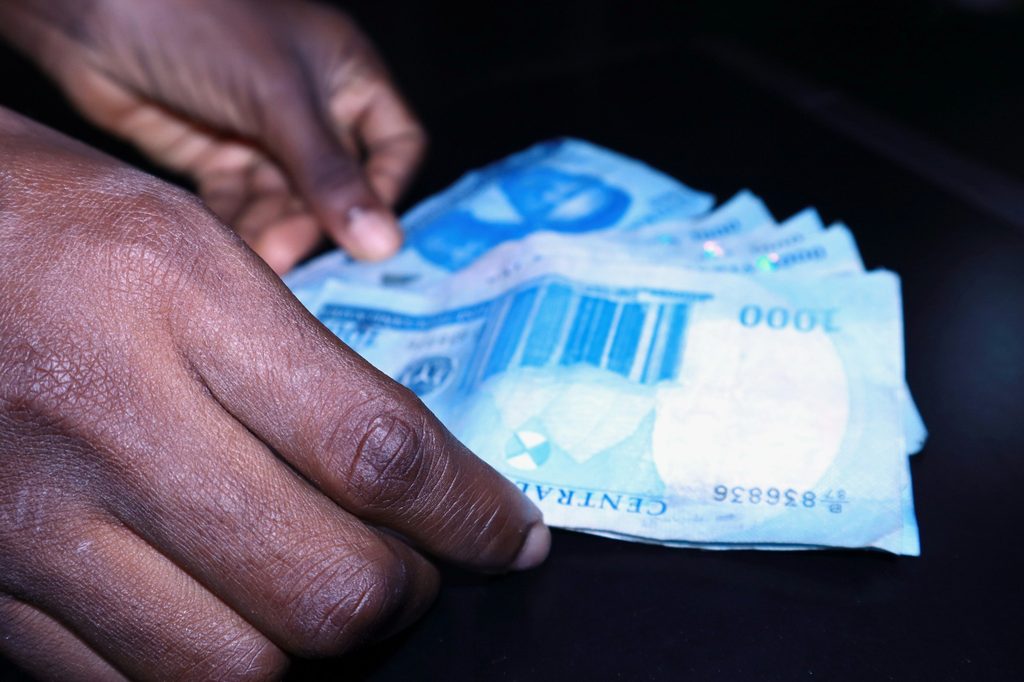
What Cheaper Money Could Do For Business
If lower rates do filter through, the gains are practical. A manufacturer could fund raw materials and wages at lower cost. A distributor might finally buy that extra truck. A clinic group could order new equipment, and a logistics firm could adopt better software. In each case, cheaper credit improves the arithmetic of projects that looked marginal last year.
Early signals are cautious, however. The Manufacturers Association of Nigeria (MAN) welcomed the cut. Yet its director-general, Segun Ajayi-Kadir, said prime lending rates could still sit between 27 and 30 per cent.
He noted that rates stayed high after earlier reductions and urged the CBN to press banks to pass this one on. That is one industry’s view. Even so, it names the real test. At the time of writing, there was no public evidence that banks had repriced their loans.
From Loan Approval To Payslip
Suppose credit does get cheaper. A bakery that expands needs more flour, packaging and drivers. Each purchase reaches a supplier, and each new employee spends a wage at a nearby shop. That is the hopeful chain from financing to production, jobs, household income and local supply chains.
Nevertheless, the chain has weak links. Firms will not borrow if customers are not buying. Banks may stay wary of riskier borrowers. Small businesses often struggle to get credit at any price. Cheaper money can support jobs, but it cannot promise them.
by 350bps
CBN
Click to explore
Banks
Click to explore
Businesses
Click to explore
Investment
Click to explore
People &
Sustainability
Click to explore
Sustainability
BORROWING
BUSINESS
SUSTAINABILITY
Where Sustainability Meets The Interest Rate
Sustainability projects often cost a lot upfront and pay back slowly. Think of solar systems that cut diesel bills, efficient motors, cleaner production lines, waste recycling, water treatment or flood protection for a warehouse. The cost of financing sits right inside the payback calculation.
When borrowing is expensive, finance teams favour quick returns. Long-term projects then lose the budget argument. Lower rates can tilt that debate, because a project that missed the internal hurdle last year may clear it sooner. Community investments benefit in a similar way. Lower interest bills leave more cash for skills training, supplier development and programmes in host communities.
Even so, a rate cut does not create green projects. Companies still need bankable plans, credible data and patient lenders. Lower rates simply remove one obstacle.
Savers And Investors Sit On The Other Side
Cheaper money is not good news for everyone. Over time, lower policy rates can pull down returns on fixed deposits, Treasury bills and other fixed-income instruments. Savers who rely on those yields may see smaller payouts. Investors may chase returns elsewhere, such as equities or longer-dated bonds, and take on more risk in the process.
The Balancing Act
The CBN still has four things to watch. Inflation comes first. At 15.39 per cent, it has eased but remains high, and cheaper credit could lift demand faster than supply.
Exchange rates and capital flows come next. Lower yields can make naira assets less attractive to foreign investors, which may reduce inflows. The Centre for the Promotion of Private Enterprise (CPPE) has warned of possible effects on the FX market.
Finally, credit growth matters. Lending that feeds speculation rather than production could create new pressures.
MORE FROM THE CBN: CBN Sandbox Tests Nigeria’s Future of Responsible Finance
What to Watch Before Planning Around 23 Per Cent
Start with your own bank. Ask whether floating-rate facilities will be repriced, and when. Then track published lending rates and the next NBS inflation reading.
Treasury bill yields and the exchange rate will show how markets are reacting. Meanwhile, revisit shelved projects with new financing assumptions, but stress-test them in case rates rise again.
The Real Test Is What Gets Built
So, back to the central question. Cheaper money helps only if it becomes productive investment. That means loans that fund expansion, cleaner energy and better jobs, not idle balances. If banks pass the cut on and firms find worthwhile projects, growth could become more inclusive and sustainable. If not, 23 per cent stays a headline number.
For more reporting on business, sustainability, ESG and Nigeria’s changing economy, keep reading CSR Reporters.
[give_form id="20698"]