Eche Munonye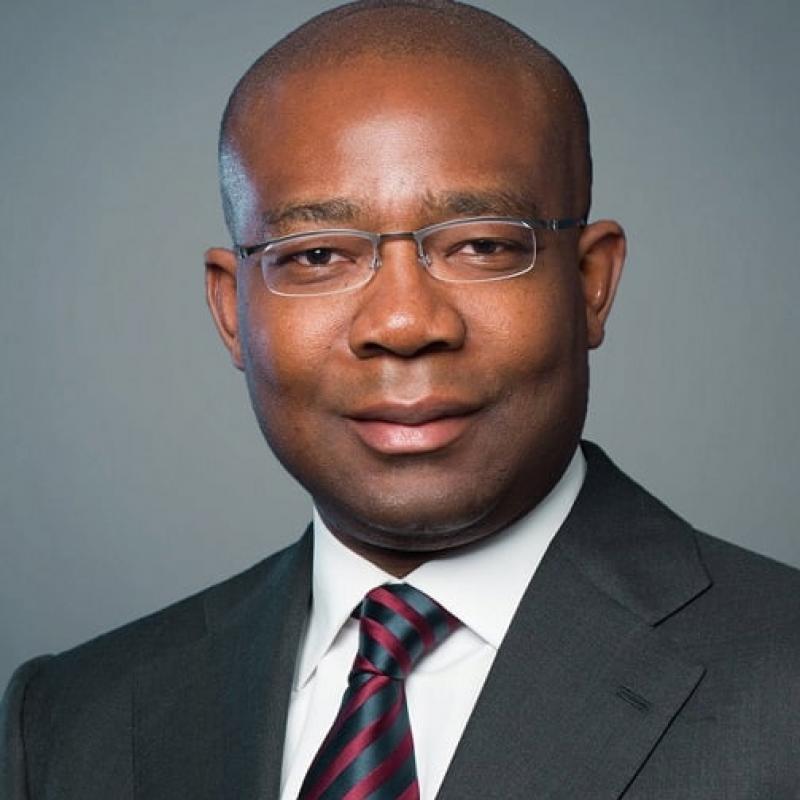
Aig Imokuede at 60: From Boardroom Leadership to Grassroots Impact
There are careers that unfold, and there are careers that detonate a before-and-after into an entire industry’s history. Aigboje Aig-Imoukhuede’s belongs to the second kind. Born on September 24, 1966, in Ibadan, though tracing his roots to Sabongida-Ora in present-day Edo State, he has spent the better part of four decades proving that African institutions can be built to global standard — not imported, not excused, but built. At 60, the arc of his career reads less like a resume and more like a blueprint for what disciplined, accountable leadership can look like on this continent.
The Making of a Reformer
Long before the headlines, there was a young man raised across Kaduna and Lagos, working through a law degree at the University of Benin at a time when the country’s most admired multinationals were, in his own observation, almost always led by lawyers. He was called to the Nigerian Bar, and that legal grounding — a discipline built on evidence, structure, and precedent — would go on to define how he approached institutions far beyond the courtroom. He later sharpened that foundation with a Trium Executive MBA, a joint program of the London School of Economics, New York University’s Stern School, and HEC Paris — an unusually international education for a Nigerian banker of his generation, and one that positioned him from the outset to think about African institutions in global terms rather than local exceptions.
From Fringe Player to Continental Force
In 2002, Access Bank was, by his own industry’s estimation, an also-ran — a bank whose leadership mandate was explicitly to climb from 65th place into the top ten within five years. It is difficult, from today’s vantage point, to appreciate how audacious that mandate was. Nigerian banking in the early 2000s was crowded with institutions long on ambition and short on governance. Aig-Imoukhuede, alongside his deputy Herbert Wigwe, did not simply chase the target. He rebuilt the machine that could reach it — overhauling risk controls, governance structures, and capitalization at a bank that had spent thirteen years struggling with exactly those problems.
The results are now case-study material. Under his decade-long stewardship as Group Managing Director and CEO, Access Bank’s customer base grew from roughly ten thousand to 6.5 million, its workforce expanded past fifteen thousand employees, and its asset base reached $12 billion — a transformation that took the bank from regional irrelevance to standing among the top five banks in Nigeria, with operations that would eventually stretch across Africa, Europe, and Asia. For that transformation, he was honored with the Ernst & Young Entrepreneur of the Year award, and Nigeria’s federal government later conferred on him the national honor of Commander of the Order of the Federal Republic (CFR) — recognition, in effect, that what he had built at Access Bank was a matter of national economic significance, not merely private enterprise.
A Reformer Beyond the Boardroom
Retirement from day-to-day banking in 2013 did not slow him down; it redirected him. He became, by multiple accounts, the first African to chair two national exchange platforms, having served as President of the Nigerian Stock Exchange and founding Chairman of the FMDQ Securities Exchange — the institutions that determine how capital moves through the Nigerian economy. In 2012, when Nigeria’s fuel subsidy regime had become a byword for opacity and loss, he was entrusted to chair the Presidential Committee on Fuel Subsidies, credited with saving the country billions of naira in fraudulent claims — a rare instance of a private-sector leader being trusted to police public-sector leakage.
He went on to found Coronation Group, now encompassing Coronation Asset Management and Coronation Capital, and to co-found the Tengen Family Office, which today oversees a multibillion-dollar investment portfolio. His civic and advisory footprint widened further still: he chairs EnterpriseNGR, sits on the King’s Trust International Africa Advisory Board, and co-chairs the France-Nigeria Business Council, extending Nigerian business influence into new institutional and diplomatic spaces. And when Access Holdings needed a steady hand following the tragic passing of Herbert Wigwe in February 2024 — his own former deputy and co-architect of the Access Bank transformation — Aig-Imoukhuede returned as Non-Executive Chairman of Access Holdings Plc, a full-circle moment for the institution he first rescued more than two decades earlier.
Answering the Call in Crisis: COVID-19
His instinct for institution-building was tested in a very different arena in 2020, when the COVID-19 pandemic threatened to overwhelm Nigeria’s already fragile health and social systems. As Vice Chairman of Global Citizen Nigeria, he helped launch the Nigeria Solidarity Support Fund alongside the Nigeria Sovereign Investment Authority — an initiative that set out to mobilize tens of billions of naira from Nigerians at home and abroad, multilateral organizations, philanthropists, and international businesses. The Fund was deliberately structured with a three-tier governance system to ensure transparency and accountability in how contributions were disbursed, targeting the country’s most vulnerable populations, strengthening domestic healthcare systems, and expanding rural and community healthcare access. It was, in miniature, the same conviction that runs through his entire career: that a crisis is best met not with charity alone, but with governed, accountable structures capable of surviving scrutiny.
Where the Impact Actually Lands: Community and Grassroots Health
What separates Aig-Imoukhuede’s giving from the ceremonial charity common to Nigerian business is that he has run his philanthropy the way he ran a bank: with targets, structure, and a demand for measurable return — but pointed squarely at the communities furthest from the boardroom. In 2014, he and his wife, Ofovwe, established the Aig-Imoukhuede Foundation, built around grooming Nigeria’s future government leaders, transforming public-sector effectiveness, and expanding access to quality primary healthcare at the community level. Ofovwe, who serves as the Foundation’s Executive Vice-Chair overseeing its strategic direction and operations, has extended that commitment further still as Vice-Chair of the Ovie Brume Foundation, which supports underserved Nigerian children — making the couple’s philanthropy a shared, deliberate project rather than a single individual’s legacy exercise.
The clearest expression of that community focus is the Adopt-A-Healthcare-Facility Programme (ADHFP), run with the Private Sector Health Alliance of Nigeria, which aims to establish at least one global-standard primary healthcare centre in every one of Nigeria’s 774 local government areas — the layer of government closest to ordinary families. The Foundation has already committed roughly ₦3 billion to revitalizing 23 primary healthcare centres — 18 in Edo State and 5 across other states — and has deliberately built the programme around Ward Development Committees, training community members themselves in leadership, oversight, and feedback so that a rebuilt clinic keeps working long after the ribbon-cutting. Adopters, whether individuals, corporates, or investors, take direct ownership of a facility’s transformation; the communities that use it are trained to hold it accountable afterward. The programme’s public nomination campaigns have since widened the search for facilities in urgent need, turning what began as an Edo State pilot into a genuinely national ambition.
On governance, the Foundation’s flagship is the AIG Public Leaders Programme, run since 2017 in partnership with Oxford University’s Blavatnik School of Government — a partnership announced at an event addressed by former UN Secretary-General Kofi Annan. The programme has put successive cohorts of Nigerian and African senior civil servants through immersive, seven-week executive training, funding scholarships worth tens of thousands of pounds per cohort, alongside AIG Visiting Fellowships that have hosted the likes of a former INEC chairman, a former Ghanaian Chief Justice, and senior administrators from across the region. The logic is unsentimental: a continent’s development is bounded by the competence of the civil servants communities actually deal with, so philanthropy that trains them compounds in ways a cheque never could. He is also a pastor at Promised Land Ministries in Lagos — a quieter, less publicized dimension of a life otherwise lived very publicly, but one consistent with a man for whom institution-building and community service seem to be a single continuous impulse rather than separate pursuits.
Why This Anniversary Matters
At CSR Reporters, we spend most of our energy asking corporate Africa to prove its claims rather than simply repeat them. It is worth pausing to recognize a career and a philanthropy both built on that harder standard — proof before recognition, structure before ceremony, and community outcomes before press releases. Aigboje Aig-Imoukhuede did not just lead a bank; he helped define what a credible African financial institution should look like, then extended that same discipline to the exchanges that move Nigerian capital, the crisis funds that steadied the country through a pandemic, and the primary healthcare centres and public servants ordinary Nigerians actually encounter.
At 60, that is the legacy worth toasting: not merely wealth built, but trust rebuilt at the grassroots, at a scale few in African business can claim.
[give_form id="20698"]