From Shares to Solar: What State’s New Support Package Could Mean for Young Entrepreneurs
 ONYINYECHI NWAIGBA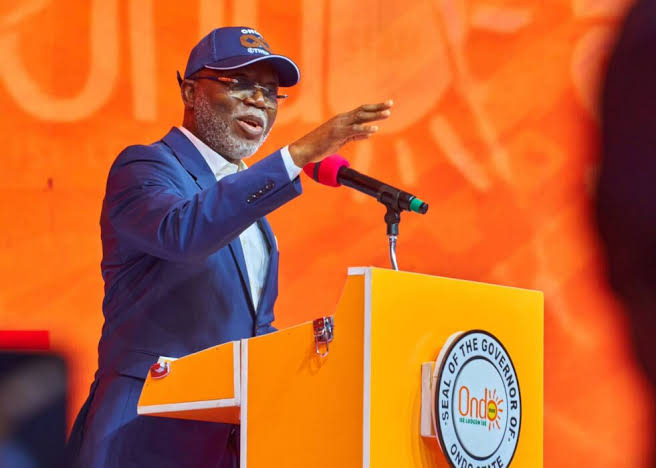
Ondo State has announced plans to purchase Dangote Refinery shares for 500 young entrepreneurs while launching a solar program for 1,000 businesses. Beyond the headline figures, the initiatives raise a bigger question about what meaningful entrepreneurship support should look like.
For many young Nigerians trying to build businesses, the biggest challenge is not necessarily a lack of ideas.
It is what comes after the idea.
Access to finance can be difficult. Electricity can be expensive and unreliable. Business owners often have to spend money on basic infrastructure before they can even think about expanding, hiring or entering new markets.
In Ondo State, the government is attempting to address some of these challenges through a package of initiatives that combines entrepreneurship funding, investment opportunities and access to alternative energy.
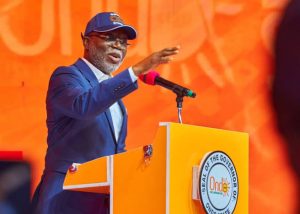
At the 2026 Ondo State Entrepreneurship Agency, ONDEA, Entrepreneurs Summit in Akure, Governor Lucky Aiyedatiwa announced plans for the state government to purchase shares in Dangote Group for 500 young entrepreneurs.
The governor also launched the Lucky Light Initiative, a phased solar-energy program designed to provide power support to 1,000 small businesses across Ondo State’s 18 local government areas.
The initiatives are different in structure, but they point towards the same question:
Can entrepreneurship support move beyond short-term grants and create assets, infrastructure and opportunities that help businesses grow?
From Grants to Ownership
The planned Dangote share purchase is perhaps the most unusual part of the package.
Rather than providing the 500 selected young entrepreneurs with a conventional cash grant, the governor said the state would purchase shares in Dangote Group for them.
The stated objective is to expose young entrepreneurs to investment opportunities and encourage participation in the capital market.
The announcement comes as Dangote Petroleum Refinery’s initial public offering has attracted considerable attention from Nigerian retail investors. Reuters reported that the IPO opened in September with a minimum subscription of 10 shares, giving individual investors an opportunity to participate in the offering.
For the selected beneficiaries, the proposed arrangement could therefore introduce another dimension to wealth creation: ownership of an asset alongside ownership of a business.
But there are still important details that have not been publicly disclosed.
The state has not yet specified how many shares each of the 500 entrepreneurs will receive, the total value of the government’s proposed investment or the final criteria for selecting the beneficiaries.
Those details will matter.
An investment program is only meaningful to beneficiaries when they understand what they own, the value of that ownership, how it is held and what rights or returns are attached to it.
Why Ownership Is Different From a One-Off Grant
Entrepreneurship programmes in Nigeria often focus on grants, loans, training or equipment.
These can be useful forms of support, but they generally address immediate business needs.
The proposed share ownership model introduces a different idea.
Instead of only helping young entrepreneurs operate their businesses, the government is seeking to give some of them exposure to the capital market.
That could encourage beneficiaries to think about investment beyond their own businesses and develop a stronger understanding of assets, equity and long-term wealth creation.
However, ownership also requires financial literacy.
Young entrepreneurs receiving shares would need to understand that investing in a company comes with both potential returns and market risks. The value of an investment can change, and owning shares is not the same as receiving a guaranteed payment.
That makes financial education an important part of any such program.
If the initiative is to build lasting value, beneficiaries need more than a share certificate or investment account. They need to understand what the asset represents.
Then There Is the Electricity Problem
While the proposed share purchase focuses on investment, the Lucky Light Initiative addresses a much more immediate problem for businesses: electricity.
ONDEA says Lucky Light is designed to provide solar energy systems to 1,000 businesses across all 18 LGAs of Ondo State. The program describes itself as an economic intervention intended to help businesses reduce their dependence on expensive and unreliable generator power.
That is significant because electricity is not simply a household expense for many small businesses.
It is a production cost.
A fashion designer needs electricity to operate equipment.
A barber needs power for clippers and other appliances.
A food business may need refrigeration.
A small manufacturer may need electricity for machinery.
A retailer may need power for lighting, cooling or digital equipment.
When businesses spend a large share of their income on fuel and alternative power, there is less money available for stock, staff, expansion and other productive investments.
Could Solar Power Improve Business Survival?
The Lucky Light Initiative is intended to address that pressure by providing solar systems to selected businesses.
According to ONDEA, the program will be rolled out in four phases, with a total target of 1,000 businesses across the state’s 18 LGAs. The first phase is planned to cover 200 businesses, followed by additional phases covering 200, 300 and 300 businesses respectively.
The agency says the systems are intended to reduce fuel and diesel spending and allow businesses to redirect some of those savings towards stock, employees and expansion.
That is where the program’s potential economic impact becomes more interesting.
The intervention is not simply about giving businesses solar panels.
It is about changing one of the costs that affects how businesses operate every day.
Of course, the actual impact will depend on the quality of the systems, their maintenance, the businesses selected and whether the power provided is sufficient for each business’s needs.
Twenty Entrepreneurs Also Receive Direct Support
The two headline programmes were accompanied by another intervention under ONDEA’s My IDEA initiative.
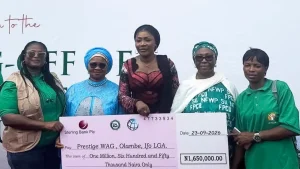
Twenty entrepreneurs were selected from more than 2,703 applications after a three-stage screening process.
According to reports from the summit, each beneficiary will receive ₦4 million, bringing the total grant package to ₦80 million. The beneficiaries will also receive business support, mentorship and opportunities for international exposure.
This creates a three-part approach to entrepreneurship support:
Investment exposure for 500 young entrepreneurs.
Energy support for 1,000 businesses.
Direct funding and mentorship for 20 selected entrepreneurs.
Each addresses a different barrier.
But Implementation Will Matter More Than the Announcement
Large numbers make announcements sound impressive.
Five hundred young people.
One thousand businesses.
Twenty grant recipients.
But the long-term impact will depend on what happens after the launch.
For the share program, transparency around beneficiary selection and the value of the investments will be important.
For Lucky Light, the quality, reliability and maintenance of the solar systems will matter.
For the grants, the question will be whether the businesses can convert the funding and mentorship into sustainable operations, employment and revenue.
The state will also need a way to measure outcomes.
How many businesses remain operational after one year?
How much have their energy costs changed?
How many jobs have been created?
How many beneficiaries continue investing?
How much additional business activity has been generated?
These are the kinds of measurements that can turn an empowerment announcement into an accountable impact program.
What Should Sustainable Entrepreneurship Support Look Like?
There is a broader lesson in Ondo’s approach.
Entrepreneurs need different forms of support at different stages.
A person starting a business may need training and seed capital.
An existing business may need affordable energy.
A growing entrepreneur may need access to finance or investment opportunities.
Another may need mentorship, market access or help with formalisation.
There is therefore no single intervention that can solve every challenge facing small businesses.
The more useful question is whether programmes are designed around the actual barriers businesses face.
In Ondo’s case, the combination of capital-market exposure, solar energy and direct business support attempts to address three different barriers: access to assets, energy costs and growth capital.
The Bigger Test Is Sustainability
The real measure of these initiatives will not be the number of beneficiaries announced at the summit.
It will be whether those beneficiaries are in a stronger position several years from now.
Can a business that receives solar power increase its production?
Can the savings create room for another employee?
Can a young entrepreneur with an investment asset build greater financial knowledge?
Can a grant recipient grow from a small operation into a sustainable enterprise?
And can the state track and publicly demonstrate those outcomes?
Those questions will determine whether the programmes become examples of lasting economic empowerment or remain short-term interventions.
For now, Ondo has put forward a model that combines business support with infrastructure and investment exposure.
The next stage is implementation.
Because sustainable entrepreneurship is not simply about helping people start businesses.
It is about giving them the conditions, knowledge, assets and support they need to keep those businesses running, growing and creating value.
And ultimately, that is where the real impact of Ondo’s new initiatives will be measured.
[give_form id="20698"]