CSR Reporters Editorial Team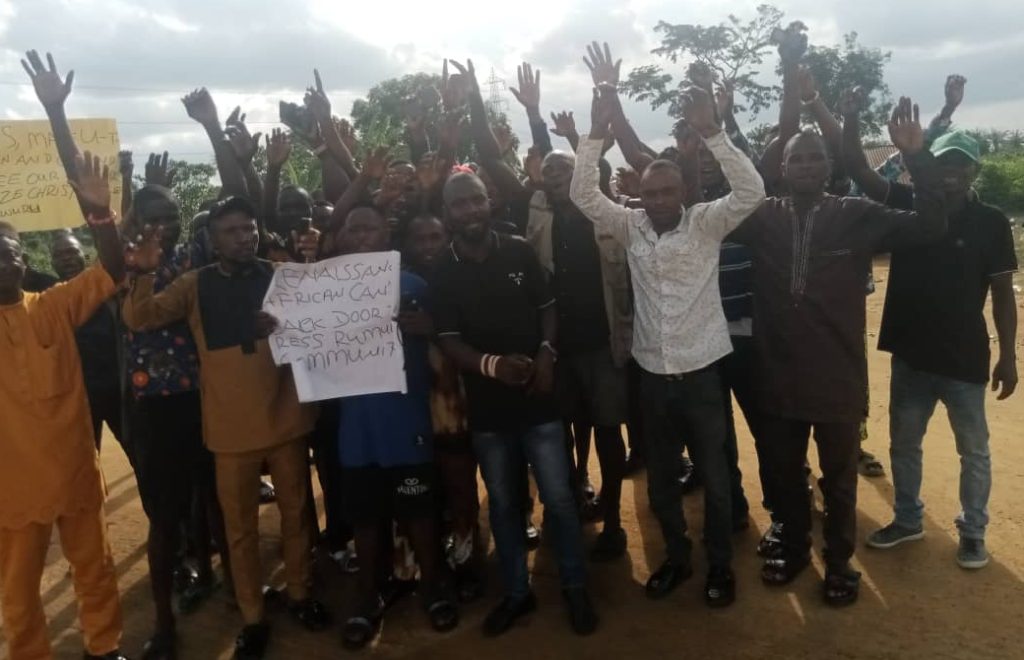
RANKED: Top 5 Host-Community Grievances Still Unresolved in 2026
Corporate Nigeria’s sustainability reports are full of community engagement language — partnership, dialogue, shared value. This edition of RANKED looks at the other side of that language: the communities who say the dialogue produced nothing. Each entry below is built from named protests, named grievance figures, and where possible, the company’s own response — or its refusal to give one. Community trust, as our earlier correction to the Nigeria’s Most Community-Trusted Brands RANKED edition established, is measured by outcome — grievance resolution, protest history, independent assessment — not by CSR spend or disclosure quality. This list applies that same standard in reverse: it ranks unresolved grievance, not underperformance on paper.
Methodology
Entries were selected on three criteria: (1) a documented, named-source protest, petition, or legal action from an identifiable host community in 2026; (2) a specific, quantifiable claim — an unpaid fund, an unenforced judgment, an unmet promise — rather than a general grievance; and (3) evidence that the matter remains unresolved as of this edition, either through company non-response, an ongoing legal or regulatory process, or a documented pattern extending across multiple years. Sector spread was a secondary consideration: this list includes oil and gas, agribusiness, and mining, reflecting where 2026’s most substantiated host-community disputes are concentrated.
1. Renaissance Africa Energy Company (RAEC) — ₦87 billion ground-rent dispute, Niger Delta
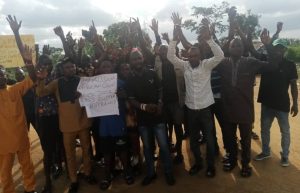
On September 24, 2026, communities from Abia, Akwa Ibom, Bayelsa, Delta, Imo and Rivers states protested outside RAEC’s Port Harcourt headquarters, demanding ₦87 billion in ground-rent payments they say Shell paid uniformly every five years from 2009 to 2014 before the arrangement lapsed. RAEC is the successor entity formed after Shell’s 2024 divestment of its onshore Nigerian assets, formerly known as Shell Petroleum Development Company of Nigeria. Protesters, represented by community spokesperson Chief Ayiba Job, alleged RAEC had failed to comply with both a Senate resolution and a Federal High Court directive on the matter. Responding on the record, Igo Weli, RAEC’s Vice President for Relations and Sustainable Development, said relevant government agencies were already handling the matter and that the company had fulfilled its documented obligations to landlords — a response that leaves the underlying ₦87 billion claim publicly unresolved rather than publicly rebutted.
2. Shell — Bille community gas leaks and the “Lifting the Lid” findings
In March 2026, Amnesty International called for an investigation after residents of the Bille community reported bubbling water, strong methane smells, and gas leaks near former Shell infrastructure. Video footage dated May 13, 2026 showed methane gas igniting at a community drinking-water pump. A subsequent 2026 report by a coalition of human rights and environmental organisations, including Amnesty, titled Nigeria: Lifting the Lid, cited internal Shell documents describing a human rights scandal broader than previously disclosed — including concerns flagged by the Nigerian army over alleged complicity in oil theft, suspected staff and contractor collusion, exemptions from safety standards, and flawed spill monitoring. This entry concerns Shell’s legacy environmental liability rather than RAEC’s separate financial dispute above — divestment does not appear, on this evidence, to have resolved the underlying infrastructure risk.
3. Okitipupa Oil Palm Company (OOPC) — a 38-year-old Supreme Court judgment, still unenforced
On July 18, 2026, protesters in the Ikoya community, Okitipupa Local Government Area, Ondo State, alleged the unjust arrest and detention of community members over a land dispute with OOPC, marching with placards demanding the company “obey Supreme Court judgment and quit our land.” The community cites a 1988 Supreme Court judgment they say ordered OOPC to negotiate a valid land agreement with the community or vacate the disputed land — a 38-year gap between judgment and enforcement. Community representative Feyi Ekundayo, a human rights activist, and national Ikale leader Orimisan Adelokiki have also petitioned the EFCC to investigate an alleged ₦10.7 billion in unaccounted land-generated revenue between 2021 and 2024, and have accused the company of relying on police intimidation rather than legal resolution.
4. Oando Energy Resources — Ndokwa communities’ unpaid OPEX Development Funds
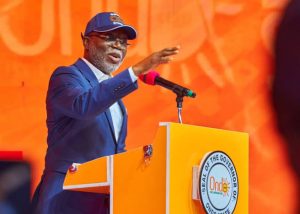
On August 11, 2026, host communities of Oando Energy Resources in Ndokwa East and Ndokwa West Local Government Areas, Delta State — Okpai, Beneku, and Umusadege — protested the alleged non-payment of their statutory 3% OPEX Development Funds for 2024, 2025, and 2026. This entry follows directly from CSR Reporters’ own investigation, The Trust That Praised Itself, Then Went Quiet, which documented the contrast between a July 2026 ceremony at which Delta State’s Solicitor-General publicly commended a related company for “contributing beyond statutory requirement,” and the three-year funding gap the Ndokwa communities say has stalled school blocks, roads, and health posts. The claim tests whether the Petroleum Industry Act’s formalised host-community entitlements can outperform the voluntary GMoUs they were designed to replace; a three-year non-payment record, left unresolved, risks reproducing the instability the reform was meant to prevent.
5. Kaduna Mining Development Company / Ming Xin Mineral Separation — Kangimi community, unmet lithium promises
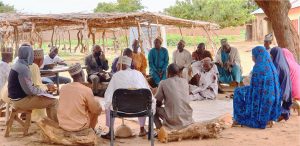
A lithium processing plant in Kaduna State — a joint venture between the state-owned Kaduna Mining Development Company (KMDC) and Chinese firm Ming Xin Mineral Separation Nigeria Ltd — was inaugurated in 2024 on promises of 1,500 direct and 5,000 indirect jobs. Reporting by the Business & Human Rights Resource Centre found the plant remains only partially operational, with Kangimi community residents describing unmet promises on jobs, infrastructure, and community development, alongside growing pollution concerns and limited transparency over the plant’s lithium sourcing. “The company failed us. Their promises were not kept,” one resident, Gambo Abdul, told researchers. When approached for comment, neither KMDC nor Ming Xin responded — a right-of-reply silence that, under the standard CSR Reporters applies in its press-release scrutiny series, is itself treated as an accountability signal rather than a neutral non-event.
Why This List Matters
None of these five disputes are secret. Each has a named community, a specific figure or judgment, and in most cases, a company representative who has spoken publicly about it. What connects them is not scale — ₦87 billion and a 38-year-old court judgment are very different kinds of claim — but pattern: formal entitlement, informal delay, and a company response that acknowledges the process without resolving the underlying claim. That pattern is precisely what CSR Reporters’ site-visitation methodology is built to test on the ground, rather than take on the strength of a press release.
[give_form id="20698"]