ROSEMARY IMOBHIO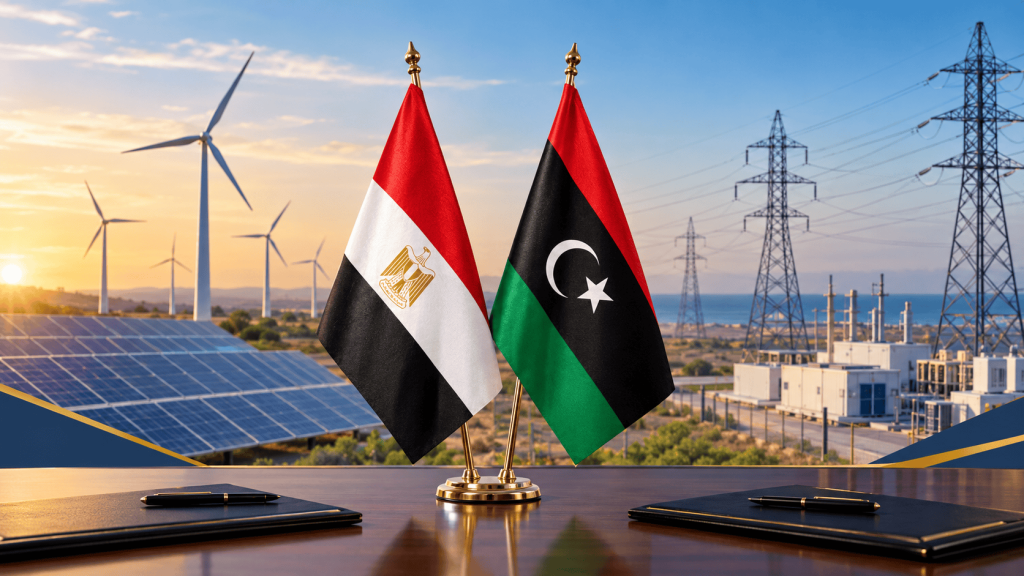
Egypt and Libya have signed a memorandum of understanding to strengthen cooperation in electricity and renewable energy. Libya’s power infrastructure is at the centre of the agreement.
The MoU focuses on improving the efficiency of Libya’s electricity network. It also creates a framework for cooperation on renewable energy projects. It was signed by Egypt’s Ministry of Electricity and Renewable Energy and Libya’s Fund for Reconstruction and Development on September 24, 2026.
The development comes as reconstruction and urban expansion increase electricity demand across several Libyan cities. For businesses and sustainability professionals, the agreement points to a broader challenge facing developing markets: rebuilding infrastructure while preparing energy systems for future demand.
The MoU was signed following discussions between Egyptian Electricity and Renewable Energy Minister Mahmoud Esmat and Belgasem Haftar, director general of Libya’s Development and Reconstruction Fund. The talks focused on electricity infrastructure, renewable energy and Libya’s reconstruction needs.
Libya’s Grid Faces Growing Demands
Electricity infrastructure is a practical foundation for reconstruction. New housing, commercial activity and public infrastructure all require reliable power. However, expanding generation alone does not solve the problem if the network cannot deliver electricity efficiently. That makes the focus on the electricity grid significant.
The two sides discussed measures to develop the network and improve its efficiency as construction and development projects expand. Libya’s Development and Reconstruction Fund also called for practical cooperation, with clear implementation measures and timelines.
Meanwhile, the agreement places renewable energy alongside grid development rather than treating it as a separate issue. This is important. A growing electricity system must respond not only to immediate demand but also to questions about efficiency, resilience and the long-term sustainability of energy supply.
For Libya, the challenge is particularly relevant as reconstruction creates new demand across cities and infrastructure projects.
Read Also: Can Africa Replicate Egypt’s Industrial Solar Model?
Renewable Energy Becomes Part Of The Equation
The MoU includes cooperation on renewable energy projects and the adoption of modern energy-sector solutions. According to reports on the agreement, the projects are intended to support the electricity needs created by urban expansion and development activity. The broader objective is to improve the efficiency and sustainability of Libya’s power system.
Still, the agreement itself does not announce specific renewable energy projects, capacity figures or investment values. That distinction is important for businesses and investors watching Africa’s energy transition. A cooperation framework can create room for future projects, but it does not automatically translate into completed infrastructure.
The immediate significance therefore lies in the direction of cooperation. Electricity network development and renewable energy are being considered together within Libya’s reconstruction agenda.
That approach reflects a wider issue across African markets. Infrastructure decisions made during periods of rapid development can shape energy costs, reliability and environmental performance for years.

From Technical Cooperation to Public Value
There is also a social dimension to the agreement. Reliable electricity affects far more than power-sector operators. It supports businesses, healthcare facilities, schools, housing and other services that depend on functioning infrastructure.
Discussions included plans to curb power outages, upgrade the grid, improve operational efficiency and train personnel, with improved service for citizens identified as a central objective. Workforce development is particularly relevant in this context. Infrastructure investment requires technical capacity to operate, maintain and eventually expand the systems being built.
For CSR and sustainability professionals, this is where the agreement moves beyond a conventional energy cooperation story. Its potential social impact will depend partly on whether infrastructure improvements translate into more reliable services for communities.
At the same time, renewable energy projects could give Libya another route for meeting rising electricity demand. Their eventual contribution will depend on project design, implementation, investment and the ability of the grid to integrate additional generation.
A Wider African Energy Question
Egypt and Libya already have a broader energy relationship. In January 2026, Egypt’s Petroleum Projects and Technical Consultations Company and Libya’s National Oil Corporation signed an MoU covering petroleum, natural gas and mining cooperation. That agreement included areas such as research and exploration, refining and potential crude oil and gas transport.
The latest agreement shifts attention towards electricity infrastructure and renewable energy. Together, the developments illustrate how energy cooperation between African countries can extend beyond conventional oil and gas. Technical expertise, infrastructure development and renewable energy are increasingly connected to wider questions of economic development.
For Libya, the test will ultimately be implementation. For Egypt, the cooperation provides another avenue for applying its technical capabilities across regional infrastructure projects.
More importantly, the agreement places energy reliability within the reconstruction conversation. As cities expand and development accelerates, the quality of the power system will influence how effectively communities and businesses can participate in that growth.
The MoU is therefore less about a single announcement than the infrastructure choices behind Libya’s next phase of development. Its significance will become clearer as cooperation moves from a signed framework to projects, investment and measurable improvements in electricity services.
Follow CSR Reporters for informed coverage of the energy and sustainability decisions shaping Africa’s development.
[give_form id="20698"]