Nigeria Wants Another $1.5 Billion From the World Bank. What Is the Money Meant to Change?
 ONYINYECHI NWAIGBA
Three proposed World Bank credits would target climate resilience, social protection and early childhood development as Nigeria’s public debt reaches N166.79 trillion. The bigger question is whether the proposed financing can create benefits that last beyond the projects themselves.
Nigeria is discussing another $1.5 billion in financing from the World Bank.
The figure is large enough to attract attention on its own, particularly because Nigeria’s total public debt stood at N166.79 trillion at the end of June 2026, according to the Debt Management Office. The debt stock was up from N152.40 trillion a year earlier.
But there is another part of the story that deserves just as much attention.
The proposed money is not being presented as one large pool of cash for general government spending.
Instead, it is divided into three proposed $500 million facilities targeting three areas with long-term consequences for Nigerians: climate resilience, social protection and early childhood development.
That makes this more than a story about borrowing.
It is also a story about what Nigeria is choosing to invest in at a time when the country is dealing with climate risks, household vulnerability and significant gaps in human development.
The important question is therefore not only how much Nigeria may borrow.
It is what the country will be able to build, protect and improve with the money and whether those benefits will last.
Three loans, three very different problems
The proposed financing consists of three separate $500 million International Development Association credits.
The most advanced is additional financing for the Agro-Climatic Resilience in Semi-Arid Landscapes project, known as ACReSAL.
The other two are a proposed Household Prosperity and Empowerment-Social Protection project, known as HOPE-SP, and a Nigeria Early Childhood Development program. The proposals are at different stages and have not all been approved.
Together, they point to three different development challenges.
One is about the environment and agriculture.
Another is about how households cope when they are poor or vulnerable.
The third is about what happens to children during the earliest years of their lives.
That combination is significant because these issues are connected.
Climate shocks can damage livelihoods.
Loss of livelihoods can push households deeper into poverty.
Poverty can affect children’s nutrition, healthcare and learning opportunities.
And poor outcomes in childhood can affect a person’s productivity and economic opportunities years later.
So while the three proposed loans are separate programs, their intended outcomes overlap in an important way: building resilience before problems become even more expensive to solve.
The climate loan: protecting land, water and livelihoods
The first proposal is an additional $500 million for ACReSAL.
If approved, it would increase the project’s total financing from $700 million to $1.2 billion.
The project operates across 19 northern states and the Federal Capital Territory, focusing on land degradation, water insecurity, climate vulnerability and declining agricultural productivity.
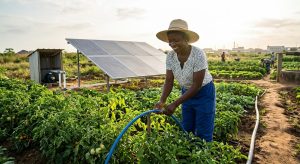
The proposed additional financing would support activities including landscape restoration, watershed rehabilitation, erosion and flood management, irrigation and drainage, water harvesting and storage, and reforestation.
The proposed allocation includes $310 million for dryland management, $165 million for community climate resilience and $25 million for institutional strengthening and project management.
At first glance, these may sound like environmental projects.
But they are also economic projects.
For a farming community, degraded soil is not simply an environmental problem.
It can mean lower yields.
A damaged watershed is not only an ecological concern.
It can affect access to water.
Flooding can destroy crops, homes, roads and local businesses.
Drought can reduce agricultural production and household income.
That is why climate resilience increasingly belongs in conversations about food security, jobs and poverty.
Why climate resilience is an economic issue
Nigeria’s farmers operate in an environment where climate conditions can directly affect income.
A farmer cannot control when rainfall arrives.
A community cannot individually prevent flooding.
And a household that loses its livelihood after a major climate event may not have enough savings to recover quickly.
Investing in drainage, water storage, irrigation, reforestation and watershed management can therefore reduce some of the risks communities face.
The World Bank has identified land degradation and climate vulnerability as significant development challenges for Nigeria. The lender’s current development work also emphasises the need to translate economic reforms into more resilient and inclusive improvements in livelihoods.
The value of ACReSAL, if the additional financing is approved and effectively implemented, would therefore be measured by more than hectares restored or infrastructure constructed.
The bigger question would be whether communities become better able to withstand climate shocks.
The second $500 million is about households
The proposed HOPE-SP facility takes the conversation from landscapes to households.
The project is designed to establish more regular social assistance for poor and vulnerable households while strengthening the systems through which social protection is delivered.
The proposal includes targeted unconditional and conditional cash transfers, modernizing the social registry, integrating National Identification Numbers into social protection information systems and strengthening implementation across federal, state and local government levels.
This matters because social protection is not simply about handing money to people.
A functioning social protection system can provide households with a buffer when income falls or unexpected shocks occur.
For a low-income family, that buffer can make a difference between keeping a child in school and withdrawing them, being able to buy food and skipping meals, or paying for basic needs and going without.
But the effectiveness of such a program depends heavily on the systems behind it.
Who qualifies?
How are vulnerable households identified?
How quickly do payments arrive?
How often are records updated?
How are errors corrected?
How is duplication prevented?
And how can governments ensure that people who genuinely need assistance are not left out?
The proposed modernization of Nigeria’s social registry is therefore potentially as important as the cash transfers themselves.
Why a social registry matters
A social protection program cannot work efficiently if government does not have reliable information about who needs support.
A stronger social registry could help government identify households that qualify for different interventions and potentially coordinate support across program-mes.
But digital systems also bring responsibilities.
Personal information needs to be protected.
Eligibility criteria need to be clear.
Records need to be updated.
And there needs to be a way for people to challenge errors.
The goal should not simply be a larger database.
It should be a social protection system that can identify vulnerable people more accurately and deliver support more consistently.
Then there is the youngest generation
The third proposed $500 million facility focuses on early childhood development.
Unlike ACReSAL, which is concentrated in specific states, the proposed early childhood program would cover all 36 states and the Federal Capital Territory.
It is designed to improve access to an integrated package of health, nutrition, early learning, childcare, water and sanitation services for children aged zero to five.
This is important because the first years of a child’s life can influence health, development and later learning.
The World Bank’s April 2026 Nigeria Development Update specifically highlighted persistent gaps in nutrition, health, early learning and care giving, arguing for stronger investment in human capital from pregnancy through age five.
The proposed program therefore treats early childhood development as more than an education issue.
A child needs nutrition.
A child needs healthcare.
A child needs safe water and sanitation.
A child needs stimulation and opportunities to learn.
Parents and caregivers also need support.
These needs overlap, which is why an integrated approach can matter.
The investment is really about what happens years later
One of the difficulties with early childhood investment is that some of its biggest benefits do not appear immediately.
A road can be opened and traffic can be counted.
A solar pump can be installed and hours of operation can be measured.
But the benefits of better nutrition or early learning can take years to become visible.
A child who receives better nutrition today may have better learning outcomes later.
A child who enters school with stronger developmental foundations may have more opportunities as they grow.
That makes early childhood development an unusual form of public investment.
The spending happens now.
The returns may come much later.
But Nigeria’s debt changes the conversation
This is where the proposed $1.5 billion cannot be discussed without looking at the debt figures.
The DMO reported total public debt of N166.79 trillion at June 30, 2026, compared with N152.40 trillion a year earlier. That represents an increase of N14.39 trillion, or about 9.44 per cent.
Domestic debt accounted for N91.59 trillion, while external debt stood at N75.20 trillion.
Nigeria’s World Bank Group exposure also stood at $20.73 billion at the end of June 2026, according to the DMO’s debt data.
So the proposed loans arrive at a time when Nigeria is already carrying substantial obligations.
That does not by itself tell us whether a particular development loan will succeed or fail.
What matters is what the borrowing produces.
A loan used for an asset or program that improves productivity, reduces future losses, strengthens human capital or creates sustainable systems has a different development logic from borrowing that produces little lasting value.
This is why the quality of implementation becomes central to the discussion.
The World Bank loans are not yet money in the bank
It is also important to distinguish between a proposed loan and an approved loan.
The three facilities are at different stages.
The ACReSAL additional financing is scheduled for World Bank board consideration on October 29, 2026.
The proposed HOPE-SP project and Early Childhood Development program are further back in the process, with technical design reviews scheduled for October 30, 2026, and proposed board consideration dates in March 2027.
So the $1.5 billion should not be described as money Nigeria has already received.
It is proposed financing.
That distinction matters because approval, disbursement and implementation are separate stages.
The real question is what Nigeria can build with it
There is a temptation to reduce the entire story to two numbers:
$1.5 billion in proposed loans.
N166.79 trillion in public debt.
Both figures are important.
But neither tells us what the investment will mean on the ground.
The more useful questions are practical.
Will farmers have better access to water and more resilient landscapes?
Will communities be better protected against floods, erosion and climate shocks?
Will vulnerable households receive social assistance more consistently?
Will Nigeria have a stronger system for identifying people who need support?
Will young children have better access to nutrition, healthcare, early learning and safe environments?
And perhaps most importantly:
Will the systems created with the borrowed money continue working after the financing program ends?
Development spending has to outlive the loan
That may be the biggest test facing all three proposals.
A climate project should not end when the funding cycle ends.
A social protection system should not depend forever on external financing.
An early childhood program should ultimately strengthen institutions that can continue providing services from domestic resources.
This is particularly relevant because the proposed HOPE-SP program explicitly envisages gradually shifting more of the financing responsibility towards federal and state budgets.
That principle could apply more broadly.
External financing can help Nigeria build infrastructure, systems and capacity.
But the long-term objective has to be sustainability.
Otherwise, the country risks repeatedly borrowing to maintain program-mes that never become financially or institutionally self-sustaining.
What should Nigerians watch?
For citizens, the next stage is not simply waiting to hear whether the World Bank approves the loans.
There are several things worth watching.
First is the final design of each program.
Second is how the funds are allocated.
Third is the implementation process.
Fourth is the transparency around beneficiaries, procurement and results.
And finally, there is the question of measurable outcomes.
For ACReSAL, that could include restored landscapes, improved water management, reduced vulnerability to floods and stronger agricultural productivity.
For HOPE-SP, it could include the number of vulnerable households reached, payment reliability, improved targeting and the strength of state-level social protection systems.
For early childhood development, it could include access to healthcare, nutrition, childcare and early learning, alongside improvements in children’s development and school readiness.
The numbers should tell the story.
The bigger picture
Nigeria’s proposed $1.5 billion World Bank financing comes at an interesting intersection.
The country needs to protect vulnerable households.
It needs to adapt to climate risks.
It needs to improve agricultural resilience.
And it needs to invest in children before development gaps become harder and more expensive to address.
At the same time, the country has a growing public debt stock and must ultimately repay what it borrows.
That makes implementation more important than the headline figure.
The real measure of these proposed loans will not be how much Nigeria receives from the World Bank.
It will be what remains after the money has been spent.
If degraded landscapes are restored, vulnerable households have stronger safety nets, and more Nigerian children receive the foundations they need to grow and learn, the financing will have produced assets that extend beyond the loan itself.
But if program-mes struggle with weak implementation, poor targeting, inadequate maintenance or limited domestic financing after external support ends, the debt will remain while the intended benefits may not.
For Nigeria, that is the central development question.
When a country borrows for resilience and human development, the real return should be measured not only in what is built today, but in how much less vulnerable people are tomorrow.
[give_form id="20698"]