ONYINYECHI NWAIGBA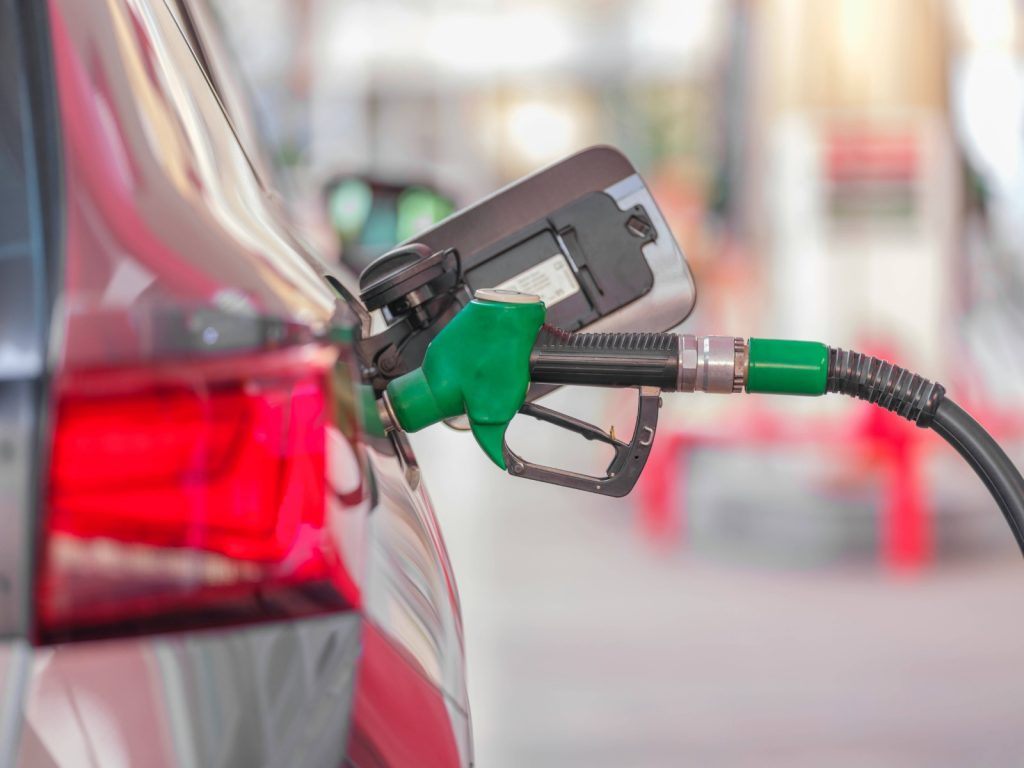
Public sector workers are demanding cheaper petrol, a wage award and a fresh minimum-wage negotiation as fuel prices put renewed pressure on household incomes. But the dispute points to a bigger question: how much can higher wages solve when the cost of getting to work and living keeps rising?
For Nigerian workers, the problem with an increase in petrol prices is rarely limited to the amount paid at the filling station.
It shows up on the way to work.
It shows up in transport fares.
Then in the price of food delivered to markets, the cost of running a small business, school expenses and household bills.
That is why a fresh dispute between organized public-sector workers and the Federal Government is about more than petrol.
Public servants under the Joint National Public Service Negotiating Council (JNPSNC) have said they will begin a three-day warning strike from October 2 if the Federal Government does not respond to their demands for a reduction in petrol prices to ₦500 per litre and an immediate wage award. They are also calling for negotiations towards a new national minimum wage ahead of 2027.
The deadline is September 30.
And with petrol prices reported at around ₦1,430 per litre or more in some parts of the country, the dispute is exposing a problem that is becoming increasingly difficult to separate from everyday economic life: what happens when wages rise more slowly than the cost of living?
Why petrol has become a wage issue
A worker does not need to buy petrol personally to feel the effect of a petrol-price increase.
Millions of Nigerians depend on buses, taxis, motorcycles and other forms of road transportation.
When the cost of operating those vehicles rises, transport operators face higher expenses. Those costs can then feed into fares.
And transportation is only one part of the chain.
Trucks move food from farms to markets.
Manufacturers move raw materials and finished goods.
Businesses transport employees and goods.
Artisans move between jobs.
Retailers restock their shops.
So when energy costs rise, the impact can spread far beyond the pump.
The Nigeria Labor Congress has similarly argued that higher petrol prices are increasing transportation costs and putting additional pressure on food, school fees, rent and other essential expenses.
This is why the workers’ demand for a cheaper pump price is tied directly to their demand for higher earnings.
Their argument is essentially that giving workers more money while the cost of getting to work and paying for necessities continues to rise may not provide much relief if the purchasing power of that income keeps being eroded.
But why is petrol suddenly so expensive again?
Nigeria’s petrol market has been deregulated since the removal of the petrol subsidy, meaning pump prices are influenced by market conditions rather than being fixed at a single nationwide government price.
The NMDPRA has said recent price volatility is linked to factors including crude-oil sourcing, domestic refining, logistics and transportation costs.
Global energy-market pressures have also been affecting fuel prices.
The Federal Government has acknowledged that disruptions in global energy supplies are putting pressure on petrol and diesel prices and, consequently, transportation costs. At the same time, it has pointed to compressed natural gas as one way Nigeria can reduce its exposure to petrol-price shocks.
That distinction matters.
Reducing petrol prices to ₦500 is a demand from organized labor. But achieving and sustaining that price would require a mechanism capable of absorbing or reducing the underlying costs that currently influence the market.
That is why this dispute is ultimately about more than what price should appear on a fuel pump.
It is also about how Nigeria protects households when energy prices move sharply.
Workers are also asking for a wage award
The second major demand is an immediate wage award.
A wage award is essentially a temporary additional payment intended to provide relief when workers are facing exceptional increases in living costs. The Federal Government previously agreed to a ₦35,000 wage award as part of its 2023 agreement with organized labor, with the Labor Ministry later confirming arrangements around its payment.
The current demand comes in a different economic environment.
The 2024 national minimum wage was set at ₦70,000, but workers and unions are now arguing that rising living costs have significantly weakened the purchasing power of wages.
The JNPSNC has therefore called not only for an immediate wage award but also for negotiations on a new national minimum wage ahead of January 2027. It has proposed a ₦500,000 minimum salary for Grade Level 01, Step 1, under a new salary structure.
That proposal is a labor demand, not an existing government-approved salary.
But it shows how dramatically the conversation around wages has changed.
The question is no longer simply what the legal minimum should be.
It is increasingly about what workers can actually afford with their earnings.
A salary increase cannot fix every cost
This is where the conversation becomes more complicated.
Higher wages can help workers cope with rising costs.
But if transport costs continue climbing, businesses continue facing high energy expenses and food prices remain under pressure, employers may also face higher operating costs.
For government, public-sector wage increases also have fiscal implications.
And for private employers, higher labor costs can influence hiring, pricing and investment decisions.
That does not mean workers’ demands are irrelevant.
It means wage policy and cost-of-living policy cannot operate completely separately.
A worker’s economic wellbeing depends not only on how much enters their bank account each month, but also on how much of that income is left after transportation, food, housing, education, healthcare and other essentials.
The transport problem is becoming impossible to ignore
Perhaps nowhere is this relationship clearer than transportation.
The Federal Government has been investing in CNG conversion and alternative-energy transport as part of its response to high petrol costs.
As of September, the State House said more than 120,000 vehicles had been converted to CNG, with more than 400 certified conversion centres and over 90 CNG refuelling stations across the country. It also cited examples of lower fares on some routes where CNG and electric buses have been deployed.
The government has set October 1 as a point by which it wants more Nigerians to begin seeing measurable reductions in transportation costs.
That makes the timing particularly important.
If cheaper alternatives can actually reduce what workers spend getting to and from work, they could provide relief without relying entirely on salary increases.
But that depends on scale.
A handful of cheaper routes cannot solve a nationwide transport problem.
For alternative energy to make a broader difference, there has to be enough infrastructure, enough converted vehicles, reliable fuel availability and enough coverage across the routes people actually use.
What does this mean for businesses?
Workers are not the only ones affected.
Businesses are also caught between rising operating costs and customers whose purchasing power is under pressure.
A small business owner paying more for transportation, electricity, logistics and supplies may eventually have to choose between absorbing the additional cost and increasing prices.
If prices rise, customers buy less.
If businesses absorb everything, margins shrink.
If margins shrink for long enough, investment and hiring can suffer.
This is why fuel prices have implications for employment and economic growth beyond the filling station.
For many small businesses, fuel is not even a direct expense. It is embedded in the cost of almost everything else.
A baker may pay more to transport flour.
A retailer may pay more to restock.
A farmer may pay more to move produce.
A delivery business may spend more per trip.
A manufacturer may face higher logistics costs.
The chain is long.
There is also the question of local refining
The workers have proposed several measures beyond simply demanding a lower pump price.
They have called for an intervention fund for the oil sector and for sufficient crude oil to be supplied in naira to local refineries. The Nigeria Labor Congress has also previously called for more crude allocation to domestic refiners and greater national storage capacity as ways of creating a buffer against international energy shocks.
Nigeria’s growing domestic refining capacity has changed the country’s fuel market significantly, but domestic refining does not automatically mean petrol prices will remain low.
The price of crude, refinery economics, logistics, exchange rates and other market factors can still affect the final price.
That is why the bigger question is whether Nigeria can build a fuel market that is less vulnerable to sudden external shocks while maintaining enough competition and supply to protect consumers.
What happens if the strike goes ahead?
The proposed action is a three-day warning strike by public-sector workers under the JNPSNC.
The Nigeria Labor Congress has backed the public servants’ demands.
If the demands are not addressed by the September 30 deadline, the unions say the strike will begin on October 2.
The immediate effects would depend on participation across the affected public-sector unions and government response before then.
But even without a prolonged strike, the dispute has already highlighted something important.
Workers are signalling that the current cost of living is affecting their ability to maintain their standard of living and, in some cases, their ability to afford the very transportation required to remain economically active.
That is a much bigger issue than a three-day industrial action.
The real issue is purchasing power
There is a temptation to treat the dispute as a simple argument between workers asking for more money and government trying to control costs.
But the underlying issue is purchasing power.
A salary is only as useful as what it can buy.
If a worker’s income increases while transportation, food, housing and other essentials rise faster, the nominal increase may not translate into a meaningful improvement in living standards.
That is why Nigeria’s conversation around wages increasingly needs to sit alongside conversations about energy, transportation, food production, housing, healthcare and inflation.
Each one affects the other.
The country cannot permanently solve a cost-of-living problem by repeatedly increasing wages if the costs driving that problem remain unchecked.
At the same time, asking workers to absorb repeated increases in essential expenses without corresponding income adjustments creates its own economic and social pressures.
Both sides of the equation matter.
Nigeria’s next test is whether relief can last
The current dispute may be resolved before the proposed strike begins.
The government could reach an agreement with labor, the unions could modify their demands, or negotiations could continue beyond the deadline.
But the bigger problem will remain.
Nigeria needs ways to protect workers and businesses from sharp increases in energy and transportation costs without creating another cycle in which temporary relief disappears as soon as prices rise again.
That means looking beyond emergency wage awards.
It means expanding affordable transport options, strengthening domestic energy supply chains, improving productivity and supporting businesses that can create jobs without passing every additional cost to consumers.
For workers, the immediate concern is simple: how far can their salary take them?
For the economy, the more difficult question is how to make sure that answer does not keep getting smaller.
Because when the cost of getting to work starts taking too much of the money earned from working, the problem is no longer just about petrol.
It is about the value of work itself.
[give_form id="20698"]