GLORYANN OSANG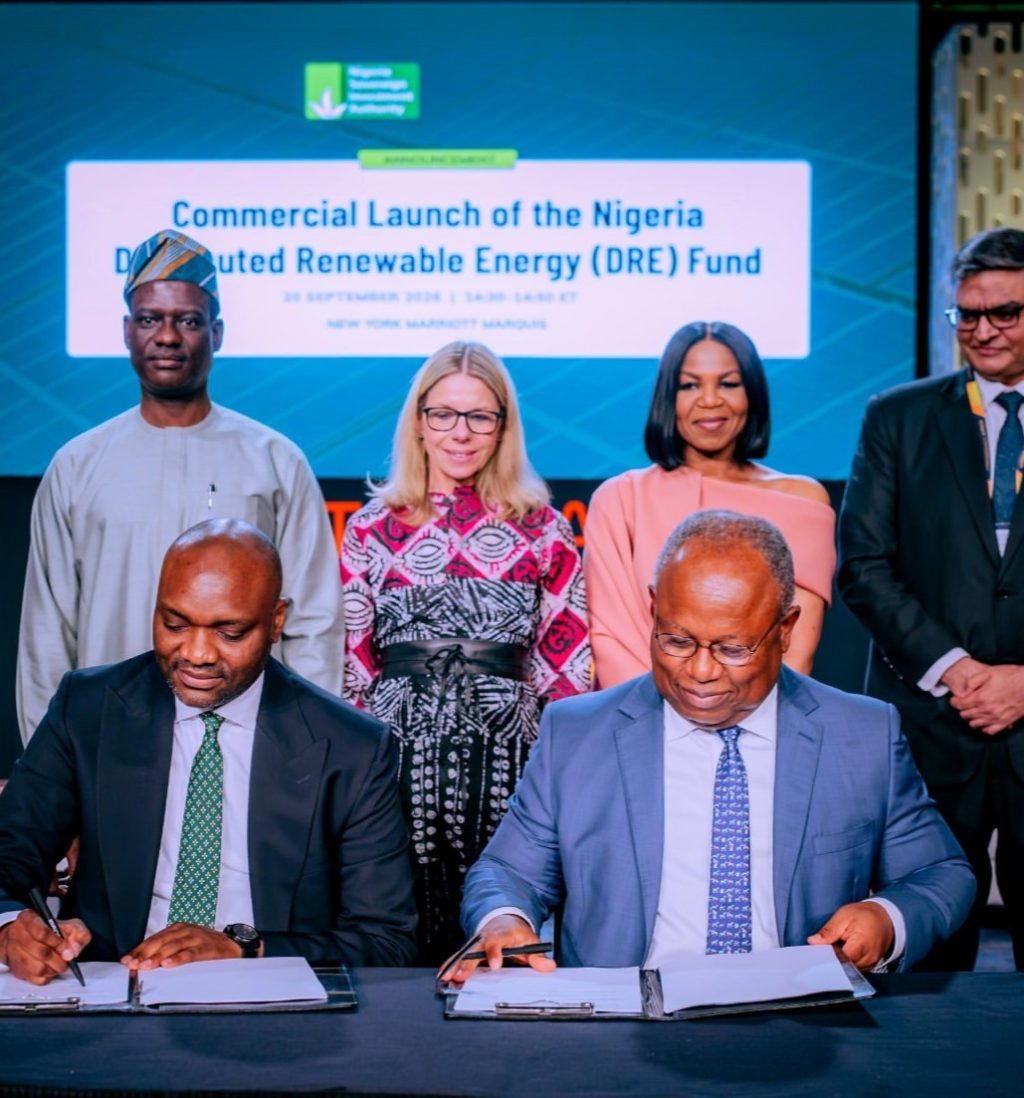
For communities where darkness can determine when a shop closes, when a clinic can operate or whether a small business can keep its doors open, access to electricity is more than an infrastructure issue. It is a question of opportunity. Nigeria is now putting new financing behind efforts to change that reality.
The Nigeria Sovereign Investment Authority (NSIA), Africa50 and Sustainable Energy for All (SEforALL) have commercially launched a $300 million Distributed Renewable Energy (DRE) Fund aimed at expanding renewable electricity solutions to communities and businesses that remain underserved by traditional power infrastructure. The launch took place on September 20, 2026, on the sidelines of the United Nations General Assembly in New York.
Rather than relying solely on expansion of the conventional electricity grid, the initiative is designed to channel investment into decentralised solutions, including mini-grids and standalone solar systems. That distinction could be significant for parts of Nigeria where extending large-scale grid infrastructure is difficult, expensive or slow.
Moving Power Closer to the People
Distributed renewable energy changes the traditional model of electricity delivery. Instead of power travelling over long distances from large generation facilities, smaller systems can generate electricity closer to the communities and businesses that need it.
For a rural health facility, that could mean a more dependable source of electricity for essential services. For a farmer, reliable power could support processing, storage or irrigation-related activities. For a small enterprise, it could provide an alternative to dependence on petrol or diesel generators.
These potential benefits are central to why the new fund is being positioned as more than an investment vehicle. The partners say the fund is intended to mobilise capital for renewable-energy projects while helping extend reliable, affordable and sustainable electricity access to underserved communities and businesses.
From Funding Structure to Capital Deployment
The commercial launch represents an important transition for the initiative. The DRE Fund has moved from its structuring phase towards active capital deployment, creating a dedicated platform for scaling distributed renewable-energy investments in Nigeria.
The fund will be co-managed by NSIA and Africa50, combining Nigeria-specific investment expertise with Africa-focused investment and fund-management capacity. The World Bank is also a founding partner, with an initial $25 million International Development Association contribution intended to help bridge public and private sources of finance.
That structure matters because the challenge facing renewable energy in Nigeria is not simply a shortage of ideas. Projects need capital. Developers need financing that can support expansion. And investors need structures capable of converting energy-access opportunities into viable long-term investments.
The new fund is designed to help address that financing gap.
Why the Social Impact Could Be Bigger Than Electricity
The most important outcome of an energy-access programme may not be measured in megawatts. It may be seen in what people can do because electricity becomes available. A business that no longer has to spend as much on fuel may have more room to invest in stock or employment.
A community health centre with dependable electricity can potentially operate equipment and services more consistently. While a school can have greater opportunity to use digital learning tools. A rural enterprise can potentially extend its operating hours or adopt equipment that depends on electricity.
These are the secondary effects that make energy access a development issue as much as an infrastructure issue. The DRE Fund’s partners specifically point to distributed renewable energy as a means of closing energy-access gaps, supporting productive economic activity and strengthening energy security.

An Alternative to Generator Dependence
Nigeria’s long-standing dependence on petrol and diesel generators has also given the renewable-energy transition a strong economic and environmental dimension. For businesses and households that cannot depend on grid electricity, generators have often become a practical fallback. But fuel costs can make that fallback expensive, while the continued use of fossil-fuel generators carries environmental implications.
Distributed solar and mini-grid systems offer another pathway. The new financing platform therefore sits at the intersection of several challenges facing Nigeria: electricity access, energy affordability, clean-energy transition and economic productivity.
Its significance will ultimately depend on how successfully investment reaches projects capable of delivering dependable power at community level.
Read Also: Policy Explainer on NERC Mini-Grid Regulations 2026 and Energy Poverty
Taking Clean Energy Beyond the Major Cities
Nigeria’s renewable-energy conversation has increasingly moved beyond large-scale power generation. The growth of mini-grids and standalone solar systems reflects the reality that a single approach may not work everywhere. A densely populated urban centre, a remote rural settlement and an isolated agricultural community can have very different energy needs.
Distributed renewable energy allows solutions to be developed around those local conditions. The DRE Fund is intended to help scale that approach by providing a financing platform capable of supporting projects across Nigeria. That could be particularly important for communities where traditional grid expansion remains challenging.
Linking Investment to Africa’s Energy Ambitions
Nigeria’s new fund is also connected to a much bigger continental ambition. The initiative supports Mission 300, the effort to connect 300 million people across Africa to electricity by 2030. Its partners describe the Nigerian fund as a potential model that could demonstrate how development finance, private capital and local expertise can be combined to accelerate distributed renewable-energy investment across Africa.
If that model proves workable, its influence could extend beyond Nigeria. But for now, the more immediate question is what happens on the ground.
The Real Test Begins Now
The announcement of a $300 million fund is significant, but the announcement itself is not the final measure of impact. The real test will come through the projects financed, the communities reached and the quality of electricity ultimately delivered.
How many businesses will gain reliable power and how many health centres and schools will benefit? How much generator dependence can be reduced and how many jobs and economic opportunities can emerge around new energy infrastructure? And, perhaps most importantly, can clean electricity become affordable and dependable enough for underserved communities to build their livelihoods around it?
Those questions will determine whether the fund becomes another financial initiative or a meaningful instrument for social and environmental transformation.
For Nigeria, the opportunity is considerable. A cleaner electricity system can support businesses. Reliable power can strengthen essential services. Decentralised energy can reach communities that conventional infrastructure struggles to serve.
The $300 million DRE Fund therefore places an important idea at the centre of Nigeria’s sustainability journey: energy transition is not only about changing how electricity is generated; it is also about changing who gets to benefit from it.
With the fund now moving towards capital deployment, the next chapter will be measured not by the size of the commitment, but by the lives, businesses and communities that reliable renewable energy eventually reaches.
Follow CSR Reporters to stay informed on the investments shaping Nigeria’s energy transition.
[give_form id="20698"]