CNG and Electric Buses Are Cutting Transport Costs on Some Nigerian Routes. Can the Savings Go Nationwide?
 ONYINYECHI NWAIGBA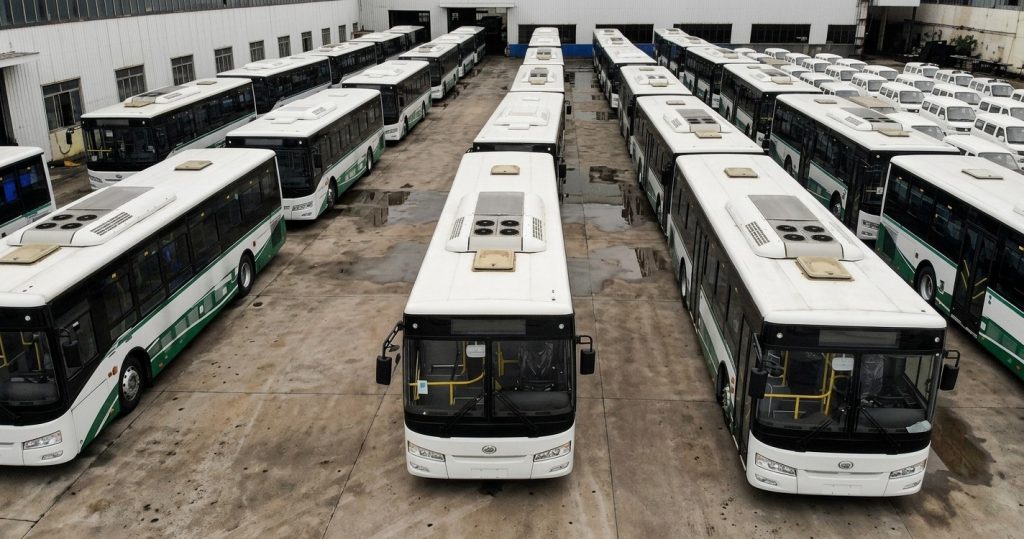
For millions of Nigerians, the cost of getting to work, school, markets and businesses is not just a transportation issue. It is part of the cost of living.
That is why the Federal Government’s push to expand Compressed Natural Gas (CNG) and electric-powered transportation is being watched closely.
The Presidential Initiative on Compressed Natural Gas and Electric Vehicles (Pi-CNG & EV) says the growing deployment of CNG buses, electric buses, taxis and tricycles is already reducing transportation costs on several routes across the country.
The initiative says the reductions are being driven by the lower operating costs associated with alternative-energy vehicles, with states adopting different approaches depending on their transport needs.
The development comes as the Federal Government and state governments work towards making cheaper transportation more visible to Nigerians following President Bola Tinubu’s October 1 target for measurable reductions in transport costs.
But while there are already examples of cheaper fares, the bigger question is whether these gains can move beyond selected government-supported routes and become a more consistent feature of Nigeria’s public transport system.
Where the Savings Are Already Showing
The evidence presented by the Federal Government points to several locations where CNG and electric mobility are already affecting what commuters pay.
In Borno State, the government says CNG-powered and electric public transport services are moving passengers for between ₦50 and ₦100 on routes where commercial operators charge between ₦300 and ₦600.
In Kaduna, 100 CNG buses have reportedly provided free transportation on major routes, carrying about 3.2 million passengers during their first year and generating more than ₦3.5 billion in reported savings for commuters.
Other examples include Oyo, where the deployment of CNG buses brought the Lagos-Ibadan fare down from about ₦8,000 to ₦3,200 during the initial deployment, and Enugu, where the government says CNG buses reduced the Enugu-Nsukka fare from around ₦2,500 to ₦1,500.
In the Federal Capital Territory, Pi-CNG & EV has also cited fare reductions on several routes. For example, passengers travelling from Kubwa to Berger pay ₦500 on CNG buses compared with ₦1,000 on diesel buses, according to the initiative.
Similar reductions have been reported on routes including Apo-Nyanya/Maraba and Masaka-Berger.
These examples demonstrate one of the central arguments behind the transition: if transport operators can spend less on energy, part of that saving can potentially be passed on to passengers.
But achieving that consistently requires more than putting CNG or electric buses on the road.
The Economics Behind Cheaper Fares
The push towards CNG has become particularly important because of the pressure placed on transport operators by conventional fuel costs.
The cost of running a diesel-powered bus has risen sharply, increasing the amount operators need to spend simply to keep vehicles moving.
In Lagos, for example, LAMATA says diesel prices have risen from about ₦950 per litre at the beginning of 2026 to between ₦1,950 and ₦2,100 per litre. The agency says the lower operating costs of CNG and electric buses are helping it manage those pressures without passing the full increase on to commuters through higher fares.
This is where the transition has implications beyond climate and energy policy.
Lower transport operating costs can affect household budgets, worker mobility and the cost of moving goods and services.
For businesses that depend on workers commuting daily, cheaper transportation can potentially reduce one of the pressures employees face.
For small businesses, particularly those operating on thin margins, transportation costs can also affect the cost of sourcing goods, reaching customers and moving products.
In that sense, transport affordability is connected to wider economic activity.
Lagos Is Expanding Its CNG Bus Fleet
Lagos provides another example of how the transition is being scaled within an existing public transport system.
The state received 20 additional high-capacity CNG buses from the Federal Government on September 30, bringing the number of CNG buses operating within its regulated bus transit system to approximately 150, according to LAMATA.
The new buses are expected to increase passenger-carrying capacity on routes with identified gaps, including the Ikorodu-TBS corridor.
For a city with a large and constantly moving population, adding buses is about more than changing the fuel source.
It also addresses capacity.
If cleaner buses are introduced without enough vehicles to meet demand, commuters may still experience long waiting times and overcrowding. The environmental benefit of the transition therefore needs to be considered alongside the quality, reliability and affordability of the transport service itself.
The Infrastructure Question
The expansion of CNG and electric mobility also exposes a major challenge: alternative-energy vehicles require the infrastructure to support them.
Nigeria currently has more than 120,000 vehicles converted to CNG, over 400 certified conversion centres and more than 90 CNG refueling stations, according to Pi-CNG & EV. The Federal Government has also announced plans to significantly expand the refueling network.
But availability is not the same as accessibility.
Some drivers have reported long queues at CNG stations, while conversion facilities and refueling infrastructure remain unevenly distributed across states.
For commercial operators, a cheaper fuel source only becomes genuinely useful if they can access it without spending several hours waiting to refuel.
The experience of drivers therefore matters just as much as the number of vehicles converted.
A transport system cannot be considered efficient simply because the fuel is cheaper on paper. Operators must be able to obtain the fuel reliably, maintain their vehicles and keep them on the road.
The Private Transport Market Remains the Bigger Test
One of the most important challenges for the CNG programme is the structure of Nigeria’s transport system.
A significant proportion of public transportation is operated by private individuals and businesses rather than government-owned fleets.
That means government-supported buses can demonstrate what lower-cost transportation looks like, but their impact will remain limited if private operators cannot participate at scale.
Conversion costs are one consideration.
For some vehicles, converting from petrol to CNG requires a substantial upfront investment. Even when the long-term operating cost is lower, a commercial driver may not have the capital available to pay for conversion.
There are also questions around vehicle suitability, maintenance, access to conversion centres and the availability of CNG itself.
These factors can determine whether the benefits of alternative energy remain concentrated around government-backed fleets or spread throughout the broader transport market.
Cheaper Energy Does Not Automatically Mean Cheaper Transport
This may be the most important lesson emerging from the rollout.
The relationship between fuel costs and transport fares is not automatic.
A reduction in energy expenditure can create room for lower fares, but operators also have other costs to consider, including vehicle financing, maintenance, tyres, insurance, spare parts, labour and route-related expenses.
That is why the Federal Government itself has said the success of the programme should ultimately be measured by what passengers pay.
Pi-CNG & EV Chairman Ismaeel Ahmed has argued that if operators spend less on energy while passengers continue paying the same fares, the objective of the intervention has not been fully achieved.
That provides a useful framework for evaluating the programme.
The number of CNG buses deployed matters.
The number of vehicles converted matters.
The number of refueling stations matters.
But ultimately, the question for commuters is simpler: has the cost of getting from one place to another actually fallen?
The Transition Is Also Creating Economic Activity
The CNG and electric mobility push is not only about transport fares.
It is creating demand for conversion centres, technicians, refueling infrastructure, vehicle maintenance and other services connected to the alternative-energy transport ecosystem.
Pi-CNG & EV says more than 7,700 technicians have been trained, while the initiative has attracted more than $2.5 billion in investment and created about 10,000 jobs.
The Federal Government has also targeted the conversion of one million commercial petrol vehicles to CNG by 2027.
If the infrastructure expands alongside vehicle conversion, the transition could therefore generate opportunities across several parts of the value chain.
But that outcome will depend on whether the market develops sustainably rather than relying indefinitely on government-supported fares and fleets.
What Comes Next?
The early evidence suggests that CNG and electric transportation can reduce operating costs and, on selected routes, produce significant savings for commuters.
The challenge is scale.
Nigeria needs enough vehicles, conversion centres, refueling stations, charging infrastructure, trained technicians and financing options to make alternative-energy transportation practical beyond a limited number of routes.
There is also a need for consistent measurement.
If the objective is affordable transportation, the impact should be tracked not only through the number of buses deployed or vehicles converted, but through changes in actual passenger fares, waiting times, route coverage and service reliability.
The October 1 target was never going to solve Nigeria’s transportation affordability problem overnight.
What it has done is place greater attention on whether cheaper energy can translate into cheaper mobility.
For commuters, that is the outcome that matters.
For businesses, it could mean lower mobility costs and more predictable access to workers and customers.
For government, it will require continued investment in infrastructure and stronger coordination with states, transport unions and private operators.
And for the country’s broader energy transition, public transportation may become one of the clearest places where Nigerians can experience the economic value of moving away from more expensive conventional fuels.
The first signs of that transition are already visible.
The bigger test is whether those savings can move from selected routes to a much larger share of Nigeria’s transport system.
[give_form id="20698"]