CSR Reporters Editorial Team
THE VERDICT | Who Kept their Word. Who Did not – Volume 17
Candour That Can Be Checked, and a Debt That Cannot Be Ignored
This week: Absa Group (South Africa) for a sustainability report that names its assurer, its standards and its own gaps. Sino-Metals Leach Zambia and its parent for a toxic spill whose costs are still being argued over in court.
The Verdict applies one test to every company, in every country: does the evidence on the page match the evidence on the ground? This week the answer splits cleanly. One company opened its books to scrutiny and told us where it fell short. The other is still contesting the scale and cost of harm it caused, nineteen months after the event.
COMMENDED: Absa Group Limited (South Africa)
What the report gets right
Our commendation standard requires third-party-verified, named disclosure frameworks. Absa’s 2025 Sustainability and Climate Report meets it in the places that can be checked:
- A named assurer and named standards. Deloitte & Touche performed limited assurance on selected information under ISAE 3000 (Revised) and ISAE 3410, the international standard for greenhouse gas statements. The report states this on its face, not in a footnote.
- Named reporting frameworks. Absa says it aligns with the GRI Standards and the GHG Protocol, applies double materiality (financial and impact), and carries a CDP rating of B. Its Social, Sustainability and Ethics Committee approved the report on 23 March 2026.
- Quantified results with prior-year comparisons. Sustainable finance mobilised reached R53.5 billion (2024: R49.2 billion), made up of R37.5 billion climate and R15.9 billion social finance. Operational emissions fell 45% (2024: 43.6%, restated). Absa met its R100 billion sustainable finance target a year early and set a new ambition of R350 to R400 billion by 2030.
- Disclosed shortfalls. Absa states that it could not set interim targets for the transport sector because of emissions data limits and the absence of clear regulatory guidance, and that agriculture emissions calculations could not be completed. Its 45% operational emissions cut still sits short of its 51% target for 2030 against a 2018 baseline. Reports that volunteer what they have not achieved are rarer than they should be.
- Controls aimed at its own claims. A Greenwashing Policy was approved in May 2025, with greenwashing risk written into its conduct, reputation and sustainability risk frameworks. Sustainability-related Organisational Health metrics make up 20% of executive incentive scorecards.
- Ethics data shown, including the uncomfortable part. Whistleblowing reports rose to 622 (2024: 573), while substantiated cases fell to 137 (2024: 222). The report discloses both figures and explains the divergence.
The caveats we are obliged to state
Commendation is not endorsement of everything. Readers should hold three limits in view:
- Limited, not reasonable, assurance, over selected information. This is the Assurance Gap we wrote about this week. Limited assurance gives a negative-form conclusion, and ISAE 3410 specifically covers greenhouse gas data. The social and finance headlines, including the R53.5 billion figure, should be checked against the assurance certificate to see whether they fall inside the assured scope.
- “Considers” is not “complies.” Absa says it considers IFRS S1 and IFRS S2 and the EU Corporate Sustainability Reporting Directive. It does not claim to comply with them, and it lists IFRS S2 compliance as work in progress for 2026.
- Self-reported recognition. The awards listed in the report are Absa’s own selection and carry no independent weight in this assessment.
What would earn a stronger Verdict next year
Move from limited toward reasonable assurance, extend assurance to the sustainable finance and social metrics, state plainly which indicators were and were not covered, and publish an IFRS S1/S2 compliance statement with a named date. Absa has the governance machinery to do it. We will check.
CALLED OUT: Sino-Metals Leach Zambia and China Nonferrous Metal Mining (Zambia)
A call-out frames institutional failure, not individual blame. The failure here is a system for measuring, admitting and repairing harm that has, on the public record, protected the company’s position more reliably than it has protected the people downstream.
What happened, and when
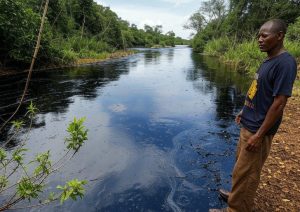
- 18 February 2025. Tailings dams collapsed at the Sino-Metals Leach Zambia facility in Chambishi, Kalulushi District, on the Copperbelt, sending acidic, metal-laden waste into the Chambishi stream, the Mwambashi River and on toward the Kafue River system.
- 2025: the volume dispute. A 385-page report prepared by Drizit, the contractor engaged by Zambia’s environmental agency, was reported by Inside Climate News to put the release above 1.5 million tons of waste, about 30 times what the company had first reported. Sino-Metals disputed the findings and replaced Drizit with a Zambian firm, Applied Science and Technology Associates, whose assessment, handed to the Zambia Environmental Management Agency in January 2026, tracked the company’s own initial account.
- July 2025: interim compensation. The government ordered interim compensation to 454 farmers. Reporting by Inside Climate News found that agreements signed by recipients carried waivers of legal rights. Payments reported by September 2025 ranged from about $592,000 (as of early September, per Dialogue Earth) to about $748,000 (the company’s own announcement), channelled through government. Farmers later told The Africa Report that they had not seen the money.
- 12 September 2025. 176 residents of Kalusale and Chambishi filed a constitutional case in the High Court of Zambia (2025/HP/1285) against Sino-Metals Leach Zambia and NFC Africa Mining, seeking remediation, monitoring, emergency support and compensation. The petition has been reported at US$80 billion.
- 17 November and 10 December 2025. The High Court dismissed every ground in Sino-Metals’ preliminary application to throw the case out, and the matter went to hearing on 10 December.
- A second action. Three environmental organisations and 54 individuals separately sued for US$220 million in the Lusaka High Court. Sino-Metals denied negligence, attributing the incident to natural disasters and vandalism.
- Meanwhile. CNMC is reported to be investing up to $1.3 billion in Luanshya Copper Mine, the main source of the ore concentrates Sino-Metals processes. The company’s chairman has publicly apologised for the spill.
The institutional failures
- Disclosure. A spill initially reported at a fraction of its later-estimated size is not a rounding error. It sets the baseline for every compensation figure that follows.
- Independence of assessment. When the contractor that produced the larger estimate is replaced by one whose findings align with the company’s, the company has made itself the arbiter of the harm it is liable for.
- Compensation design. A scheme that asks affected people to waive legal rights in exchange for interim payments, and that reaches only a subset of those affected, treats a remedy as a release.
- Litigation posture. Defending in court is a right. But the pattern of preliminary objections, causation counter-claims and overlapping cases, set against communities that say they are still unable to farm their land, tells affected people the cost of waiting falls on them alone.
- Capital allocation. Committing up to $1.3 billion to expand the supply chain while liabilities are unresolved sends a signal about which obligation the company believes is more urgent.
What the company should do
- Publish the full independent impact assessment and the methodology behind the spill-volume estimate, and commission a jointly agreed, genuinely independent review.
- Remove rights waivers from interim compensation. Interim relief should be unconditional.
- Publish a list of households and hectares affected, amounts paid, dates, and the channel used, so payments can be verified by the people meant to receive them.
- Ring-fence a remediation and compensation fund before approving new expansion capital.
- Report the incident and its liabilities in CNMC’s own sustainability disclosures, with third-party assurance.
Right of reply
Sino-Metals did not respond to requests for comment from Inside Climate News or Climate Home News at the time of their reporting, and has described the claims against it as unfounded. We have not been able to confirm developments since early 2026. CSR Reporters invites Sino-Metals Leach Zambia and CNMC to respond, and will publish any reply in full.
What the pair teaches
One company shows what it looks like to put your claims where they can be tested: a named assurer, a named standard, and the courage to publish what you did not achieve. The other shows what happens when the first question after harm is how much it will cost, rather than how much was done.
Neither story is finished. Absa has to extend its assurance. Sino-Metals has to settle its debt. The Verdict will return to both.
Disclosure is a promise. Remediation is the proof.
Sources: Absa Group Limited Sustainability and Climate Report 2025; Inside Climate News (4 September 2025); Climate Home News (2 September 2025); Dialogue Earth; The Africa Report; Southern Africa Litigation Centre; Business and Human Rights Resource Centre; Daily Nation Zambia; Africanews. CSR Reporters’ own earlier coverage is cited transparently, including The Verdict Vol. 14 on Anglo American and this week’s feature on the assurance gap.
CSR Reporters works with corporates, investors, and institutions to build credible, context-aware sustainability strategies, assurance-ready reporting, and impact intelligence grounded in Africa’s realities. Get in touch to find out how your organisation can move from announcement to accountability.
Want to talk to us? Email: enquiries@csrreporters.com
Call or WhatsApp: +234 803 401 2198, +234 803 209 8499, +234 903 329 6374, +234 903 254 1168
[give_form id="20698"]