The Sustainability Assurance Gap: How Many “Verified” Sustainability Reports Are Actually Assured?
 Eche Munonye, Founder and Chief Strategist, CSR Reporters
The Sustainability Assurance Gap: How Many “Verified” Sustainability Reports Are Actually Assured?
A badge that says “assured” proves a stamp exists. It does not tell you what the stamp covers, how hard anyone looked, or who was holding it.
“Verified” has become the most overworked word in sustainability reporting. Turn to the back of a glossy report and you will find a page with a respected firm’s logo, a paragraph of dense professional language, and a signature. The reader concludes that someone checked the numbers, and that the report can therefore be trusted.
Someone did check something. The entire accountability question lives in what that something was.
Three questions the badge never answers
An assurance statement is a narrow legal instrument that gets read as a broad moral endorsement. Before a report earns the word “verified,” three things must be on the table:
- What was assured? The whole report, or a handful of selected indicators?
- How much assurance was given? Limited, or reasonable?
- By whom, and against what standard? A named provider, working to a named assurance standard such as ISAE 3000, AA1000AS or ISO 14064-3?
Most reports answer none of these on the cover. Many answer them only in small type on the last page, in language that requires an accountant to decode. That is not an accident of design. It is how a modest check gets to wear the clothing of a thorough one.
Limited is not a clean bill of health
The most common level of sustainability assurance is limited assurance. Its conclusion is delivered in negative form: nothing has come to the assurer’s attention to suggest the information is materially misstated. The procedures behind it lean heavily on enquiry and analytical review. Reasonable assurance is a different animal. It requires deeper testing and produces a positive conclusion, closer in character to a financial audit.
Limited assurance is a legitimate first step, and no one should sneer at companies that take it. The dishonesty begins when marketing blurs the two, when “independently assured” is allowed to sound like “independently audited.” They are not the same promise, and readers deserve to know which one they were given.
The scope trick
Here is the maneuver that matters most. A company has its Scope 1 and Scope 2 greenhouse gas figures assured, which is the most measurable, most auditable part of its footprint. It then describes the whole document as an “assured report.”
The claims most prone to exaggeration are precisely those least likely to be in scope: community investment, human rights due diligence, grievance resolution, local content, beneficiary reach. These are the claims that fill the pages and win the awards. They are also the hardest to measure and the easiest to inflate.
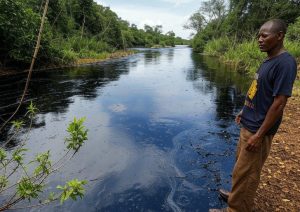
This is the same gap we keep finding on the ground. In Nigeria’s host communities, spend and project counts are reported with confidence, while whether communities believe those projects were fair, adequate or wanted goes unmeasured. If an assurer never tests the outcome claims, then a “verified” report is verified exactly where verification is easiest, and unexamined where scrutiny is most needed.
Who is holding the stamp?
Independence and competence are not interchangeable with brand recognition. Large audit firms assure sustainability data, and often also earn advisory and other non-audit fees from the same client. Smaller and specialist providers may be highly competent yet less recognised by investors. Some reports mention assurance without naming the provider at all.
Our own record shows how fine these distinctions are. In The Verdict, we commended MTN Nigeria for its seventh consecutive sustainability report with EY assurance, aligned to IFRS S1 and S2. We commended KCB Group in Kenya for an IFRS-aligned report carrying Deloitte limited assurance. But we also flagged the gaps: Sunbeth Global Concepts announced a voluntary IFRS S1/S2 report with no named assurance provider, and Zenith Bank’s first standalone report was described as “assured” while the named provider could not be confirmed. Even our commendations come with caveats, because our standard requires a named disclosure framework and third-party verification that can actually be identified.
That is the discipline we are asking of everyone: if you claim assurance, name who gave it, to what standard, and over what.
“Aligned with” is not “compliant with”
A second gap sits beside the first. Many reports now say they are “aligned with” IFRS S1 and S2, GRI or TCFD. Alignment is usually self-declared. It can mean a full, line-by-line application of a standard, or it can mean borrowing the vocabulary and a few of the tables.
Assurance over a self-declared alignment claim is a different thing from assurance over the underlying data. A reader needs to know which one was tested. The International Auditing and Assurance Standards Board’s ISSA 5000, designed as a single global baseline for sustainability assurance, should help narrow this gap over time. But a standard only works where it is applied, named and disclosed.
The ten-minute test any reader can run
You do not need to be an accountant to separate a serious assurance statement from a decorative one. Ask:
- Is the assurance provider named? If not, stop here.
- Which standard did they work to? A named standard, not just “international best practice.”
- Limited or reasonable? It should be stated plainly.
- Which indicators were covered? Look for a list or table, not a general sweep.
- Do social and community claims appear in the assured list? If only emissions and energy are covered, the human story is untested.
- Is the full statement published? Not a summary, and not a logo.
- Does the report say what it did not assure? Honest reports draw their own boundaries.
What companies, investors and regulators should demand
Companies should publish the full assurance statement beside the report, state the level of assurance on the first page, list assured indicators in a table, disclose non-audit fees paid to the assurer, and extend assurance to social metrics, including grievance and community-outcome data.
Investors should treat an undisclosed scope as a risk, and price “assured” accordingly until it is explained. A badge with no boundary is a narrative, not a control.
Regulators moving African markets toward mandatory IFRS sustainability disclosure should settle the assurance question early. Disclosure rules without assurance rules invite exactly this gap: more reporting, more badges, and no firmer ground underneath.
Verified, sentence by sentence
Assurance is the price of credibility, and it is worth paying in full. But it has to be paid in full, openly, and for the claims that matter.
The next time a sustainability report announces that it is verified, ask the only question that counts: verified by whom, to what standard, and which sentences did they actually check?
Trust is not a logo on the last page. It is a boundary drawn honestly, and defended in public.
CSR Reporters works with corporates, investors, and institutions to build credible, context-aware sustainability strategies, assurance-ready reporting, and impact intelligence grounded in Africa’s realities. Get in touch to find out how your organisation can move from announcement to accountability.
Want to talk to us? Email: enquiries@csrreporters.com
Call or WhatsApp: +234 803 401 2198, +234 803 209 8499, +234 903 329 6374, +234 903 254 1168
[give_form id="20698"]