ONYINYECHI NWAIGBA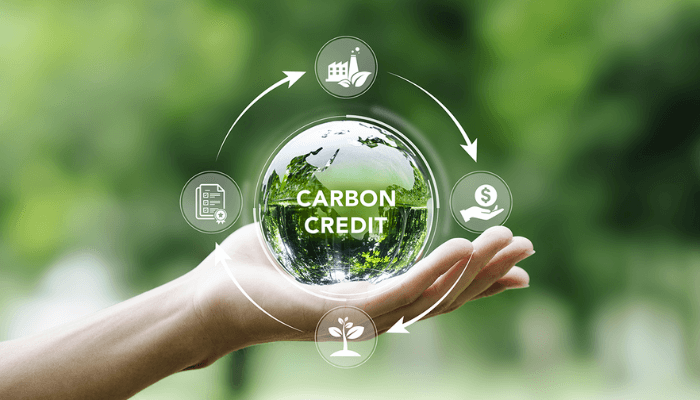
Carbon credits can sound like a complicated climate-market concept. But behind them are questions about money, businesses, communities, forests, energy and Nigeria’s transition to a lower-carbon economy.
Carbon credits are one of those terms that have become increasingly common in conversations about climate change.
Governments talk about them. Companies buy them. Investors are watching the market. Climate projects are being developed around them.
But for many Nigerians, one question remains:
What exactly does a carbon credit have to do with me?
The short answer is: potentially quite a lot.
Carbon credits sit at the intersection of climate action and finance. They can help direct money towards projects that reduce or remove greenhouse gas emissions, while creating another potential source of revenue for project developers and, depending on how projects are structured, participating communities.
Nigeria has also been developing its carbon-market framework. The country’s 2021 updated Nationally Determined Contribution indicated an intention to engage in voluntary cooperation under Article 6 of the Paris Agreement and develop a national carbon pricing and market framework.
More recently, the World Bank’s Carbon Pricing Dashboard says Nigeria finalized a Carbon Market Activation Policy in 2025, intended to provide a framework for carbon trading, credit issuance and emissions reporting.
So, what does this mean beyond policy documents?
First, what exactly is a carbon credit?
Think of a carbon credit as a unit representing a quantified amount of greenhouse-gas emissions that has been reduced, avoided or removed through a project or activity.
The idea is relatively simple.
A project reduces or removes emissions.
That climate benefit is measured and verified under an applicable standard or system.
Credits can then be issued to represent the resulting emission reductions or removals.
A company or other buyer can purchase eligible credits, depending on the market and the rules governing their use.
The World Bank describes carbon crediting programmes as systems that register climate-mitigation activities and issue credits for the emission reductions achieved by those activities.
The complicated part is proving that the claimed reduction actually happened, measuring how much was achieved and ensuring that the same reduction is not counted more than once.
And that is where the real conversation begins.
Why should Nigeria care?
Because Nigeria has enormous development needs alongside its climate commitments.
The country needs more energy.
It needs infrastructure.
It needs investment.
It needs jobs.
It needs better waste management, cleaner cooking solutions and more efficient transport.
It also needs to reduce greenhouse-gas emissions and build resilience to climate impacts.
Carbon markets are one mechanism that can potentially connect some of these needs to climate finance.
For example, a project that replaces diesel generators with renewable energy may reduce emissions.
A clean-cooking project may help households move away from more polluting fuels.
A project that captures methane from waste could reduce emissions while improving waste management.
A forestry or land-use project could generate climate benefits while supporting ecosystem protection.
If the resulting emission reductions meet the relevant requirements, they may potentially generate carbon credits.
That creates a financial dimension around activities that previously might have struggled to attract investment.
So where does the money come from?
This is perhaps the most interesting part.
A company, organization or investor may want to support emission reductions but may not be able to achieve all of those reductions within its own operations.
Depending on the market and the applicable rules, it may purchase eligible carbon credits generated by projects elsewhere.
That creates demand for projects capable of producing credible emission reductions or removals.
For Nigeria, that could create opportunities for climate-related projects to attract additional sources of finance.
But there is an important distinction:
A carbon credit is not simply free money for planting trees or installing solar panels.
A project has to demonstrate a credible climate benefit and satisfy the rules of the relevant crediting system.
The World Bank identifies issues such as additionality, monitoring, reporting, verification and registration as important elements in carbon-crediting systems.
What could this mean for Nigerian businesses?
Carbon markets could become increasingly relevant to companies operating in Nigeria.
For some businesses, the first issue will be emissions measurement.
A company cannot seriously manage what it has not measured.
Businesses may increasingly need to understand their greenhouse-gas emissions, particularly as investors, customers, regulators and international supply chains place greater emphasis on climate-related information.
For companies developing emission-reduction projects, carbon finance could potentially provide another revenue stream.
For others, carbon markets may become relevant because of the expectations of international customers or investors.
This is particularly important for businesses connected to global value chains.
A Nigerian company supplying an international customer may increasingly encounter questions about emissions, sustainability and the carbon intensity of its products.
That means carbon literacy could eventually become a business skill, not just a climate-policy skill.
What about ordinary Nigerians?
This is where carbon credits become much more interesting.
Carbon markets are not only about corporations trading certificates.
The projects behind the credits can involve real communities and real infrastructure.
Imagine a clean-cooking project serving thousands of households.
Or a renewable-energy project providing electricity to communities that previously depended heavily on diesel generators.
Or a waste-management project capturing methane.
Or a land-restoration project involving local communities.
The carbon credit may be the financial instrument attached to the emission reduction.
But the actual project is happening somewhere, involving real people.
That means the quality of the project matters just as much as the existence of the credit.
If a carbon project generates revenue but provides little benefit to the communities where it operates, important questions arise.
Who owns the carbon rights?
Who receives the revenue?
Were communities properly consulted?
Are they compensated fairly?
What happens to the project after the credits have been sold?
These are not side questions.
They are part of the credibility of the carbon market itself.
And this is where things can get complicated
Not every carbon credit should automatically be treated as proof of meaningful climate action.
Carbon markets have faced criticism over concerns including low-quality credits, weak verification, questionable additionality and greenwashing.
The World Bank has noted that concerns about low-quality credits and inflated emissions-reduction claims have affected trust in voluntary carbon markets.
One important question is additionality.
In simple terms:
Would the emission reduction have happened anyway?
If a project would have gone ahead without carbon-credit revenue, the argument that the credit caused the additional climate benefit becomes more difficult.
Another concern is measurement.
How can we know that a project actually reduced one tonne of carbon dioxide equivalent?
That requires credible monitoring and verification.
There is also the issue of double counting.
If the same emission reduction is counted by both a country and a company, the claimed climate benefit could be overstated.
Article 6 of the Paris Agreement contains accounting provisions intended to prevent this problem. The World Bank explains that corresponding adjustments are used in relevant international transfers to ensure that an emission reduction is not counted toward the climate targets of both the seller and buyer.
In other words, carbon credits are only as useful as the systems used to measure, verify, track and account for them.
Nigeria is building that system
This is why Nigeria’s emerging carbon-market framework matters.
The country has been working towards establishing systems that can support carbon-market activity and international cooperation.
Nigeria’s updated NDC already recognized the potential role of Article 6 and the need for a national carbon-pricing and market framework.
The World Bank’s current Carbon Pricing Dashboard reports that Nigeria’s 2025 Carbon Market Activation Policy is intended to enable carbon trading, credit issuance and emissions reporting. It also notes that work on a broader carbon-tax framework remains ongoing.
The development of these systems is important because a functioning carbon market needs more than buyers and sellers.
It needs rules.
It needs measurement.
It needs verification.
It needs registries.
It needs transparency.
And it needs institutions capable of ensuring that the environmental and social claims behind credits can be trusted.
Could carbon credits become a major opportunity for Nigeria?
Potentially, but the opportunity should not be confused with a guarantee.
Nigeria has sectors where emission-reduction projects could potentially be developed, including energy, waste, transport, agriculture, forestry and clean cooking.
The country also has a large population, significant energy needs and substantial infrastructure gaps.
That combination could create opportunities for projects that deliver both development benefits and measurable climate outcomes.
But attracting carbon finance at scale will depend on the quality of those projects and the credibility of the systems supporting them.
The World Bank’s guidance on high-integrity carbon markets emphasizes governance, validation, issuance, monitoring, verification and registration as core elements of a functioning framework.
For Nigeria, that means the biggest opportunity may not simply be generating more credits.
It may be generating credits that buyers can trust and communities can benefit from.
What should Nigerians be watching?
As Nigeria’s carbon market develops, there are a few questions worth paying attention to.
Who benefits?
Carbon projects should not only generate certificates. The people and communities involved should have a clear stake in the benefits.
How is the emission reduction measured?
The credibility of a credit depends heavily on the quality of its measurement and verification.
Would the project have happened anyway?
Additionality matters because the purpose of carbon finance is to support genuine additional climate action.
Who is buying the credits?
Understanding who purchases credits and what they intend to use them for can help explain how the market is developing.
How transparent is the system?
Clear rules around registration, issuance, ownership, transfer and reporting are essential for trust.
What happens beyond the carbon credit?
The most interesting question may be what the project leaves behind: cleaner energy, jobs, restored land, better waste management, improved cooking systems or other lasting benefits.
So, why should Nigerians care?
Because carbon credits are no longer just a global climate buzzword.
They are becoming part of a broader conversation about how climate action gets financed.
For Nigeria, that conversation touches investment, business, energy, agriculture, waste, forests, infrastructure and communities.
There is an opportunity to attract capital towards projects that can reduce emissions while supporting development.
But there is also a responsibility to ensure that the numbers behind those credits are credible, that environmental claims can be verified and that communities are not left out of the financial benefits.
Carbon credits may be measured in tonnes of carbon dioxide equivalent.
But their real-world value should ultimately be measured by what those tonnes help make possible.
Cleaner energy. Better infrastructure. New investment. Stronger businesses. Healthier communities. And projects that deliver benefits beyond a certificate on a registry.
That is why Nigerians should care.
Because if Nigeria’s carbon market grows, the important question will not only be how many credits the country can generate.
It will be what those credits actually deliver.
[give_form id="20698"]