RANKED: Nigeria’s Top 10 Companies for Stakeholder Engagement – Who Really Gets Heard?
 CSR Reporters Editorial Team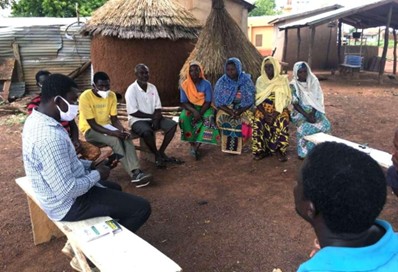
RANKED: Nigeria’s Top 10 Companies for Stakeholder Engagement - Who Really Gets Heard?
Every company says it engages its stakeholders. Few can show who was at the table, who was left out, what was promised, and whether the people affected agree that they were heard. In Nigeria, where companies operate beside communities that often depend on them for jobs, roads, water and recognition, the difference between engagement on paper and engagement in practice shows up as protests, court cases and shutdowns.
This ranking looks at ten companies and asks a harder question than most CSR rankings do: not how many consultations a company reports, but whether the evidence suggests that the people affected have a voice, a channel for complaints and a response. It follows CSR Reporters’ view that social licence is measured by community-reported outcomes, such as grievances raised and resolved, and not by spend or disclosure alone.
The ranking is provisional. It rests on a desk review of public sources, much of it press coverage. Allegations by communities are reported as allegations, company responses are included where we found them, and every company named is invited to reply.
The Top 10 at a glance
| Rank | Company | Engagement signal | Evidence |
| 1 | Chevron Nigeria (NNPC JV) | GMoU model with elected community committees | Structured, mixed outcomes |
| 2 | MTN Nigeria | Assured, IFRS-aligned sustainability reporting | Process disclosed |
| 3 | Nigerian Breweries | Stakeholder dialogue in sustainability reporting | Process disclosed |
| 4 | Nestlé Nigeria | Acknowledged community complaints and added a liaison officer | Responsive after challenge |
| 5 | NLNG | Host-community programmes, repeated disputes over recognition | Mixed |
| 6 | Dangote Cement | Community agreements alongside long-running land disputes | Mixed |
| 7 | TotalEnergies Nigeria | Restarted scheme after community appeal; facility shutdown reported | Mixed |
| 8 | Oando | Alleged lack of engagement; no company response found | Contested |
| 9 | Seplat Energy | Repeated protests; disputes who is a host community | Contested |
| 10 | Renaissance Africa Energy (ex-SPDC) | Collapsed mediations and inherited grievances | Contested |
Evidence labels: Structured, mixed outcomes means a formal engagement mechanism with documented strengths and tensions. Process disclosed means engagement is described in reporting but outcomes were not found. Responsive after challenge means the company publicly acknowledged a problem and acted. Mixed means documented engagement alongside documented disputes. Contested means repeated, unresolved grievances in the public record.
How we ranked
Companies were assessed against five criteria:
- Structure: whether a formal, published mechanism exists for engaging affected communities and other stakeholders.
- Inclusiveness: who is at the table, how host or affected communities are defined, and who is excluded.
- Responsiveness: whether complaints get an answer, and how quickly.
- Outcomes: community-reported conflict, agreements honoured and disputes resolved, rather than activities completed.
- Transparency and verification: whether engagement claims are independently assured or supported by grievance data.
Placement is a judgment-based ordering. No numerical scores were assigned. Where a company’s evidence is mostly self-reported disclosure, it is ranked above companies with documented unresolved grievances, but below companies with evidence of outcomes. That placement reflects the evidence available and is not a finding that its engagement is strong.
Limits of this edition. This is a desk review with no site visits or community interviews. Several sources are years old. A company with few public disputes is not necessarily engaging well, and a company with many may simply operate where tensions are highest. Oil and gas operators face the most scrutiny, so the list should be read with that in mind.
The ranking
1. Chevron Nigeria (NNPC JV)
Engagement evidence: Structured, mixed outcomes
Chevron’s Global Memorandum of Understanding model, introduced in 2005 after violent clashes, is the most developed engagement structure on this list. It brought together 95 communities of different sizes, many of which had competed over land and compensation, into regional committees with elected community representatives who help decide priorities and oversee how projects are chosen, funded and executed. Few Nigerian companies have built anything comparable.
What is on record: The company reports about N16.7 billion spent on more than 500 projects between 2005 and 2015 under its committees, and says the projects have benefited over 600,000 people. A Delta State governor and a Niger Delta NGO praised the model.
What is contested or missing: The praise and figures come largely from Chevron-linked sources, and no independent evaluation was found. Tensions persist. Chevron blames leadership tussles in the Ugborodo community for stalling development, and in 2013 it denied reports that its officials interfered in the election of one committee’s representatives. A model is only as legitimate as the leadership it recognises.
2. MTN Nigeria
Engagement evidence: Process disclosed
MTN Nigeria has built the strongest reporting discipline among the companies reviewed. Its 2025 sustainability report is its seventh consecutive one, aligned with IFRS S1 and S2 and independently assured by EY, and it was the first Nigerian telecoms company to present such a report on the Nigerian Exchange platform.
What is on record: The company assessed how sustainability issues affect its business and wider society and measured its economic, environmental and social impacts for 2021 to 2024.
What is contested or missing: We found no evidence on how it consults affected communities, how many grievances it receives or how it resolves them. Its position reflects the quality of its disclosure, not proven engagement outcomes.
3. Nigerian Breweries
Engagement evidence: Process disclosed
Nigerian Breweries has published sustainability reports with dedicated stakeholder dialogue sections, and its 2015 report carried limited assurance from Deloitte. Its 2025 annual report lists community projects including a donated cassava processing plant and an entrepreneurship development centre.
What is on record: A history of reporting on stakeholder dialogue and a recent record of community projects.
What is contested or missing: We found no recent data on who it engages, what communities or customers raised, or how grievances were handled. No public disputes surfaced in our review, but that is an absence of evidence and not evidence of strong engagement.
4. Nestlé Nigeria
Engagement evidence: Responsive after challenge
In 2019 an ICIR investigation reported that a water project near Nestlé Waters’ Abaji factory was not solving the Manderegi community’s water scarcity, and that factory effluent had caused erosion. The community chief was quoted describing the project as propaganda. Nestlé Waters’ Nigeria head responded publicly, acknowledged mistakes, and appointed a community liaison officer at the factory.
What is on record: A public response, an admission of error, a new liaison role, and company statements that it consulted stakeholders before building and that third-party valuers assessed land claims and that its effluent is monitored by third-party laboratories.
What is contested or missing: The evidence is from 2019 and concerns the water business. We found no data showing the liaison role resolved the complaints, and the company’s own claims about consultation are not independently verified.
5. NLNG
Engagement evidence: Mixed
NLNG runs extensive community programmes in Bonny, but the public record shows repeated disagreement over who counts as a host community. In 2021 the Finima community threatened to sever ties, saying it was denied the rights of a landlord community, and a court case over its recognition as a host community has been reported. The same year Bonny Kingdom’s royal houses sued over an alleged N20 billion in unpaid proceeds. More recently a monarch-backed committee accused NLNG of divide-and-rule tactics around Train 7 contracts.
What is on record: NLNG denied neglecting Bonny, said it respects the monarch, and pointed to completed CSR projects under Trains 1 to 6 and committed Train 7 projects. On the Finima ruling, it said its lawyers were studying the decision.
What is contested or missing: No grievance data or independent assessment was found. Recognition of host communities is the recurring fault line, and the company’s responses are statements of intent, not evidence of resolution.
6. Dangote Cement
Engagement evidence: Mixed
The record is a mix of agreements and disputes across plants. Some mining communities near its operations say they have signed a community development agreement and received jobs and help. Elsewhere, the Ijako-Orile community near the Ibese plant said in 2020 that its land entitlement dispute had run for nine years, and Kogi youths have alleged neglect and pollution around Obajana. After a youth from the Gboko host community was killed by a soldier, the company’s management opened a dialogue with the community and offered jobs to the family.
What is on record: Community development agreements in some mining areas and a dialogue process after the Gboko killing.
What is contested or missing: No consolidated engagement policy, grievance data or outcome tracking was found, and the older disputes show no clear resolution. Long-running land claims suggest that engagement has not always led to settlement.
7. TotalEnergies Nigeria
Engagement evidence: Mixed
TotalEnergies restarted its Catch Dem Young scholarship scheme for Egi host communities after chiefs and community leaders appealed, a sign that community requests can change company decisions.
What is on record: A scheme restored on community request, described by the company as its major CSR programme.
What is contested or missing: A January 2026 report headline says a host community shut a TotalEnergies facility in Rivers over jobs and neglect. We have not reviewed the details, and the company’s response should be sought. A shutdown is a sign that normal channels were not working.
8. Oando
Engagement evidence: Contested
A Guardian report described hundreds of residents of Egbemo Angalabiri in Bayelsa protesting at the premises of Oando and Renaissance, alleging marginalisation, lack of jobs and failure to meet with the community.
What is on record: A community protest and a specific allegation that neither company met with residents. CSR Reporters’ earlier Verdict also raised allegations by Ndokwa communities of unpaid funds.
What is contested or missing: The Guardian reported that it could not obtain a response from either company. These are allegations, and Oando’s side was not found. Its position reflects an unanswered complaint, not a finding.
9. Seplat Energy
Engagement evidence: Contested
Seplat has a GMoU framework, but protests have recurred across states. Mosogar Kingdom protested in March 2026 alleging exclusion from decisions on a project in the Sakpoba Forest Reserve. In 2024 residents of Obotie said they had written for six months without a reply, and in December 2025 Abigborodo’s leaders alleged that pipeline work continued without engagement or recognition. Imo’s Ekugba community issued an ultimatum alleging neglect.
What is on record: Seplat denies encroaching on any community land, says Abigborodo and Obotie are not its host communities because they do not appear in the records inherited from Shell, and says those communities skipped a meeting. It also denied wrongdoing to the Ekugba community.
What is contested or missing: Whether a community is a host community is itself an engagement question. When several communities in different states raise similar complaints, a records-based answer does not close the dispute. CSR Reporters has previously reviewed Seplat’s community record.
10. Renaissance Africa Energy (formerly SPDC)
Engagement evidence: Contested
Renaissance inherited Shell’s onshore assets and its grievances. Communities across six Niger Delta states say land acquisition fees and rentals remain unpaid, and tripartite mediation efforts in 2025 and 2026 ended in a stalemate. OML 25 communities said the handover happened without consulting them and asked that Shell’s liabilities be inherited. Rumuekpe community protested over neglect.
What is on record: Renaissance held a stakeholder engagement with OML 25 communities, told Rumuekpe it would address lapses within 48 hours, and told communities it had begun paying withheld GMoU funds.
What is contested or missing: Much of the dispute pre-dates Renaissance, so the ranking reflects an inherited record as well as current conduct. Mediations have collapsed, communities have issued final demands, and CSR Reporters’ earlier edition on host-community grievances cited a N87 billion ground-rent claim.
What the list tells us
- Structure is not the same as legitimacy. Chevron has the best-developed model and still faces questions about who represents communities.
- Recognition is the fault line. Disputes at Seplat, NLNG and the former Shell assets turn on who counts as a host community and who decides.
- Responsiveness separates companies. Nestlé admitted fault and added a liaison role, and TotalEnergies restored a scheme on request, while unanswered letters recur in the contested group.
- Disclosure is not engagement. The best-reported companies publish little on community voice or grievance outcomes.
- Sector matters. Six of the ten are oil and gas operators, where scrutiny and tension are highest. Companies in other sectors face less community exposure, which flatters their record.
How to climb the next ranking
A company’s position can change quickly with better evidence. The following would improve placement in the next edition:
- Publish a grievance log: complaints received, resolved and the time taken, with categories.
- Publish clear, public criteria for who counts as a host or affected community, and a process to appeal exclusion.
- Report spend and decisions by community cluster, and have the community-facing claims independently assured.
- Use independent facilitation for disputes, and publish the outcome of mediation.
- Invite a CSR Reporters site visit and community interviews.
Right of reply
Every company named is invited to submit documentation or corrections, including where allegations are attributed to communities. Evidence received will be reflected in the next edition. Send material to enquiries@csrreporters.com.
| DON’T JUST ANNOUNCE YOUR IMPACT. PROVE IT. CSR REPORTERS helps organisations verify, assess, document and communicate the real impact of their CSR and sustainability initiatives. Project Verification | Beneficiary Feedback | Impact Assessment | Impact Storytelling | Stakeholder Engagement Have an initiative worth documenting? Let us verify it. Document it. Tell the story. Talk to CSR REPORTERS enquiries@csrreporters.com 📞 Call/WhatsApp: 0803 401 2198 | 0903 329 6374 | 0905 024 4468 | 0803 209 8499 |