CSR Reporters Editorial Team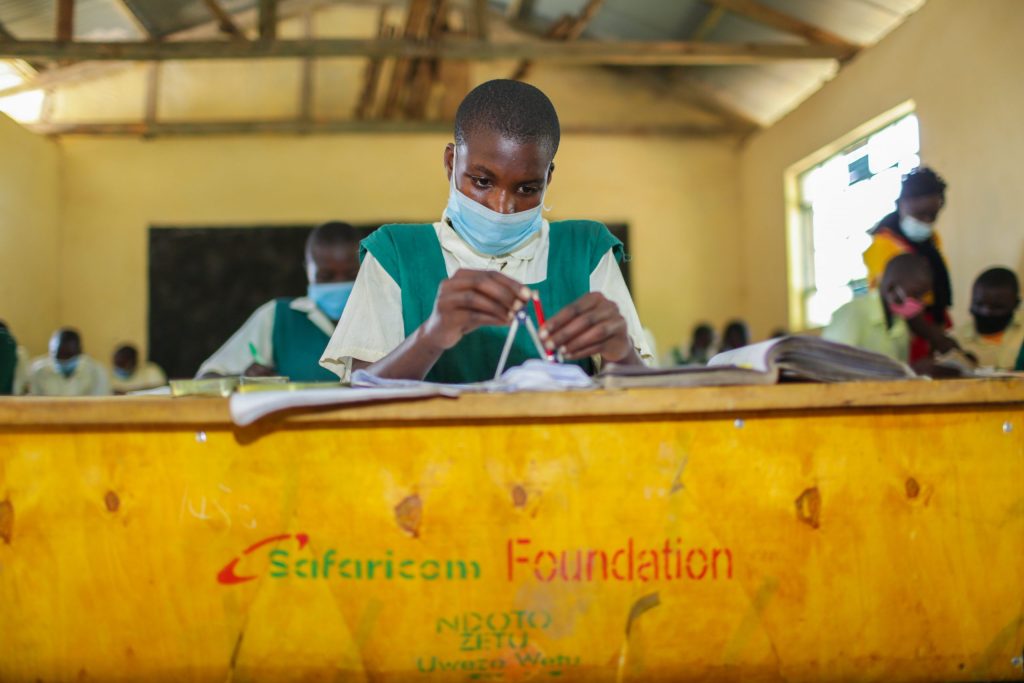
THE VERDICT | Who Kept their Word. Who Did not – Volume 19
Every week, The Verdict asks one question of two institutions: when they say what they owe, do the facts agree? This week the answer runs across two countries and two very different documents. In Kenya, a company publishes a report that is willing to say where it is falling short. In Nigeria, a community points to a Supreme Court judgment and says it has waited decades for anyone to act on it.
COMMENDED: Safaricom PLC (Kenya)
For reporting its own shortfalls in plain view.
Safaricom’s FY26 Annual Report, covering 1 April 2025 to 31 March 2026 and marking the company’s 25th year, is a large, polished document. What earns this week’s commendation is not the polish. It is the places where the report declines to flatter.
- A stalled programme is named as stalled. Under its Citizens of the Future education initiative, the digital skills component reached eight Teacher Training Colleges and 18,600 beneficiaries. The report then states that this component is on hold and under redesign. Few corporate reports volunteer that a flagship strand has paused.
- Spend is reported even when it fell. Investment through the Safaricom and M-PESA Foundations is disclosed at KShs 6.8 billion, down from KShs 8.9 billion the year before, a decline of 23.6%.
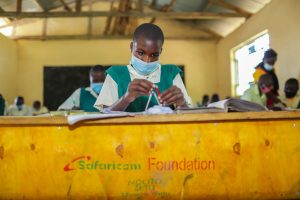
- Progress is set against targets. The report records 47 schools upgraded, benefiting about 35,000 learners and more than 1,500 teachers, against a stated target of 500 schools by 2030. That lets a reader judge the pace for themselves.
- It admits its materiality work is dated and commits to refreshing it. The report says its material matters rest on a 2021 assessment, and that a double materiality assessment will be carried out in the next financial year to support the move to mandatory IFRS sustainability reporting in Kenya by 2027.
- Some claims carry outside validation. The company reports an A score in CDP’s Climate Change and Supplier Engagement assessment and continued Lead Company status with the UN Global Compact. It also reports that its debut Green Bond in November 2025 was oversubscribed by 175.7%.
The caveat, stated plainly
CSR Reporters’ standard for a commendation is third-party-verified disclosure against a named framework. Safaricom does not yet meet that standard in full, and we say so. The FY26 Annual Report states that external assurance is provided on the financial statements by Ernst & Young LLP. It does not state that the sustainability data in the report has been independently assured. The frameworks it lists are the Integrated Reporting Framework, IFRS Accounting Standards, the NSE ESG Manual and the SDGs, not IFRS S1 and S2, which the company says it is preparing for.
This commendation is therefore for candour and direction of travel, not for a clean assurance badge. What would earn the full mark is straightforward: an FY26 Sustainable Business Report that carries a named assurance provider, a stated assurance standard, a stated level of assurance, and an index showing where each IFRS S1 and S2 requirement is met.
CALLED OUT: Okitipupa Oil Palm Plc (Nigeria)
For a host-community dispute that has outlived the paper meant to settle it.
This call-out concerns an institutional failure, not a personal one. The question is why a land dispute between a company and the Ikale community in Ikoya, Okitipupa Local Government Area, Ondo State, remains unresolved, and why it has escalated to protests and arrests.
- The community’s central claim. Residents and the Ikale Supreme Civil Rights Council cite a 1988 Supreme Court judgment, which they say required the company either to negotiate a valid agreement with the host community or to vacate the land. They allege no such agreement exists. They marched under placards demanding that the company obey the judgment.
- Arrests have deepened the grievance. Community members, including national Ikale leader Orimisan Adelokiki, were arrested. The Ondo State Police Command stated that those involved had been arraigned and remanded on judicial orders. Protesters called the arrests unjust and accused the company and the police of intimidation.
- A financial question sits beside the land question. Community representatives have petitioned the EFCC over an alleged ₦10.7 billion in unaccounted land-generated revenue between 2021 and 2024, as set out in CSR Reporters’ earlier RANKED coverage.
- Reports point to a further court ruling. Sahara Reporters, drawing on Ikale community media, has reported a later Supreme Court ruling in favour of the Konye family, described as the ancestral landowners, declaring the occupation of the Ikoya estates illegal. The terms and effect of that ruling should be confirmed from the judgment itself.
The company’s position
Okitipupa Oil Palm Plc has previously rejected fraud allegations against its managing director as false and malicious, and its board has said dividends were paid to shareholders twice under the current management. We have not yet obtained the company’s response to the current allegations. CSR Reporters will put them to the company and publish its reply in full.
Why this is an institutional failure
Whatever the precise wording of each judgment, the pattern is the same. A court decision, a community’s claim to land, and a company’s operations have not been reconciled into one agreement that all parties accept. In that gap, the community’s only visible channel has been the street, and the state’s visible response has been policing. A functioning host-community framework would have produced a documented agreement, a published account of land revenue, and an independent mediation process long before protesters reached for placards.
Three steps would show good faith:
- Publish the judgments relied on and the company’s reading of them.
- Disclose land agreements and land-linked revenue in a form the community can inspect.
- Convene independent mediation, with the Ondo State Government engaged given its historical role in the company.
The common thread
Safaricom shows what it looks like when an institution tells its stakeholders where it has fallen short and what it will do next. Okitipupa Oil Palm shows what happens when the paper that is supposed to settle a relationship, whether a judgment or an agreement, is never turned into practice. One reports its gaps. The other is accused of leaving a gap open for decades. Trust is built on the first and eroded by the second.
| DON’T JUST ANNOUNCE YOUR IMPACT. PROVE IT. CSR REPORTERS helps organisations verify, assess, document and communicate the real impact of their CSR and sustainability initiatives. Project Verification | Beneficiary Feedback | Impact Assessment | Impact Storytelling | Stakeholder Engagement Have an initiative worth documenting? Let us verify it. Document it. Tell the story. Talk to CSR REPORTERS enquiries@csrreporters.com 📞 Call/WhatsApp: 0803 401 2198 | 0903 329 6374 | 0905 024 4468 | 0803 209 8499 |