GMoUs and Grievances: What Host-Community Frameworks Promise vs. Deliver
 Eche Munonye, Founder and Chief Strategist, CSR Reporters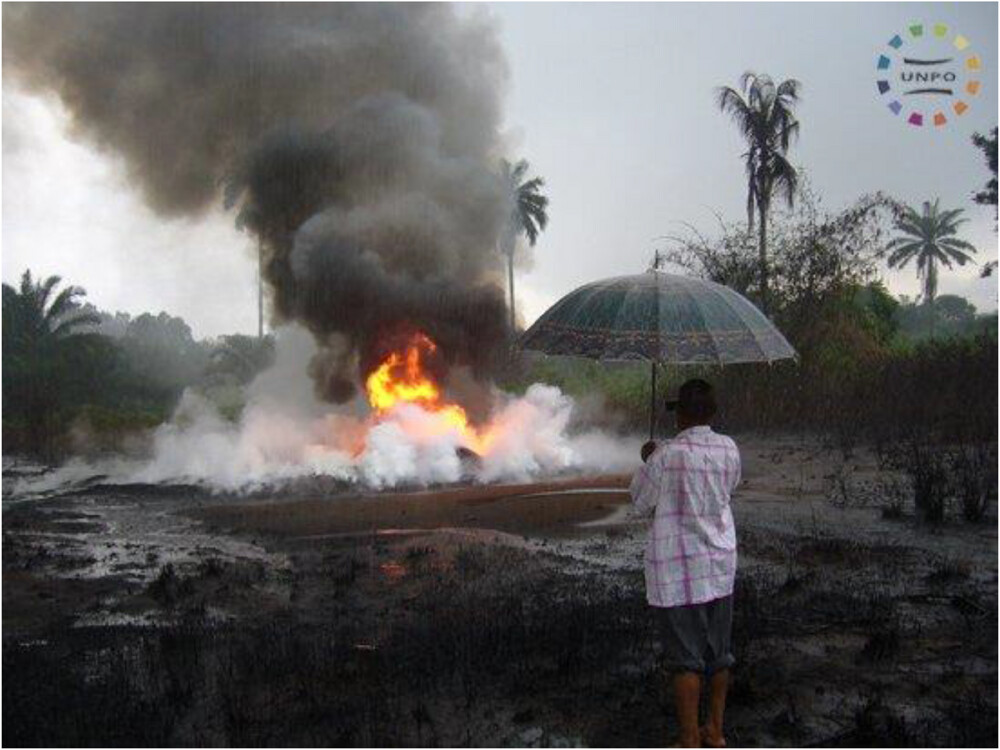
GMoUs and Grievances: What Host-Community Frameworks Promise vs. Deliver
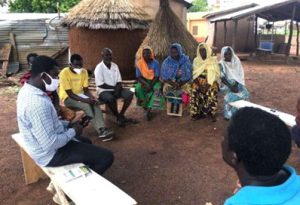
Every few months, a familiar scene repeats itself in the Niger Delta. Young men block a flow station gate. Women march with placards. A community leader tells a reporter that the company “signed an agreement and then forgot us.” Days later, the company issues a statement pointing to its Global Memorandum of Understanding (GMoU), its trust fund and its community investments.
Both sides are describing the same document. They are simply describing different realities. That gap, between what host-community frameworks promise and what communities say they deliver, is where trust in Nigeria’s extractive sector is won or lost.
The promise: a better deal than the old model
The GMoU emerged as a response to a failure. Under the old approach, companies negotiated separately with individual communities, often through a handful of chiefs or youth leaders. The result was fragmentation, rivalry over who got contracts and cash, and a cycle of disruption and appeasement.
The GMoU model, popularised by Chevron in the Niger Delta in the mid-2000s and adopted in various forms by other operators, changed the architecture. Instead of dozens of bilateral deals, clusters of communities would negotiate one agreement, governed by a representative body, funded on a predictable cycle and tied to a community development plan. In theory, this meant participation, transparency, predictability and shared ownership of outcomes.
The Petroleum Industry Act (PIA) of 2021 then moved the conversation from voluntary practice to statutory obligation. It requires upstream operators to set up Host Communities Development Trusts (HCDTs), funded with 3% of the operator’s actual annual operating expenditure in the preceding financial year in the host communities’ area of operation. The law specifies governance structures, including a board of trustees, a management committee and an advisory committee, and directs how funds are to be split between development projects, reserves and administration.
On paper, this is a significant upgrade. The promise is no longer corporate goodwill. It is a legal entitlement.
Where the promise frays: five design gaps
The record of grievances suggests the problem is rarely the existence of a framework. It is the distance between its design and its day-to-day operation.
1. Who speaks for the community? A GMoU is only as legitimate as the body that signs it. When representatives are selected through processes that communities do not trust, or when factions, elites or traditional rulers dominate, the agreement becomes a deal between a company and a few individuals. Those excluded do not feel bound by it, and they protest.
2. Whose needs are funded? Community development plans should reflect priorities identified by the people affected. In practice, projects are too often chosen because they are visible, easy to commission and easy to photograph. A borehole or classroom block may be welcome, but it is not necessarily the answer to a polluted river, a lost fishing ground or a shortage of livelihoods.
3. Is the money paid, and on time? Many disputes are not about the principle of the agreement. They are about delayed disbursements, unexplained deductions and contested figures. A framework that promises predictable funding but delivers irregular payment breeds suspicion quickly.
4. Can anyone see the books? Transparency is the promise that most often goes missing. Communities frequently cannot say how much was contributed, what was spent, on which projects and through which contractors. Without that visibility, every shortfall becomes a suspicion, and every suspicion becomes a grievance.
5. What happens when something goes wrong? Many frameworks contain a grievance mechanism on paper. Fewer have one that communities know about, trust and can use without fear of being labelled troublemakers. When there is no credible channel for complaints, protest becomes the channel.
What the grievance record shows
Recent cases illustrate these gaps. They are allegations, and the companies concerned have the right to respond, but the patterns are instructive.
Seplat Energy publicly promotes its GMoU framework. Yet CSR Reporters has documented host-community protests in three different Delta State communities in November 2024, December 2025 and March 2026, in which residents alleged exclusion from decisions despite the existence of that framework. The recurrence matters. One protest can be a local dispute. Three, in different communities, suggest a structural question about how participation works in practice.
Oando has described the host-community trust arrangement in Ndokwa as a model of engagement. Communities in the area have alleged that millions of naira remain unpaid. Whatever the final facts, the contrast between a company’s self-description and a community’s lived account is precisely the gap this article is about.
More recently, the dispute involving Renaissance Africa Energy Company (RAEC), Shell’s onshore successor entity, over an alleged ₦87bn in ground rent, and a community protest on 24 September 2026, shows how legacy obligations can survive a change of ownership while the people affected struggle to find who is accountable.
The common thread is institutional, not personal. These are failures of process: of representation, payment, disclosure and redress.
The PIA test: a framework with teeth, still being proven
The PIA was meant to fix many of these weaknesses by making contributions mandatory, defining governance and giving the regulator oversight. But a statute does not implement itself. Communities still face practical questions. Has the trust been incorporated? Were its trustees chosen through a process residents consider fair? Is the 3% contribution calculated on transparent figures? Are annual reports published in a form a community member can actually read?
There is also a transition problem. Communities that had long-standing GMoUs now find themselves navigating two systems, with uncertainty about how old commitments, arrears and expectations are treated under the new law. Where that transition is poorly explained, resentment grows.
The test of the PIA will not be how many trusts exist on paper. It will be whether the people living beside the infrastructure can see the money, shape its use and challenge it when it goes wrong.
What credible delivery looks like
If companies, regulators and communities want frameworks that deliver, five tests are worth applying.
- Legitimate representation: Is the signing body chosen through a process communities accept, and does it include women, youth and affected minorities?
- Needs-led planning: Does the development plan trace back to documented community priorities, not company convenience?
- Published numbers: Are contributions, disbursements and project costs disclosed in plain language, at community level?
- A grievance channel that works: Is there an accessible, independent mechanism with response timelines, and do communities know it exists?
- Independent verification: Has anyone outside the company or the trust confirmed that projects were delivered, functioning and benefiting the intended people?
That last test is the one most often skipped. Companies report what they spent. Trusts report what they funded. Rarely does an independent party walk the ground, speak to beneficiaries and confirm what changed.
From signed to delivered
A GMoU is not proof of a social licence. It is a promise. The licence is earned when the promise is kept, visibly and verifiably, to the satisfaction of the people it was made to.
Companies should stop treating the existence of a framework as the answer to a grievance. Regulators should treat disclosure and redress as enforceable obligations, not aspirations. And communities deserve access to the information they need to hold both to account.
Until that happens, the gates will keep closing, the placards will keep rising, and the same two documents, the agreement and the grievance, will keep telling very different stories about the same place.
| DON’T JUST ANNOUNCE YOUR IMPACT. PROVE IT. CSR REPORTERS helps organisations verify, assess, document and communicate the real impact of their CSR and sustainability initiatives. Project Verification | Beneficiary Feedback | Impact Assessment | Impact Storytelling | Stakeholder Engagement Have an initiative worth documenting? Let us verify it. Document it. Tell the story. Talk to CSR REPORTERS enquiries@csrreporters.com 📞 Call/WhatsApp: 0803 401 2198 | 0903 329 6374 | 0905 024 4468 | 0803 209 8499 |