Beyond Food Aid: Can Climate-Smart Farming Help Displaced Women Rebuild Their Livelihoods?
 ONYINYECHI NWAIGBA
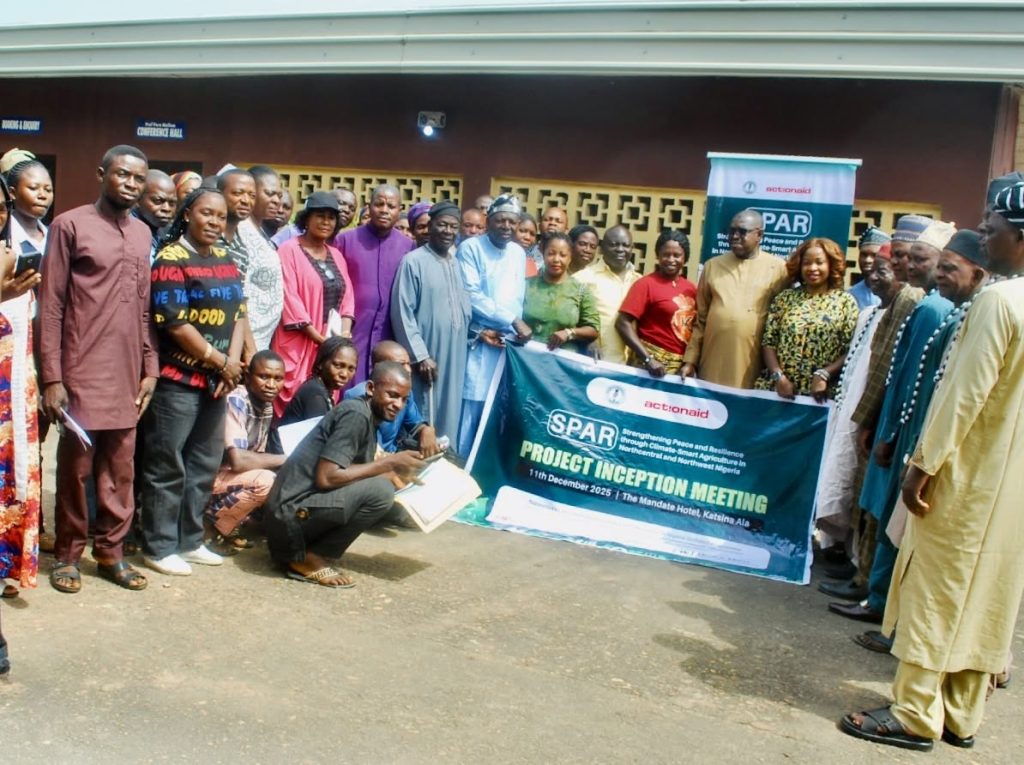
An initiative targeting 200 displaced women in Benue State is exploring how small-scale vegetable farming and practical training could support household food security. Its success will depend on more than distributing planting materials.
For families living in displacement camps, the challenge of getting food is often connected to a much bigger problem: losing the means to produce it.
A woman who once cultivated her own farmland may now depend on food donations. A family that previously grew vegetables and other crops may have to rely on irregular assistance to meet its daily needs. Even when food is available, the loss of income and the inability to return to farming can make it difficult to plan for the future.
This is part of the reality facing internally displaced people in Benue State, where insecurity and other pressures have forced farming households away from their communities and livelihoods.
A proposed climate-smart vegetable farming initiative in Makurdi is seeking to address part of this challenge by helping 200 displaced women grow food within their displacement camp.
The initiative, being planned by the Benue Non-Governmental Organisation Network (BENGONET) and its partners, is expected to provide planting materials and five sacks to each beneficiary. The women are also expected to receive training in climate-smart agriculture, with the aim of helping them grow vegetables despite the limitations of their current living conditions.
The proposal was announced during a food donation to displaced residents at the Internally Displaced Persons (IDP) camp at Makurdi International Market, organised to commemorate World Food Day 2026.
Although the intervention is relatively small, it raises an important question about humanitarian support: can helping displaced families grow some of their own food become a step towards more sustainable livelihoods?
When Displacement Takes Away More Than a Home
Displacement affects much more than where people live. For farming households, it can mean losing access to farmland, tools, seeds, customers and the income that comes from agricultural production.
The consequences can continue long after a family has left its community.
An International Organization for Migration assessment of 910 households across 18 displacement sites in Benue State found that 99 per cent of surveyed households had engaged in farming before displacement. However, only 37 per cent continued agricultural activities after being displaced.
The assessment also found that 59 per cent of households relied on humanitarian assistance as a livelihood source during displacement, highlighting the economic pressures many families face. <Cite refs={[“turn662180search4”]}/>
These findings help explain why access to food assistance alone may not be enough to address the long-term needs of displaced farming communities.
Food donations can provide immediate relief to families who are struggling to eat. But when households lose their means of producing food or earning an income, they may continue to face food insecurity even after receiving assistance.
For women who previously contributed to household farming and income generation, the loss of productive opportunities can also reduce their ability to support their families independently.
This is where small-scale farming initiatives may offer another form of support.
How Sack Farming Could Help
The proposed intervention will use sacks to enable women to grow vegetables within the camp.
Sack farming is a space-efficient method of growing crops in containers rather than relying entirely on conventional farmland. Depending on the crops, growing conditions and available resources, it can allow households to produce vegetables and other food crops in relatively small spaces.
For people living in displacement camps, where access to land may be limited or uncertain, this approach offers a practical alternative worth exploring.
Growing vegetables could help participating households supplement the food they receive, improve access to fresh produce and reduce some of the money they spend buying vegetables.
It could also give women an opportunity to apply agricultural knowledge they already possess while learning techniques suited to their current circumstances.
The proposed training component is particularly important. According to the initiative’s organisers, the women will receive further instruction in climate-smart agriculture.
That matters because distributing planting materials does not automatically guarantee a successful harvest. Beneficiaries need to understand how to prepare their growing medium, manage water, select suitable crops, control pests and maintain healthy plants.
The availability of water, the quality of the planting materials and the ability to replace inputs when necessary will also influence the outcome.
The intervention therefore has the potential to offer more than a one-time distribution exercise, provided the practical support continues after the initial materials are handed over.
Why Climate-Smart Agriculture Matters
Climate-smart agriculture involves approaches designed to support agricultural productivity while helping farmers adapt to climate-related challenges and, where possible, reduce agriculture’s environmental impact.
For vulnerable households, this can involve practical measures such as using water efficiently, choosing suitable crops, improving soil management and adopting farming methods that can withstand changing environmental conditions.
In Benue, these considerations are particularly relevant because agriculture supports many livelihoods, while flooding, changing weather patterns and insecurity can disrupt production.
The proposed initiative recognises that climate and environmental pressures can make existing economic difficulties worse for displaced communities.
However, climate-smart farming should not be treated as a guarantee against food insecurity. Its results depend on the methods used, the conditions in which crops are grown and the resources available to farmers.
For the 200 women expected to benefit, the most useful training will be the kind they can apply with the materials and space available to them.
The goal should be to make the techniques practical, affordable and sustainable, rather than introducing methods that beneficiaries cannot maintain once external support ends.
Women’s Economic Empowerment Begins With Practical Opportunities
The focus on women is another important part of the initiative.
Women in displaced households may carry significant responsibility for feeding children, managing household needs and finding ways to cope with reduced income. Yet displacement can limit their access to the land, tools and economic opportunities they previously relied on.
Helping women grow food within the camp could provide a practical way to contribute to household nutrition and reduce some daily expenses.
There may also be opportunities to build on the initiative over time. If production is successful and there is sufficient space, water and market access, some participants could explore growing additional vegetables for sale or working together to share knowledge and resources.
But these outcomes should not be assumed.
The immediate intervention is focused on vegetable production and household food security. Turning it into a source of income would require additional support, including reliable buyers, access to markets, suitable storage and the ability to produce enough to sell.
This distinction matters because empowerment programmes should be assessed by what women are actually able to do with the support they receive, not simply by the number of people enrolled.
The Challenge Is Making the Support Last
The initiative’s proposed reach of 200 women is a meaningful starting point, but its longer-term value will depend on what happens after distribution and training.
Will the women have reliable access to water throughout the growing period? Will they receive follow-up guidance if their crops develop problems? Will they be able to obtain replacement planting materials? And will the programme assess whether the vegetables grown are making a difference to household food consumption?
These questions matter because even a well-designed intervention can struggle if the conditions needed to maintain it are missing.
Monitoring should therefore go beyond counting the number of sacks distributed or women trained.
Useful measures could include how many participants successfully grow vegetables, how much food they harvest, whether households consume more fresh produce and how long the farming activities continue after the initial intervention.
Feedback from the women themselves would also help organisers understand which techniques are working, what obstacles they face and what additional support they need.
Such information could help BENGONET and its partners improve the programme and determine whether it can be expanded to reach more households.
Moving From Emergency Relief to Sustainable Livelihoods
The proposed farming initiative also reflects a broader question about how displaced communities are supported.
Emergency food assistance remains essential when families cannot meet their immediate needs. But longer-term support must also consider how people can regain access to productive activities, rebuild their livelihoods and prepare for life beyond displacement.
In August 2026, the Food and Agriculture Organization of the United Nations and the Benue State Government were reported to be developing a climate-resilient livelihoods strategy and a climate-smart agriculture investment framework for internally displaced people and vulnerable host communities.
The work is intended to identify sustainable livelihood options and translate priorities into practical investments that can support recovery and resilience. <Cite refs={[“turn662180search3”]}/>
The proposed vegetable-growing initiative operates on a smaller scale, but it speaks to a related need: helping vulnerable households maintain some capacity to produce food while larger efforts to rebuild livelihoods continue.
For displaced women, growing vegetables will not resolve the wider challenges of insecurity, loss of farmland, inadequate housing or prolonged displacement. Nor can a small farming project replace the need for reliable food assistance and lasting solutions that allow people to rebuild their lives safely.
What it can potentially do is provide a practical starting point.
If the initiative delivers suitable materials, useful training and continued support, it could help participating households supplement their food supplies and regain some control over an important part of daily life.
The real measure of success will not simply be that 200 women receive planting materials. It will be whether they can use those materials to grow food, whether their families benefit and whether the skills remain useful after the programme’s initial support ends.
For CSR and development initiatives, that is an important distinction. Support should not be measured only by what is distributed, but by the difference it makes to people’s lives.
In Benue, the proposed initiative offers an opportunity to test how a relatively simple farming method can contribute to food security under difficult conditions. Whether it becomes a lasting source of support will depend on the resources, follow-up and practical opportunities available to the women.
The goal is not to suggest that displaced families should have to solve their own food insecurity. It is to ensure that, alongside immediate relief, they have opportunities to rebuild their ability to provide for themselves.
That is when assistance can begin to move beyond meeting today’s needs towards strengthening tomorrow’s resilience.
DON’T JUST ANNOUNCE YOUR IMPACT. PROVE IT.
CSR REPORTERS helps organisations verify, assess, document and communicate the real impact of their CSR and sustainability initiatives.
Project Verification | Beneficiary Feedback | Impact Assessment | Impact Storytelling | Stakeholder Engagement
Have an initiative worth documenting? Let us verify it. Document it. Tell the story.
Talk to CSR REPORTERS
enquiries@csrreporters.com
📞 Call/WhatsApp: 0803 401 2198 | 0903 329 6374 | 0905 024 4468 | 0803 209 8499
www.csrreporters.com