ONYINYECHI NWAIGBA
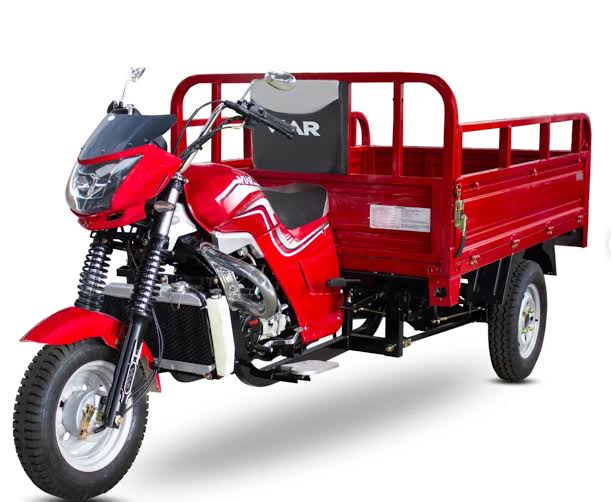
Zeetin Technologies is bringing tricycle assembly to Abuja, with plans to create jobs and expand local manufacturing. But the bigger test will be whether locally assembled vehicles become more affordable for the traders, farmers and small businesses that depend on them.
For many Nigerian small businesses, transportation is not just another operating expense. It can determine how much profit a business makes, how far it can reach and whether it can afford to serve more customers.
A market trader needs to move goods from suppliers to a shop. A farmer needs to transport produce from a rural community to a market before it spoils. A distributor needs to deliver products to retailers, while an artisan may need to move tools and materials between jobs.
For these businesses, the cost of moving goods can quickly eat into already limited earnings.
This is one reason the arrival of a local tricycle assembly operation in Abuja is worth watching.
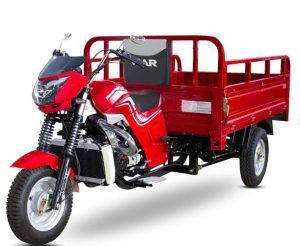
Zeetin Technologies is assembling the VZ150 and VZ200 tricycle models at its facility in the Idu Industrial Area of Abuja, in technical partnership with VIAR Motor Indonesia, a manufacturer with more than 30 years of experience in three-wheeler engineering.
The company is scheduled to unveil the factory and products on October 21, 2026, with former Nigerian President Goodluck Jonathan expected to attend as chairman of the occasion. The company says its plans include creating employment, supporting small businesses and gradually increasing the local content used in production.
The announcement comes with an important question for Nigeria’s economy: can assembling more products locally create meaningful economic opportunities for Nigerians, particularly businesses that need affordable equipment to grow?
Why Tricycles Matter to Small Businesses
Tricycles occupy an important place in Nigeria’s informal and small-business economy.
They are used to move passengers, transport agricultural produce, deliver goods and support businesses that cannot afford larger commercial vehicles. For some operators, a tricycle is an income-generating asset. For others, it is a tool that makes daily business operations possible.
A farmer who can move produce to market more efficiently may be able to reduce delays and avoid some losses. A retailer who can transport larger quantities of goods may spend less on repeated trips. A distributor may be able to serve more customers within the same working day.
However, owning a vehicle also comes with costs. Buyers must consider the purchase price, fuel, maintenance, repairs, spare parts and the possibility of lost income when a vehicle breaks down.
This means the economic value of a tricycle is not determined by its availability alone. It also depends on whether the person buying it can afford to operate and maintain it.
For small businesses working with limited capital, even a relatively modest difference in purchase price or maintenance costs could influence whether acquiring a vehicle makes financial sense.
That is why affordability will be one of the most important things to watch as Zeetin introduces its products to the Nigerian market.
Can Local Assembly Strengthen Nigeria’s Manufacturing Sector?
Nigeria’s manufacturing ambitions involve more than producing finished goods within its borders. A stronger manufacturing sector can also create demand for technical skills, expand supply chains and give local businesses opportunities to provide components and services.
Zeetin says its Abuja operation already involves Nigerian technicians who received training at VIAR’s facility in Semarang, Indonesia. The company also identifies quality control, planning, sales and after-sales services as areas of activity around the factory.
These activities matter because manufacturing can generate economic value beyond the factory floor.
A functioning assembly operation may require mechanics, technicians, warehouse staff, sales personnel and customer-service workers. Dealers may find new business opportunities, while repair workshops and spare-parts traders could benefit as more vehicles enter the market.
Over time, a broader local supply chain could create opportunities for Nigerian businesses to produce or supply selected components and related materials.
But there is an important distinction between assembling a product locally and manufacturing most of its components locally.
The company has indicated that it intends to deepen local content as production develops. It has not, however, publicly established what proportion of the tricycles’ components currently comes from Nigerian suppliers or how many additional jobs the operation is expected to create.
Those details would help determine how much value the initiative is retaining within the Nigerian economy.
Local assembly can be a starting point. The longer-term opportunity is to build the technical capacity, supplier networks and industrial expertise that allow more of the production process to take place locally.
Jobs Are Important, but So Is the Quality of Those Jobs
Job creation is frequently presented as a major benefit of new industrial projects. Yet the number of jobs created is only one part of the story.
The type of employment, the skills workers acquire, the stability of their jobs and the opportunities for career development also matter.
For example, technical training could help Nigerian workers develop skills that remain useful beyond one factory. Experience in vehicle assembly, quality assurance, equipment maintenance and production planning could potentially support employment across the wider automotive and engineering sectors.
Similarly, if the business develops a network of authorised dealers, repair centres and spare-parts suppliers, it could create opportunities for small enterprises outside the assembly facility.
However, these wider benefits will depend on the scale of production, demand for the vehicles and the company’s ability to sustain its operations.
At this stage, the announcement provides a basis for examining the potential benefits, but it is not yet evidence of the total number of jobs created or the long-term economic impact.
For the initiative to demonstrate its contribution to development, future reporting should establish how many people are employed, what training they receive and how many Nigerian businesses participate in the supply chain.
Will Locally Assembled Tricycles Be More Affordable?
This may be the most important question for the people the company says it wants to serve.
Zeetin’s stated objective is to make it easier and cheaper for Nigerian small businesses to move goods and people. But the actual selling price of the VZ150 and VZ200 models, financing arrangements and expected maintenance costs will determine whether that ambition translates into practical benefits.
Local assembly does not automatically guarantee lower prices.
The final cost of a vehicle can depend on imported components, exchange rates, duties, energy costs, production volumes, financing and distribution expenses. If many important parts are still imported, changes in foreign exchange rates may continue to affect production costs.
The cost of financing also matters. A business owner who cannot pay the full purchase price upfront may need access to affordable credit or a structured repayment arrangement.
Without such options, a vehicle could be available in the market but remain beyond the reach of the very traders, farmers and artisans it is intended to support.
There is also the question of running costs. Fuel efficiency, durability, spare-parts availability, warranty coverage and access to reliable repairs can all influence how much a vehicle costs to operate over its lifetime.
For small businesses, these factors can be just as important as the initial price.
The real test will therefore be whether the new products offer buyers a financially practical alternative, not simply whether they are assembled in Nigeria.
What About Climate and Cleaner Transport?
Zeetin has also indicated plans to introduce compressed natural gas (CNG) and electric-powered tricycle models in the future. These are plans rather than evidence that the alternative-fuel models are currently available.
If developed and deployed successfully, such options could broaden the choices available to commercial transport operators.
Electric tricycles, for example, could reduce direct exhaust emissions during use. Their overall environmental benefits, however, would depend on factors such as how the electricity is generated, battery production, battery lifespan and end-of-life management.
CNG-powered vehicles could offer a different fuel option, but their practical value would depend on the availability and cost of refuelling infrastructure.
For businesses considering either option, purchase price, maintenance, reliability and access to energy would all influence adoption.
Nigeria’s transition towards more sustainable transport cannot depend on introducing alternative-fuel vehicles alone. Operators also need infrastructure, technical support, financing and clear information about the long-term costs.
For now, the immediate development to assess is the assembly of the conventional VZ150 and VZ200 models. The planned CNG and electric options represent a possible next stage, not an outcome that should be assumed in advance.
What Would Make This Initiative Meaningful?
The launch of a local assembly facility provides an opportunity to ask how industrial projects can deliver measurable benefits for businesses and communities.
Several indicators will help establish whether Zeetin’s initiative is achieving its stated goals.
First, the company would need to provide clearer information about pricing and affordability. Buyers need to know what the vehicles cost and whether financing options will be available.
Second, employment figures should distinguish between direct factory jobs and opportunities created through dealers, repair workshops and suppliers. Training outcomes would also help show whether the initiative is building skills that workers can use over time.
Third, information about local content would reveal how much of the production value is retained within Nigeria. Tracking the number of Nigerian suppliers involved, the components sourced locally and any expansion of domestic production would provide a more complete picture.
Finally, the experience of the customers will matter. If traders, farmers and delivery businesses purchase the vehicles, evidence of operating costs, reliability, maintenance needs and business benefits could help establish whether the products are meeting their intended purpose.
These measures would move the conversation beyond the launch event and towards the economic outcomes that follow.
Building More Than a Factory
Nigeria’s small businesses need more than encouragement to grow. They need practical tools, affordable equipment, reliable infrastructure and an economic environment that allows them to invest with greater confidence.
Local tricycle assembly could contribute to that effort by supporting technical employment, developing industrial capacity and expanding the availability of commercial vehicles.
But the size of that contribution will depend on what happens next.
Can the factory maintain production? Will prices be competitive? Will local suppliers become more involved? Can buyers access affordable financing? And will the company provide evidence of the jobs and economic opportunities it creates?
These questions are not reasons to dismiss the initiative. They are the questions that help distinguish an industrial announcement from a lasting development outcome.
For a market trader, the value of a locally assembled tricycle may come down to whether it makes transporting goods cheaper. For a farmer, it may mean getting produce to market more reliably. For a technician, it could mean developing skills and building a career. For a local supplier, it may offer an opportunity to participate in a growing manufacturing chain.
Those are the outcomes worth measuring.
Zeetin’s Abuja assembly operation marks a development in Nigeria’s local vehicle assembly landscape. Whether it becomes a meaningful boost for small businesses and the wider economy will depend not just on what rolls out of the factory, but on who can afford it, who benefits from its production and how much value remains in Nigeria.
DON’T JUST ANNOUNCE YOUR IMPACT. PROVE IT.
CSR REPORTERS helps organisations verify, assess, document and communicate the real impact of their CSR and sustainability initiatives.
Project Verification | Beneficiary Feedback | Impact Assessment | Impact Storytelling | Stakeholder Engagement
Have an initiative worth documenting? Let us verify it. Document it. Tell the story.
Talk to CSR REPORTERS
enquiries@csrreporters.com
📞 Call/WhatsApp: 0803 401 2198 | 0903 329 6374 | 0905 024 4468 | 0803 209 8499
www.csrreporters.com