
 ROSEMARY IMOBHIO
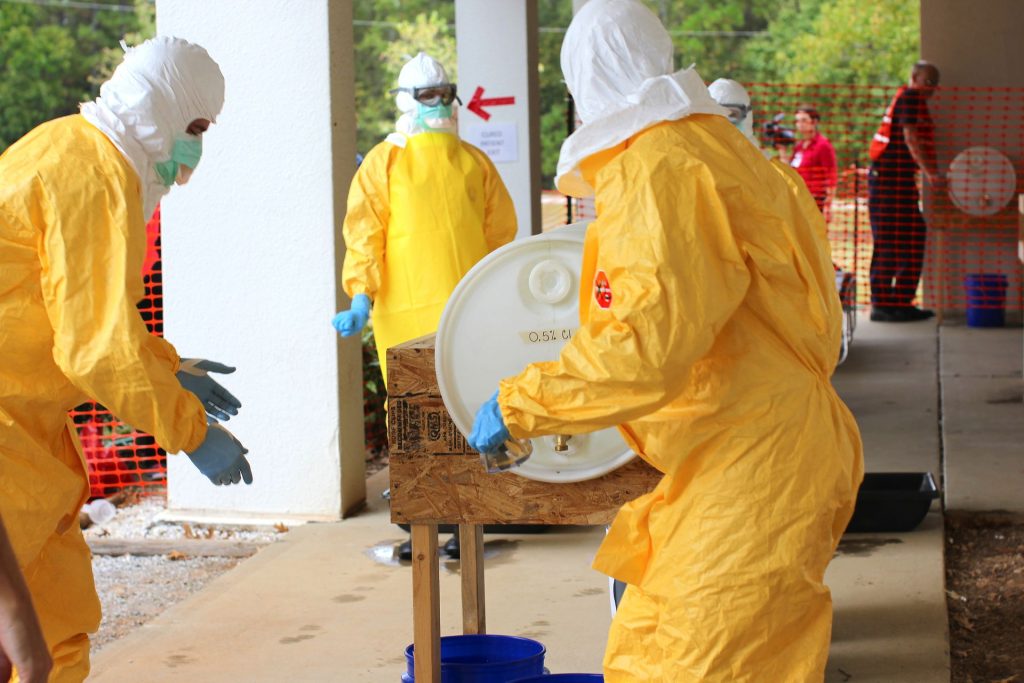
On 20 October 2026, Nigeria’s health ministry confirmed one case of Ebola in the Federal Capital Territory (FCT). The patient is a woman who arrived on an international flight from Uganda, her symptoms began on 7 October. She sought care at a private Abuja facility on 11 October, and laboratory results confirmed Bundibugyo virus on 20 October.
Officials say she is in isolation and that 44 contacts have been identified. They include health workers, patients, caregivers and travel companions. However, identification is not monitoring. No public figure yet shows how many contacts have completed follow-up, and investigators are still working out where she was infected.
This is one imported case, not an outbreak. Still, Nigeria is the fifth country to detect the virus since the Democratic Republic of the Congo (DRC) declared its epidemic on 15 May. That context raises a larger question about how well the lessons of 2014 have lasted.
What Happened In the 2014 Ebola Case
On 20 July 2014, an acutely ill traveller, Patrick Sawyer, from Liberia landed in Lagos. He was admitted to a private hospital, where Ebola was confirmed, and he died on 25 July. By 24 September, Nigeria had recorded 19 confirmed cases and one probable case in two states, with eight deaths.
Tracers identified 894 contacts and made about 18,500 face-to-face visits to check for symptoms. The country was declared free of the disease on 20 October 2014. That toll was small beside the wider West African epidemic, which killed more than 11,000 people.
Health workers paid a heavy price. A peer-reviewed analysis found that more than half of the patients were health workers (1). Dr Ameyo Stella Adadevoh, who isolated the index patient, was among the dead.
The Lessons Behind The Outcome
Containment owed more to systems than to luck. CDC credits an Emergency Operations Centre (EOC), run through an incident management system, with helping to control the outbreak early. The polio programme supplied the template. Its deputy incident manager became the Ebola incident manager, and polio officers deployed to Lagos on 23 July.
People mattered as much as structures. A review in the Pan African Medical Journal notes that the response team had worked together on earlier emergencies. It also credits quick release of state funds and the rapid mobilisation of skilled staff (2).
Yet the response was not flawless. Eight of 20 patients died, and the same review pairs its lessons with explicit cautions. A policy analysis from the Centre for Journalism Innovation and Development argues that fear and weak infection prevention and control (IPC) left too few staff willing to work in isolation wards (3). That is one assessment, but it is consistent with the high infection rate among health workers.
Which Lessons Carry Over
Early recognition, coordination, disciplined tracing and public trust still apply. The virus, however, is different. The 2014 epidemic involved the Zaire species. Bundibugyo has no approved vaccine or specific treatment, and NCDC warns against assuming that Zaire-targeted products will work. However, human clinical trials are underway for top candidate vaccines, including a ChAdOx1-based vaccine by the University of Oxford and an mRNA candidate by Moderna.
Scale also differs. The European Centre for Disease Prevention and Control reports 9,552 confirmed cases and 4,602 deaths in the DRC as of 19 October. Only 76.9% of identified contacts there are under follow-up, which shows how hard monitoring becomes once transmission grows.
Read Also: FG Launches ₦3.05 Billion Programs to Strengthen Healthcare, Education and Reduce Poverty
What The 2026 Ebola Preparedness Record Shows
On 28 May 2026, NCDC issued an advisory rating Nigeria’s importation risk as high. It cited major airports, porous borders and early symptoms that resemble malaria and Lassa fever. Lagos and the FCT sit among ten states in the highest tier.
The advisory asked commissioners to activate coordination structures and engage private providers. It also called for at least one functional isolation facility, protected frontline workers, traveller surveillance, calm public messaging and uninterrupted routine care. States were to report their readiness within 72 hours.
Some measures are documented. On 5 June, NCDC’s Director-General described activated pillars including border surveillance, laboratory readiness and risk communication. President Tinubu also approved N10 billion on 9 June, created a task force and announced isolation centres at the Lagos and Abuja airports.
Evidence of implementation is thinner. CSR Reporters check found no public breakdown of that spending, and some travellers described no screening on arrival in Abuja. It also could not find published state readiness updates, isolation capacity figures or training numbers. Announcements are not proof of delivery.
Responsibility Beyond The Ministry
Preparedness is a governance question as much as a medical one. Health workers carry the occupational risk, and the Abuja contact list includes them. The ministry says the private hospital is receiving IPC support.
Private providers deserve fair scrutiny. In 2014 and in 2026, the patient first sought care at a private facility. Early symptoms mimic common illnesses, so travel-history questions, isolation protocols, protective equipment and prompt reporting are core duties. No evidence shows that any facility failed. Employers, airlines and transport operators also have a role, from cooperating with tracing to protecting staff who report exposure.
Communication carries its own accountability. The ministry urged calm and warned against stigma, which protects patients, families and travellers from discrimination. Consistency helps too. Meanwhile, routine care must continue, a point the advisory itself makes.
Keeping The Evidence Public
Public trust depends on evidence the public can check. Authorities could publish the number of contacts monitored against the number identified. They could also report state readiness, isolation capacity and how the N10 billion was spent. Private facilities need protective equipment and IPC training, with staff supported if they are exposed.
The polio lesson also applies. Nigeria’s EOC capacity existed before 2014 because someone had funded it for another purpose. Keeping such structures active between emergencies is cheaper than rebuilding them during one.
Other African countries share this pattern: air links, informal crossings and private clinics as the first point of care. Kenya has already reported nine cases linked to one cluster. Experience becomes an asset only when institutions document it, fund it and show their work.
References
- Vaz, R. G., Mkanda, P., Banda, R., Komkech, W., Ekundare-Famiyesin, O. O., Onyibe, R., Abidoye, S., Nsubuga, P., Maleghemi, S., Hannah-Murele, B., & Tegegne, S. G. (2016). The Role of the Polio Program Infrastructure in Response to Ebola Virus Disease Outbreak in Nigeria 2014. The Journal of infectious diseases, 213 Suppl 3(Suppl 3), S140–S146. https://doi.org/10.1093/infdis/jiv581
- Oleribe, O. O., Crossey, M. M., & Taylor-Robinson, S. D. (2015). Nigerian response to the 2014 Ebola viral disease outbreak: lessons and cautions. The Pan African medical journal, 22 Suppl 1(Suppl 1), 13. https://doi.org/10.11694/pamj.supp.2015.22.1.6490
- Centre for Journalism Innovation and Development. (2026). Ebola 2026: Is Nigeria Prepared for Another Crisis? . CJID. Retrieved from https://thecjid.org/ebola-2026-is-nigeria-prepared-for-another-crisis/
CSR Reporters will keep tracking how African institutions document their preparedness, so follow our health and governance coverage for the next set of verified updates.
[give_form id="20698"]