ONYINYECHI NWAIGBA
The second cohort of HERTISAN has combined financial literacy and enterprise management training with micro-grants for selected women artisans. The initiative highlights the importance of helping women turn practical skills into better-managed businesses, while raising questions about the support needed to sustain growth beyond training.
For many women who earn a living through baking, fashion design, hair styling, furniture making and other trades, knowing how to deliver a good product or service is only one part of running a successful business.
They must also determine how much to charge, manage the cost of materials, keep accurate financial records, separate personal spending from business expenses and decide when it is financially safe to expand.
Without these skills, a business can attract customers and generate sales without making enough profit to remain sustainable.
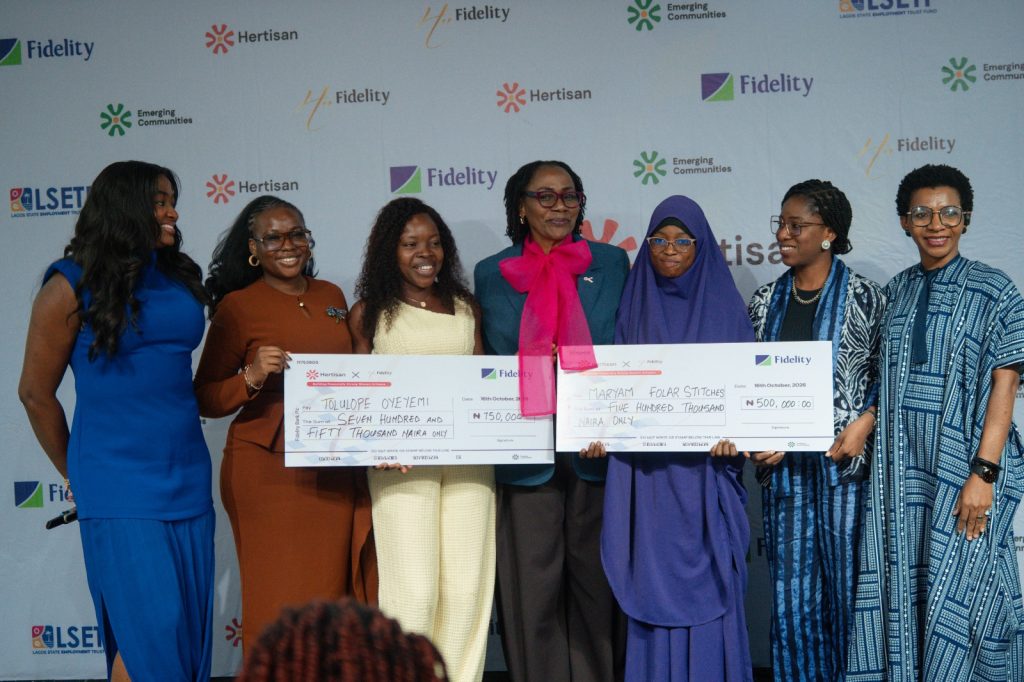
This is the challenge the HERTISAN enterprise development programme is seeking to address. Its second cohort has graduated 200 women artisans and entrepreneurs, combining business management and financial literacy training with ₦5 million allocated across 23 enterprise awards for selected participants.
The graduation ceremony took place on October 16, 2026. The programme is implemented by Emerging Communities, with Fidelity Bank supporting the second cohort as headline sponsor through its HerFidelity initiative. Government partners include the Lagos State Employment Trust Fund and the Lagos State Residents Registration Agency.
The programme focuses on helping women translate existing technical and vocational skills into more sustainable enterprises. Its approach recognises that being good at a trade does not automatically provide the financial knowledge required to manage and grow a business.
However, the significance of the initiative extends beyond the graduation ceremony. Its longer-term value will depend on whether participants can apply what they have learned, use available financial support effectively and build businesses capable of surviving changing economic conditions.
Why business skills matter for women entrepreneurs
Women-owned businesses contribute to local economies by providing goods and services, supporting household incomes and creating opportunities for other workers.
Across Nigeria, women operate businesses in sectors ranging from food production and personal care to fashion, furniture, decoration and other creative trades. Many of these enterprises begin with practical skills and relatively modest resources.
Yet the transition from possessing a skill to running a sustainable business can be difficult.
An entrepreneur may know how to bake but struggle to calculate the full cost of ingredients, electricity, packaging, transportation and labour when setting prices. A fashion designer may receive regular orders but find it difficult to determine how much money should be reinvested in materials or saved for future expenses.
In such situations, revenue does not necessarily translate into profit. Poor record-keeping can make it difficult to identify which products are profitable, while weak cash-flow management can leave a business unable to meet expenses even when customers owe it money.
HERTISAN addresses these challenges through practical financial literacy and business management training. Participants are encouraged to understand their production costs, calculate profitability, maintain records, manage cash flow and make informed decisions about reinvestment.
These capabilities can help entrepreneurs gain a clearer picture of their businesses and make decisions based on financial information rather than guesswork.
The training is particularly relevant for small businesses that may not have the resources to employ accountants, financial advisers or dedicated business managers.
Beyond technical skills to business sustainability
The programme targets women working in trades such as baking, floristry, hair styling, fashion design, furniture making, interior decoration and event decoration.
These businesses may differ in their products, customers and operating costs, but they face several common management challenges.
Entrepreneurs must understand demand, control expenses, price their products appropriately and maintain enough working capital to continue operating. They also need to assess whether expanding production or purchasing new equipment is financially realistic.
For example, a baker considering a larger oven must evaluate not only the purchase price but also expected demand, electricity costs, ingredient requirements and the additional revenue needed to justify the investment.
Similarly, a fashion designer seeking to employ an assistant must consider whether the business can sustain the additional wage costs during periods of lower demand.
Business training can help entrepreneurs assess these decisions more systematically. It can also encourage better separation between household and business finances, making it easier to determine whether an enterprise is generating enough income to support its operations.
According to Emerging Communities, HERTISAN seeks to close the gap between possessing technical skills and having the financial knowledge required to operate a viable enterprise.
The programme’s Executive Director, Dr Seyi Tytler, has emphasized that its objectives extend beyond the number of women trained. The wider aim is to help women build businesses that can grow, withstand financial shocks and create lasting economic value.
That focus is important because the success of an enterprise development programme cannot be established by graduation numbers alone. Participants must have opportunities to apply their knowledge and demonstrate whether the training contributes to stronger business performance over time.
What the ₦5 million enterprise awards mean
A notable feature of HERTISAN Cohort 2.0 is the allocation of ₦5 million across 23 enterprise awards.
The awards are intended to connect the training with practical financial support, allowing selected participants to invest in their businesses. Depending on individual needs and business plans, such funding could help recipients purchase equipment, acquire materials, improve production capacity or address other operational requirements.
For a small enterprise, even a relatively modest investment can help address a specific constraint. A business owner may be able to purchase essential tools, buy materials in larger quantities or improve the efficiency of a production process.
However, the grant allocation must be understood accurately. The ₦5 million was allocated across 23 award recipients, not distributed equally among all 200 graduates. The funding should therefore not be described as a grant received by every participant.
The distinction also highlights a wider challenge in entrepreneurship support: training can reach many people, while direct financial assistance may be available to only a smaller group.
For the programme to create lasting value for all its graduates, business education may need to be complemented by other forms of support, including mentorship, access to appropriate financing, business networks and follow-up assistance.
For recipients of the awards, the next step will be to deploy the funding in ways that address genuine business needs. The longer-term value will depend on whether the investments help improve operations, strengthen cash flow or support sustainable expansion.
The role of corporate and public-sector collaboration
Fidelity Bank supported HERTISAN Cohort 2.0 through its HerFidelity initiative, which focuses on women’s financial inclusion, business education and entrepreneurship support.
The bank’s involvement connects the programme to a broader approach to women’s economic participation that combines financial support with capacity building.
The participation of the Lagos State Employment Trust Fund and the Lagos State Residents Registration Agency also brings public-sector institutions into the initiative.
Such collaboration can be useful because women entrepreneurs often require more than one type of intervention. Business training may improve financial management, while funding can address investment needs and public-sector programmes may offer additional routes to employment support or enterprise development.
Corporate support can also help programmes reach participants who might otherwise struggle to pay for training or obtain specialized business guidance.
However, the effectiveness of these partnerships depends on clear responsibilities, appropriate programme design and evidence of results. Organisations supporting entrepreneurship initiatives need to consider not only how many people participate but also whether the support addresses the barriers that prevent businesses from surviving and growing.
What happens after graduation?
Graduation marks the completion of a training stage, but it does not automatically mean that participants’ businesses will become more profitable or resilient.
Women entrepreneurs continue to operate in an environment shaped by changing input prices, energy costs, transportation expenses, customer purchasing power and competition.
Even an entrepreneur with strong financial management skills may struggle when costs rise sharply or demand weakens. This makes continued support and practical opportunities to apply business knowledge important.
HERTISAN’s longer-term impact would be easier to assess if follow-up evaluations tracked participants’ business performance after graduation.
Useful indicators could include changes in record-keeping practices, pricing decisions, cash-flow management, business survival, revenue and profitability. Evaluations could also examine whether participants have expanded production, hired workers, accessed additional financing or developed new customer relationships.
For the 23 award recipients, it would be useful to assess how the grants were invested and whether the investments helped address specific business constraints.
These measures would provide a clearer picture of whether the programme is improving enterprise performance and livelihoods rather than simply delivering training and financial awards.
They could also help programme organisers identify which forms of support are most useful and where participants require additional assistance.
Strengthening women’s participation in the economy
Supporting women entrepreneurs can contribute to wider economic development by helping businesses operate more effectively, sustain household incomes and create opportunities for employment.
When a small enterprise becomes more financially stable, its owner may be better positioned to plan ahead, retain workers, serve customers consistently and invest in expansion.
The benefits can extend to suppliers, apprentices and other people who depend on the business for income. However, these outcomes depend on individual businesses’ performance and should be measured rather than assumed.
HERTISAN Cohort 2.0 represents an effort to combine business education with targeted financial assistance for women working across different trades.
Its 200 graduates represent the programme’s immediate training reach, while the 23 enterprise awards provide additional support to selected participants. The next challenge is to determine whether these interventions translate into stronger businesses and more secure livelihoods.
For Nigeria’s women entrepreneurs, access to practical business knowledge is an important part of building sustainable enterprises. Pairing that knowledge with appropriate financing, mentorship and continued support could help more women move from simply operating a trade to managing a business with a clearer path to growth.
Ultimately, the value of programmes such as HERTISAN will be measured not only by how many women graduate, but by whether participants are better equipped to manage financial pressures, make informed business decisions and sustain their enterprises over time.
[give_form id="20698"]