Nigeria Develops Disease-Resistant Ginger Planting Materials to Revive Struggling Industry
 ONYINYECHI NWAIGBA
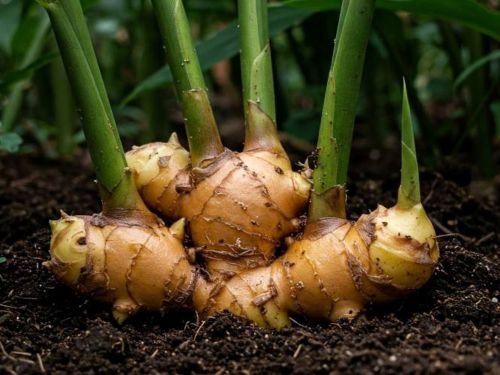
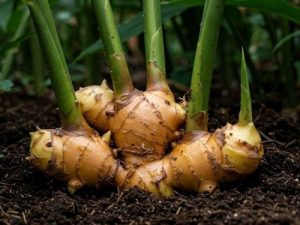
Nigeria’s biotechnology agency says it has developed ginger planting materials with improved resistance to fungal attacks following severe losses from ginger blight. The development could support farmers’ recovery and help rebuild the country’s ginger export market, but field validation, affordable access and effective distribution will determine its real impact.
Nigeria is taking another step towards reviving its struggling ginger industry, with the National Biotechnology Research and Development Agency (NBRDA) announcing the development of ginger planting materials with improved resistance to fungal attacks.
The development comes after a devastating ginger blight outbreak in 2023 wiped out farms, disrupted exports and left farmers facing significant financial losses. The disease has also continued to threaten recovery efforts, with renewed outbreaks reported in parts of Kaduna State in 2026.
According to NBRDA Director-General and Chief Executive Officer, Professor Abdullahi Mustapha, the agency has developed planting materials intended to help address the fungal disease. It is also working on a biological spray, known as a bio-fungicide, to support disease control.
Mustapha disclosed the development at the 60th Annual Conference and Diamond Jubilee of the Agricultural Society of Nigeria in Abuja.
He explained that the planting materials and biological spray could offer complementary approaches to managing ginger blight. However, he stressed the importance of field validation, farmer training and coordinated deployment before the technologies can deliver results at scale.
The announcement offers a potential route towards rebuilding an agricultural value chain that supports farmers, traders, processors and exporters. But the bigger question is whether the scientific development can translate into healthier farms, restored incomes and a more reliable supply of Nigerian ginger.
The scale of the damage to Nigeria’s ginger industry
Before the disease outbreak, Nigeria’s ginger industry was valued at approximately $730 million, according to figures cited by the agency. Ginger production and exports supported economic activity across farming communities, particularly in Kaduna State, one of the country’s major ginger-producing areas.
The 2023 outbreak caused substantial damage, leaving many farmers with reduced harvests and significant financial losses. Some farmers were forced to scale back production or leave the business altogether.
Figures cited by Mustapha indicate that ginger farmers lost about ₦12 billion in 2023. Nigeria’s ginger export earnings also fell by 74 per cent, from ₦23.76 billion in the first nine months of 2023 to ₦6.28 billion during the corresponding period in 2024.
The disruption extended beyond individual farms. When production falls sharply, processors may struggle to obtain sufficient raw materials, exporters may find it harder to fulfil orders, and traders can face higher procurement costs.
The industry has also faced renewed pressure from disease outbreaks and rising production costs. Reports published in September 2026 indicated that ginger blight had resurfaced in parts of Kaduna State, threatening farmers who were attempting to rebuild their operations.
These challenges demonstrate why restoring the industry requires more than increasing the number of farms planted. Farmers also need effective disease management, reliable planting materials, affordable inputs and markets capable of absorbing their produce.
How the new planting materials could help farmers
Ginger blight can damage crops and substantially reduce harvests, making disease management a major concern for farmers.
Planting materials with improved resistance to fungal attacks could help reduce vulnerability to the disease and support more reliable production. If validated under field conditions, they may give farmers another tool for protecting their farms against future outbreaks.
The distinction between improved resistance and complete immunity is important. The agency has announced progress in developing planting materials with improved resistance; this does not mean the crop is guaranteed to remain unaffected by the disease.
The materials must be tested under different farming conditions to establish how effectively they perform, including how they respond to disease pressure and whether they maintain acceptable yields and crop quality.
The proposed bio-fungicide could provide an additional disease-management option if testing establishes its effectiveness and suitability for farmers. Its practical value will depend on factors such as application requirements, affordability, availability and how it performs alongside other crop management practices.
For farmers, the ultimate benefit will be measured by whether these interventions reduce crop losses, improve harvests and make ginger farming a more viable source of income.
What recovery could mean for jobs and rural livelihoods
Nigeria’s ginger value chain supports more than cultivation alone. It includes the businesses and workers involved in planting material production, farm labour, harvesting, processing, packaging, transportation, storage and export.
A sustained recovery could create opportunities throughout this chain.
Farmers who are able to return to production may regain an important source of income. Agricultural input suppliers could serve more growers, while processors may have better access to raw ginger for drying, grinding and other value-added activities.
Transporters, warehouse operators and traders could also benefit from more consistent supply. For rural communities, the wider effects may include renewed commercial activity and improved opportunities for people whose livelihoods depend on agriculture.
However, these benefits are potential outcomes, not results that have already been achieved through the new planting materials. They will depend on the extent to which farmers can adopt the technology successfully and whether production can recover without being undermined by recurring disease outbreaks.
Access is particularly important for smallholder farmers, who may not have the financial resources to experiment with unfamiliar planting materials or absorb the cost of another failed farming season.
If improved materials are expensive, difficult to obtain or distributed too slowly, the benefits may remain limited to a small number of growers. Making the innovation accessible to farmers in affected communities will therefore be an important part of the recovery process.
Rebuilding export confidence requires more than better planting materials
Nigeria’s ginger industry also needs to rebuild its position in international markets.
Disease-related production losses can make it difficult for exporters to meet orders consistently. Reduced supply may affect processing businesses and weaken the industry’s ability to maintain reliable relationships with international buyers.
Improved planting materials could help address one part of this challenge by supporting healthier crops and more dependable production. But export recovery will also depend on the availability of sufficient volumes, consistent product quality, effective processing and storage, and the ability of businesses to meet buyers’ requirements.
Farmers and exporters also need to be able to manage production costs. If cultivation becomes too expensive, even a successful disease-control intervention may not make ginger commercially attractive to every grower.
The recovery effort must therefore connect agricultural research with the practical needs of the market. Better planting materials are an important starting point, but they need to be supported by functioning supply chains, suitable infrastructure, financing and market access.
What must happen next?
Nigeria has already introduced other ginger recovery interventions. The National Agricultural Development Fund launched its Ginger Recovery, Advancement and Transformation for Economic Empowerment (GRATE) project in March 2024, committing ₦1.6 billion to support affected farmers with agricultural inputs, including seeds, fertilisers and crop protection products.
The new planting materials could complement broader recovery efforts, but their success will depend on how effectively research institutions, government agencies, farmers and agricultural businesses work together.
First, the materials need to undergo field validation to establish their performance under real farming conditions. Results should help determine their suitability, disease resistance, yield potential and practical requirements.
Second, farmers need access to clear guidance on how to use the materials and manage the disease. Training and agricultural extension services can help growers adopt appropriate practices, identify symptoms early and understand how planting materials fit into wider crop protection strategies.
Third, the government and relevant institutions must consider how validated materials can be multiplied and distributed affordably. A promising innovation cannot significantly improve national production if farmers in affected areas cannot obtain it in sufficient quantities.
Finally, recovery programmes need to track measurable results. These should include the number of farmers reached, planting materials distributed, crop losses, yields, production costs, farmer incomes and the return of ginger exports to international markets.
Such monitoring would help establish whether the intervention is improving livelihoods and strengthening the value chain, rather than measuring progress only by the development or announcement of a new technology.
Turning scientific progress into lasting agricultural recovery
The development of ginger planting materials with improved resistance to fungal attacks offers Nigeria a potentially valuable tool in its efforts to rebuild a damaged industry.
For farmers who lost crops and income during the ginger blight crisis, the prospect of more resilient planting materials is significant. For processors, exporters and rural businesses, a recovery in production could help restore activity across the value chain.
But the announcement is an early step, not proof that the industry has recovered. Field validation, effective disease management, affordable access, farmer training and stronger market connections will determine how much difference the technology makes.
Nigeria’s ginger recovery will ultimately depend on whether scientific advances reach the people who need them most. If the new planting materials perform as expected and are deployed effectively, they could help protect farmers’ livelihoods, strengthen agricultural businesses and support the rebuilding of a valuable export industry.
The real measure of success will be healthier farms, more dependable harvests and farmers who can return to ginger production with greater confidence.
DON’T JUST ANNOUNCE YOUR IMPACT. PROVE IT.
CSR REPORTERS helps organizations verify, assess, document and communicate the real impact of their CSR and sustainability initiatives.
Project Verification | Beneficiary Feedback | Impact Assessment | Impact Storytelling | Stakeholder Engagement
Have an initiative worth documenting? Let us verify it. Document it. Tell the story.
Talk to CSR REPORTERS
enquiries@csrreporters.com
📞 Call/WhatsApp: 0803 401 2198 | 0903 329 6374 | 0905 024 4468 | 0803 209 8499
www.csrreporters.com