

 CSR Reporters ' Editorial Team
THE VERDICT | Who Kept Their Word. Who Did Not. | Volume 21
This week’s Verdict is about one question: can the public check what a company says about its own environmental performance? Safaricom shows what it looks like when the answer is yes, even when the news is mixed. Heirs Energies shows what happens when a flaring pledge and the satellite record point in different directions.
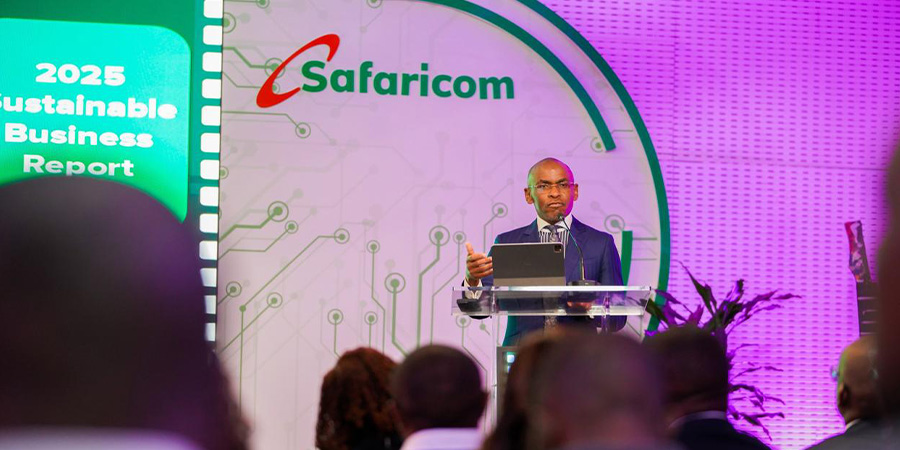
Commended: Safaricom (Kenya)
Why: it reports against named international frameworks, and it publishes numbers that do not flatter it.
The evidence:
- Framework discipline: the CEO has said the company adheres to IFRS S1 and S2 and the TCFD framework for climate reporting. This is its 15th consecutive Sustainable Business Report.
- Candour on emissions: the group reports that Scope 1 and 2 emissions for Safaricom Kenya rose by up to 9.1%, Ethiopia’s fell by 31%, and the whole group’s rose by 1%. A company chasing applause would have led with the Ethiopian figure.
- Money behind the claim: in FY26 it issued its debut KShs 20.0 billion Green Medium-Term Note, oversubscribed by 175.7%, to fund renewable energy and energy-efficient infrastructure.
- Infrastructure: a summary of its FY26 annual report cites 2,002 solar-powered sites, with 35% of the network on green energy. We have not checked that figure against the report itself.
Flagged caveat: we could not confirm which independent firm assured the FY26 climate figures, or at what level. Under our standard that keeps this a commendation for disclosure quality, not for emissions performance. A group-wide rise in emissions is not a win.
What would strengthen it: a named assurance provider, a published IFRS S2 index, and a Kenya emissions line that moves down.
Called out: Heirs Energies (Nigeria)
The institutional failure: a public pledge to end routine flaring by 2025, a satellite record that moved the other way, and a gas-capture programme whose stated completion date has now passed without public confirmation.
The timeline:
- January 2021: the OML 17 assets pass from Shell to Trans-Niger Oil and Gas, in a deal reported at US$533 million. Heirs Energies operates the block for the NNPC/Heirs joint venture.
- 2021 to 2022: at Agbada, flaring doubles immediately after the sale, then almost doubles again the following year, according to a SkyTruth analysis for Climate Home News.
- By 2025: the company’s website says it is committed to eliminating routine flaring and greenhouse gas emissions by 2025.
- 9 December 2025: Heirs and NNPC sign agreements with five offtakers to capture and sell about 180 million standard cubic feet a day of flare gas. A company manager gave third-quarter 2026 as the completion date.
- 5 February 2026: Climate Home News publishes its investigation. Heirs did not answer its questions.
- 30 September 2026: the third quarter ends. We found no public confirmation that the capture projects were completed.
The numbers:
- Flaring across OML 17 grew sevenfold between 2020, Shell’s last year, and 2024, per SkyTruth’s analysis of satellite data from the Colorado School of Mines.
- At the Oyigbo field, 15 times more gas was burned in 2024 than in 2020.
- At Nkali, flaring was nearly four times higher in the year after the sale.
- Climate Home reports that publicly available NNPC data shows flaring stayed high throughout 2025.
On the ground: Climate Home reporters saw active flare stacks metres from homes and businesses in Oyigbo, with soot-stained walls, and a community leader described several flaring episodes a week. A Port Harcourt physician told them a link to illness is “probable” but not scientifically proven in the Niger Delta.
What the company can fairly say: it has signed flare gas commercialisation deals under the regulator’s programme, restored the Agbada-67 well, which added about 45 million cubic feet a day to the gas grid, and says it has raised gas output while running host-community health and education programmes. Mature oil fields produce large volumes of associated gas, and capturing it needs money and pipelines. The World Bank also says flaring has risen nationally as smaller Nigerian operators ramped up production.
Why this is still a call-out: a pledge with a date is a commitment the public can measure. The 2025 date has passed, the independent record shows more flaring, not less, and the company has not published block-level flare volumes that would show otherwise, in the sources we reviewed. A deal signed is not gas captured. The company’s own third-quarter 2026 deadline has also gone by with no public update.
What would change this verdict: monthly OML 17 flare volumes by site from 2020 to 2026; confirmation of when the capture facilities were commissioned and how much gas they take; and independent verification by the regulator.
The wider lesson
Announcing a target is not the same as meeting it. Companies in both countries are about to face mandatory climate disclosure: Kenya’s roadmap requires IFRS S1 and S2 reporting from 1 January 2027 with limited assurance in the early years, and Nigeria’s adoption becomes fully mandatory from January 2028. The firms that will cope are those already publishing numbers that can be checked, including the unflattering ones.
Right of reply: both companies will be sent these findings with the opportunity to respond, and any response will be published.
DON’T JUST ANNOUNCE YOUR IMPACT. PROVE IT.
CSR REPORTERS helps organisations verify, assess, document and communicate the real impact of their CSR and sustainability initiatives.
Project Verification | Beneficiary Feedback | Impact Assessment | Impact Storytelling | Stakeholder Engagement
Have an initiative worth documenting? Let us verify it. Document it. Tell the story.
Talk to CSR REPORTERS
enquiries@csrreporters.com
Call/WhatsApp: 0803 401 2198 | 0903 329 6374 | 0905 024 4468 | 0803 209 8499
[give_form id="20698"]