Nigeria–Germany Partnership: Can New Investments Strengthen Agriculture and Clean Energy?
 ONYINYECHI NWAIGBA
Nigeria and Germany are exploring opportunities to deepen economic cooperation in agriculture, renewable energy, industrial development and skills acquisition. The discussions could open new opportunities for technology transfer, local production and job creation, but their real value will depend on whether diplomatic engagements translate into practical investments that benefit businesses and communities.
Nigeria is seeking to strengthen its economic relationship with Germany, with renewed attention on sectors that could support food security, industrial growth, energy access and employment.
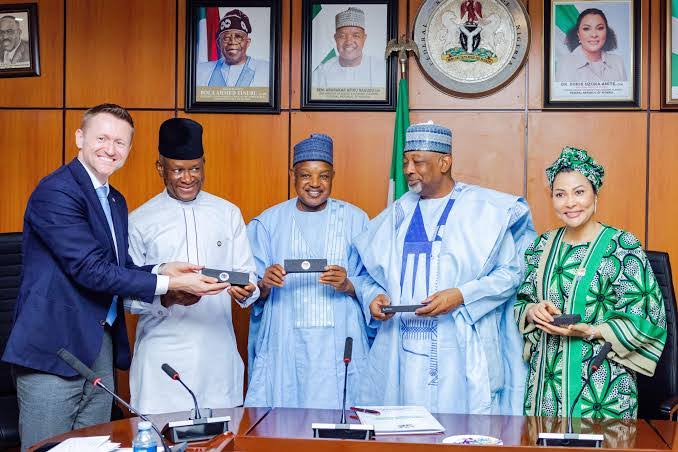
The discussions took place during a high-level meeting in Abuja on October 29, 2026, between Nigerian government officials and a delegation from the German Bundestag Committee on Economic Cooperation and Development, led by Professor Wolfgang Stefinger.
The Nigerian delegation included the Minister of Budget and Economic Planning, Abubakar Bagudu; Minister of Agriculture and Food Security, Abubakar Kyari; Minister of State for Industry, John Enoh; and Minister of State, Doris Uzoka-Anite.
Both sides discussed existing areas of cooperation and explored opportunities for further partnerships in agriculture, renewable energy, vocational education, industrial development, technology transfer and the creative economy.
For Nigeria, the engagement presents an opportunity to attract investment, strengthen local industries and access technical expertise that could support development across different sectors.
However, the meeting did not announce a specific new investment amount or signed project agreement. The next step will be determining how the areas discussed can translate into concrete programmes, business partnerships and measurable economic outcomes.
Why Agriculture Is Central to the Partnership
Agriculture remains important to Nigeria’s economy, supporting livelihoods, food supply chains and businesses across rural and urban communities. Yet farmers and agricultural enterprises continue to face challenges involving limited financing, inadequate infrastructure, post-harvest losses, outdated equipment and inconsistent access to markets.
During the meeting, the Minister of Agriculture and Food Security, Abubakar Kyari, highlighted the Federal Government’s priorities for improving domestic food production and strengthening the agricultural sector.
These priorities include expanding irrigation systems, improving access to agricultural finance and modern technologies, reducing food imports and post-harvest losses, and promoting climate-resilient farming.
Cooperation with Germany could support these objectives through investment, technical expertise, agricultural research and improved production technologies.
For example, better irrigation systems could help farmers reduce their dependence on unpredictable rainfall, while improved storage and processing facilities could reduce the amount of agricultural produce lost between harvest and the market.
Modern agricultural equipment and technical support could also help farmers improve productivity and strengthen their ability to participate in commercial agricultural value chains.
Smallholder farmers, who play a significant role in Nigeria’s food production, would be particularly important to the success of such efforts. Support that connects them to finance, quality inputs, technology and reliable markets could help improve productivity and household incomes.
However, the benefits of agricultural investment will depend on how projects are structured. Large-scale investments should create opportunities for local farmers and businesses rather than developing production systems that leave smaller agricultural players behind.
Renewable Energy and the Need for Reliable Power
Renewable energy is another important area of potential cooperation between Nigeria and Germany.
Access to reliable and affordable electricity remains a major concern for households, businesses and industries across Nigeria. For manufacturers, agricultural processors and small enterprises, unreliable power can increase operating expenses, limit production and affect business competitiveness.
Renewable energy investments could help address some of these challenges, particularly where solar, wind and other appropriate technologies can provide reliable electricity for communities and productive activities.
In agriculture, energy access supports irrigation, cold storage, food processing and the preservation of agricultural produce. Farmers and agro-processors with dependable electricity can potentially reduce their reliance on expensive diesel generators and improve the efficiency of their operations.
For rural communities, renewable energy solutions could also support access to electricity where extending conventional power infrastructure is difficult or expensive.
Germany has experience in renewable energy development, energy efficiency and technical training. Stronger cooperation could create opportunities for technology exchange, local capacity development and investment in clean energy projects.
The discussions also identified vocational education and technical skills as important areas of cooperation. This is particularly relevant because expanding renewable energy infrastructure requires trained technicians, engineers, installers and maintenance professionals.
For Nigeria, attracting investment in clean energy should therefore go hand in hand with developing the local workforce needed to install, operate and maintain these systems.
The Importance of Technology Transfer and Local Industrial Development
Beyond agriculture and renewable energy, the discussions highlighted industrial development and technology transfer as important areas for strengthening economic relations.
Nigeria’s industrial development depends partly on its ability to move beyond importing finished goods and expand domestic manufacturing, processing and technical capabilities.
German businesses have experience across manufacturing, engineering, energy infrastructure and industrial technology. Greater cooperation could create opportunities for Nigerian companies to access technical expertise, improve production processes and develop skills required for more competitive operations.
The Minister of State for Industry, John Enoh, emphasised the importance of manufacturing, entrepreneurship, digital innovation and vocational training in strengthening local industries and creating employment.
Such cooperation could be particularly useful for small and medium-sized enterprises seeking to improve their operations, adopt new technologies and participate in larger supply chains.
However, technology transfer should involve more than the importation of equipment. Its long-term value depends on whether Nigerian workers and businesses acquire the knowledge and technical capabilities needed to use, maintain and eventually improve the technologies introduced.
Training programmes, research partnerships, local supplier development and collaboration between German and Nigerian businesses could help deepen these benefits.
This would also create opportunities for young Nigerians to develop technical skills that are relevant to emerging industries.
What Existing Nigeria–Germany Cooperation Shows
The latest engagement builds on an established economic and development relationship between the two countries.
In May 2026, Nigeria’s Ministry of Budget and Economic Planning reported that bilateral trade between Nigeria and Germany had increased by almost 30 per cent to approximately €3 billion in 2025.
The ministry also stated that more than 90 German companies were operating in Nigeria across sectors including energy, manufacturing, healthcare, logistics and industrial services.
Germany’s development cooperation with Nigeria is also significant. During the October 2026 engagement, Germany’s Consul General, Daniel Krull, said the country’s development cooperation with Nigeria amounted to more than €700 million.
This existing relationship provides a foundation for further discussions on investment, skills development and infrastructure.
German development institutions, including the German Agency for International Cooperation (GIZ) and KfW Development Bank, have been involved in supporting development priorities in Nigeria.
Their involvement demonstrates the different ways international cooperation can contribute to development, including technical assistance, institutional capacity-building, financing and private-sector partnerships.
However, existing development cooperation and bilateral trade figures should not be mistaken for new funding committed during the October meeting. The specific investments and programmes arising from the latest discussions have not yet been announced.
Skills Development and Opportunities for Young Nigerians
One of the most important areas of potential impact is vocational education and technical skills development.
As Nigeria seeks to expand agriculture, manufacturing and renewable energy, businesses will need workers with the practical skills required to operate modern equipment, manage production processes and maintain technical infrastructure.
Without adequate local skills, companies may struggle to maximise the benefits of new investments or rely heavily on external technical support.
Germany’s experience with vocational and technical education could provide opportunities for cooperation in professional training, industry-based learning and institutional partnerships.
Such initiatives could help young Nigerians develop skills in electrical installation, renewable energy systems, mechanical engineering, agricultural technology, industrial operations and other specialised fields.
The discussions also touched on employment and skilled migration, highlighting the importance of creating opportunities for professionals to develop their careers while contributing to economic activity in both countries.
For these opportunities to produce lasting benefits, training programmes should be connected to actual labour-market needs. Young people need access not only to certificates but also to practical experience, relevant equipment, industry exposure and employment pathways.
Partnerships between educational institutions, employers and technical training organisations could help bridge this gap.
What Could Prevent the Partnership from Delivering Results?
Despite the opportunities, translating bilateral discussions into successful investments will require addressing several challenges.
Investors need a predictable business environment, reliable infrastructure, clear regulations and confidence that projects can operate sustainably over the long term.
In Nigeria, high operating costs, electricity constraints, foreign exchange risks, infrastructure gaps and concerns about policy implementation can influence investment decisions.
Agricultural projects may also face challenges involving land access, security, irrigation, transportation and the availability of finance. Renewable energy investments require appropriate financing arrangements, technical capacity and a supportive regulatory environment.
For small businesses, the challenge is ensuring that large investment partnerships create opportunities beyond major corporations.
Local suppliers, entrepreneurs, farmers and technical professionals should be able to participate in the value chains created by new projects. Otherwise, the economic benefits may remain concentrated among a limited number of investors and established businesses.
There is also a need for accountability. Governments and development partners should establish clear targets for projects, monitor implementation and communicate their results.
This is important because the value of international cooperation should be measured not only by the number of meetings held or agreements announced, but also by the improvements generated in people’s lives.
Turning Diplomatic Engagement into Measurable Development
The renewed Nigeria–Germany engagement creates an opportunity to strengthen cooperation in sectors that are closely connected to the country’s development priorities.
Agricultural investment could support farmers, improve food processing and reduce post-harvest losses. Renewable energy could expand electricity access and support businesses that depend on reliable power. Industrial cooperation could strengthen local manufacturing, while vocational training could prepare young people for emerging employment opportunities.
But these benefits will depend on implementation.
Future projects should be assessed through practical indicators such as the number of farmers reached, agricultural productivity improvements, renewable energy capacity deployed, businesses supported, workers trained and sustainable jobs created.
It will also be important to examine how much investment actually reaches local enterprises and communities, whether technology is transferred effectively and whether projects remain operational over time.
For Nigeria, the objective should be to build partnerships that strengthen domestic capacity rather than create long-term dependence on external expertise and imported solutions.
Germany’s technical capabilities and development experience could complement Nigeria’s resources, market potential and workforce. The opportunity lies in combining these strengths to support productive industries and more resilient communities.
Ultimately, stronger Nigeria–Germany relations will matter most when cooperation moves beyond diplomatic discussions to investments and programmes that improve food security, expand access to clean energy, strengthen local businesses and create meaningful opportunities for Nigerians.
[give_form id="20698"]