The Navigator and the Chapel: Tinubu’s Mecca Pilgrimage and Nigeria’s Search for Focused Leadership
 Eche Munonye, Founder and Chief Strategist, CSR Reporters
The Navigator and the Chapel: Tinubu's Mecca Pilgrimage and Nigeria's Search for Focused Leadership
Imagine a great ship leaving Lagos harbour at dawn, carrying over two hundred million passengers. On the quay, a blessing is offered. Voices rise. Heads bow. Many on board are moved to tears, because they have little else to hold on to except hope.
Then the captain walks into the wheelhouse.
What the captain does in the next hour, and the hour after that, decides whether the blessing meant something. That question, not the blessing itself, is the real subject of this article.
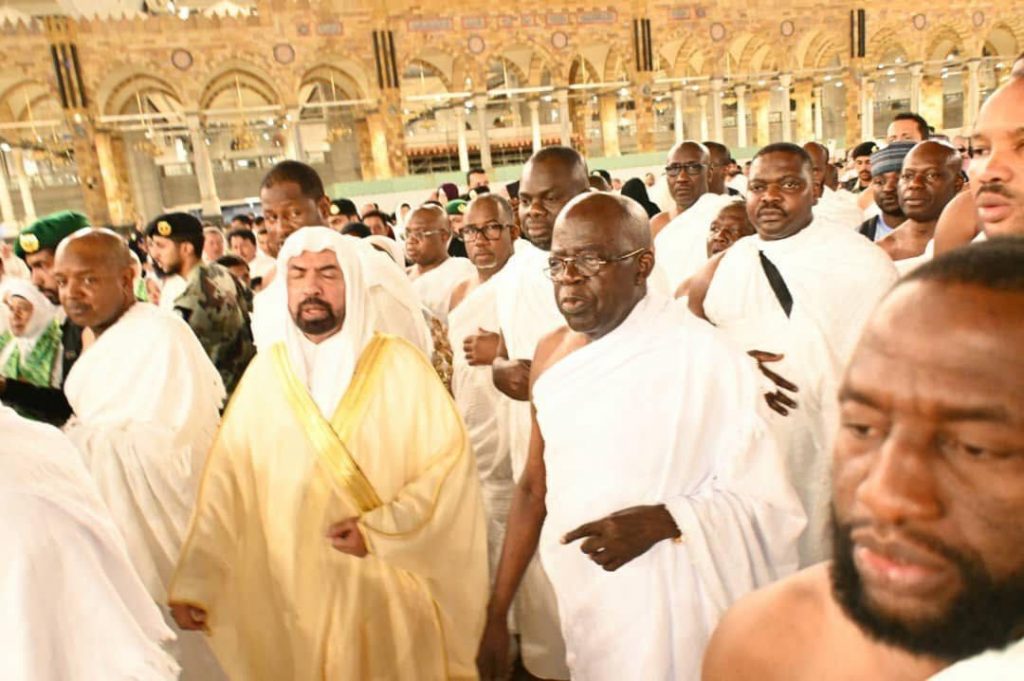
Last week, President Bola Tinubu travelled to Makkah to perform Umrah. His office said he would offer prayers for Nigeria’s peace, unity, stability and progress. It is a personal act of faith, and it deserves the respect any sincere act of faith deserves. But a nation is not only a congregation. It is also a vessel in motion, and vessels do not reach harbour on blessings alone.
The Blessing and the Voyage
No serious person argues that prayer is worthless. Across Nigeria, prayer has steadied families through hunger, grief and fear when little else could. In a country where trust in institutions is fragile, faith is often the one institution people still believe in.
But notice what prayer does on a ship. It steadies the passengers. It does not read the charts, trim the sails, check the fuel or watch the rocks. That is the work of a navigator, and the navigator’s virtues are different from the pilgrim’s: attention, discipline, measurement, and the willingness to turn the wheel when the instruments say the course is wrong.
Prayerful leadership asks, “Will Heaven be kind to us?” Focused leadership asks, “What exactly are we steering toward, how will we know we are on course, and who answers if we are not?”
What a Compass Actually Does
A compass is humble. It has no opinion about your intentions. It does not care how sincere the captain is, how loud the crew sings, or how long the speeches were at departure. It simply points, and the pointing is the same whether you like it or not.
Focused leadership works the same way. It means:
- A destination the passengers can read. Not “progress” in general, but power supply, food prices, road safety, school completion, security in a named community, with figures and dates.
- Instruments that cannot be flattered. Data that is published, independently checked and open to challenge, rather than numbers that arrive polished from the same office that wants to be praised.
- A log that is open. Every voyage keeps a record. A nation’s equivalent is a public account of what was promised, what was delivered and what slipped.
- A crew that is trusted to speak. Good captains want the lookout to shout early. Weak ones treat the shout as disloyalty.
The Weather We Cannot Pray Away
Nigeria’s storms are no secret: insecurity that still shapes where farmers dare to plant and children dare to study; a cost of living that has turned ordinary meals into budgeting exercises; electricity that is still more promise than service; and a youth population that is not waiting for the next generation of leaders to be born, because it is already here and already restless.
These are not mysteries that require divine explanation. They are problems that require sustained attention, competent delivery and honest measurement. When a leader tells citizens to pray harder, citizens are entitled to ask a simple follow-up: and what will you do harder?
The Case for the Chapel
In fairness, there is a serious argument on the other side, and it deserves to be stated well. Leaders carry burdens no manual prepares them for. Many citizens take comfort in seeing their president seek guidance, and see humility in it. Religious leaders in Nigeria have long urged citizens to pray for their leaders rather than curse them, and there is wisdom in that: contempt rarely repairs anything. And the President himself has framed the matter as both, telling worshippers at the National Mosque that the word for all of us is to work harder and pray harder.
That last formulation is the right one. The problem is not prayer. The problem arises when prayer becomes a substitute, when the language of faith is invoked at the moment the language of results is due, or when a public that is asked to keep praying is never shown the chart.
At its best, the chapel and the wheelhouse are not rivals. The captain who prays at dawn and checks the instruments by noon is the captain worth following.
Focus Is a Habit, Not a Mood
The uncomfortable truth is that focus cannot be declared. It has to be built into how an administration works: a short list of priorities that does not change with the news cycle; targets with owners and deadlines; progress reported regularly in plain language; and independent eyes, from the press, civil society and citizens, allowed to verify.
This is exactly the discipline we ask of corporations. We do not accept a company announcing that it “cares deeply about communities” without evidence of what was built, who benefited and whether it lasted. We should not demand less of those who govern. Sincerity is a starting point. Verification is how trust is earned.
The Question for the Wheelhouse
So here is the question every Nigerian is entitled to put, politely and persistently, to everyone who leads, from the Presidency to the council ward: what are you steering toward, and how will we know?
If the answer arrives with a target, a date and a way to check, the blessing will have been worth something. If it arrives as another call to wait and pray, the passengers are right to look up from their knees and ask who is watching the rocks.
A nation can be prayed for by millions. It can only be navigated by a few. The few owe the many a clear heading, an honest log and the courage to turn the wheel.