
Top 20 Companies Supporting SMEs in Nigeria: Ranking Their Impact, Funding and Evidence
 CSR Reporters Editorial Team
Top 20 Companies Supporting SMEs in Nigeria: Ranking Their Impact, Funding and Evidence
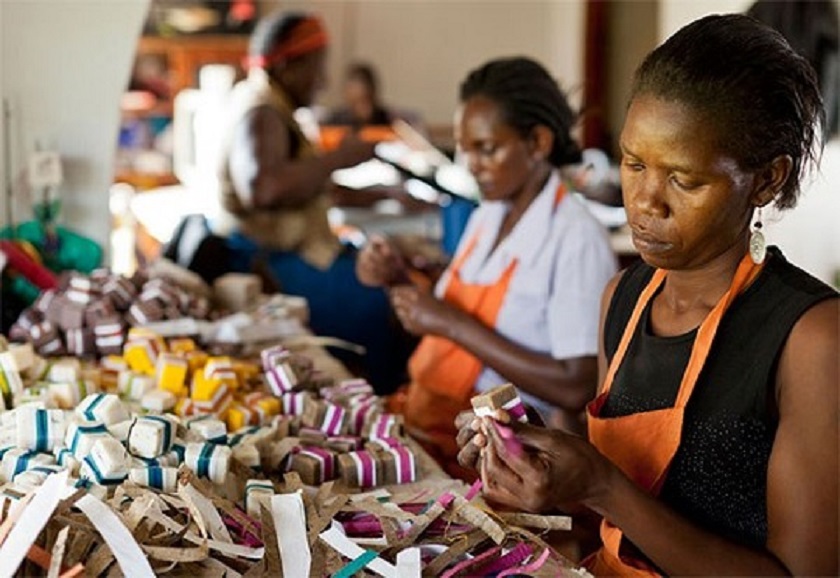
Nigeria has no shortage of companies announcing SME loans, grants, entrepreneurship programmes and business support initiatives. What remains in short supply is evidence of what happens after the support is delivered.
Small and medium-sized enterprises are central to Nigeria’s economy, yet access to affordable finance, business development support, reliable markets and the infrastructure needed to grow remains a major challenge.
Across the country, banks, fintech companies, manufacturers, multinational corporations and philanthropic organisations have introduced programmes intended to address these gaps. Some provide loans and grants. Others offer training, mentorship, technology, equipment, market access and business development opportunities.
But how much of this support is translating into sustainable businesses, increased revenue, employment and long-term economic opportunity?
That is the question behind this CSR REPORTERS ranking of 20 companies and organisations supporting small and medium-sized enterprises in Nigeria in 2026.
The ranking examines the nature of their interventions, the scale of support disclosed and, most importantly, the quality of evidence available to demonstrate results.
Our central finding is striking: Nigerian companies are generally more forthcoming about the money they lend, grants they announce and people they reach than about the businesses they actually help to grow.
Of the 20 organisations examined, only three published outcome-related data in the materials reviewed. Even these figures were company-reported and had not been independently verified.
| DON’T JUST ANNOUNCE YOUR IMPACT. PROVE IT. CSR REPORTERS helps organisations verify, assess, document and communicate the real impact of their CSR and sustainability initiatives. Project Verification | Beneficiary Feedback | Impact Assessment | Impact Storytelling | Stakeholder Engagement Have an initiative worth documenting? Let us verify it. Document it. Tell the story. Talk to CSR REPORTERS enquiries@csrreporters.com Call/WhatsApp: 0803 401 2198 | 0903 329 6374 | 0905 024 4468 | 0803 209 8499 |
Why SME support matters in Nigeria
Small and medium-sized enterprises are among the most important contributors to Nigeria’s economic activity, employment and household livelihoods. They provide opportunities for entrepreneurship, support local supply chains and create economic participation beyond the country’s largest corporations.
Yet many face persistent barriers, including high borrowing costs, limited access to formal credit, inadequate business infrastructure, weak market access and gaps in managerial and technical capacity.
Access to finance is particularly important. Commercial lending rates reported in Nigeria in 2026 have ranged between 29 and 36 per cent, making borrowing expensive for many small businesses. A business loan can provide working capital and support expansion, but the cost and repayment conditions can also place additional pressure on an already vulnerable enterprise.
This is why SME empowerment should not be measured by the amount of money disbursed alone.
A meaningful assessment must ask whether businesses survived, increased revenue, created jobs, improved productivity, gained access to new markets or developed the capacity to operate independently.
For companies claiming to support entrepreneurship, these are the outcomes that matter.
How CSR REPORTERS ranked the companies
This ranking considers organisations operating in Nigeria that support SMEs through one or more of the following:
- Business loans and other financing arrangements.
- Grants and startup funding.
- Entrepreneurship training and mentorship.
- Supplier and retailer development.
- Market access and business partnerships.
- Digital payment, technology and business management tools.
- Support for women-owned, youth-led and rural enterprises.
Commercial lending by banks and fintech companies is included. However, loan disbursement is treated as evidence of financial reach, not proof of business impact.
Assessment criteria
Five considerations informed the editorial assessment:
1. Business outcomes: Evidence of business survival, revenue growth, profitability, employment creation, expansion or improved productivity.
2. Inclusion: Support for women-owned businesses, young entrepreneurs, first-time borrowers, rural enterprises and underserved business owners.
3. Verified reach: The number of businesses actually supported, rather than announced targets, proposed facilities or funding commitments.
4. Non-financial support: Access to training, mentorship, technology, market opportunities and other resources that help businesses become more competitive.
5. Evidence quality and accountability: The availability of transparent data, identifiable methodologies, independent verification and relevant regulatory or governance information.
Important methodological disclosure
This is an editorial ranking based on publicly available and third-party-reported information reviewed for this edition. It is not a scored assessment drawn from the CSR REPORTERS proprietary database. No physical site visits were conducted for this edition.
The ordering reflects the strength and breadth of the evidence available to us, not a definitive measurement of the actual performance of every organisation. Companies with limited public disclosures have not necessarily performed poorly; rather, their published evidence does not allow their impact to be established confidently.
The Tony Elumelu Foundation is included as an exception to the company-only scope because of the scale of its entrepreneurship grants and its connection to the wider Heirs Holdings business ecosystem.
Evidence confidence levels
To distinguish programme activity from demonstrated outcomes, we applied three evidence confidence levels:
- Moderate: Outcome-related metrics have been published, but remain company-reported and independently unverified.
- Low: Programme reach, lending or participation figures are available, but meaningful business outcome data were not found.
- Very Low: Evidence is largely limited to announcements, targets, planned funding or relatively small programmes.
No organisation received a High confidence rating because none had its SME outcome claims independently verified in the materials reviewed.
Disclosure on editorial independence
Access Bank is a support sponsor of SISA 2026, CSR REPORTERS’ awards platform. It has been assessed using the same evidence criteria applied to every other organisation in this ranking.
CSR REPORTERS has also separately examined OPay’s reported first-half 2026 loan losses. That previous coverage forms part of the accountability context considered in this assessment.
The ranking does not constitute an endorsement of any organisation or its products.
THE RANKING: 20 COMPANIES AND ORGANISATIONS SUPPORTING SMEs IN NIGERIA
TIER ONE: Organisations publishing outcome-related data
These three organisations stand out because their published disclosures go beyond announcing funding or programme participation to provide some information about what happened to supported businesses.
1. Tony Elumelu Foundation
Why it ranks first: The foundation publishes the most extensive set of entrepreneurship outcome claims among the organisations reviewed.
The Tony Elumelu Foundation has established one of Africa’s most visible entrepreneurship support programmes, combining business grants, training and mentorship.
The foundation reports that it has disbursed more than $100 million in grants to 24,000 entrepreneurs since 2015. It also reports $4.2 billion in revenue and 1.5 million jobs generated by supported entrepreneurs.
Its CEO has reported a five-year business survival rate of 77.5 per cent among funded entrepreneurs, compared with a continental average of 10 per cent cited by the foundation. Women own 48 per cent of the businesses supported.
The 2026 cohort adds another 3,200 entrepreneurs, each receiving $5,000.
What remains unproven: These figures cover the foundation’s activities across all 54 African countries, not Nigeria alone. Some published accounts also contain inconsistencies in poverty-reduction and household-impact figures. The reported survival comparison lacks a clearly cited independent benchmark, and the figures remain self-reported.
Evidence confidence: Moderate.
2. Moniepoint
Why it ranks second: Its SME lending disclosures are accompanied by some information about business activity following access to credit.
Moniepoint’s microfinance bank announced in January 2026 that it disbursed more than ₦1 trillion in credit to SMEs in 2025.
Its 2026 impact report also reported that businesses accessing its credit recorded an average 36 per cent growth in transaction value. The report highlighted increased access to business credit for first-time borrowers and a more than 300 per cent increase in disbursements to women-owned businesses in 2025.
These disclosures provide a useful starting point for understanding the relationship between business finance and commercial activity.
What remains unproven: Transaction-value growth is not necessarily equivalent to increased profit, improved cash flow or business survival. The published figures do not sufficiently explain whether the results represent all borrowers or only businesses that remained active on the platform. More disclosure is also needed on interest rates, repayment burdens and default rates among SME borrowers.
Evidence confidence: Moderate.
3. Nestlé Nigeria
Why it ranks third: Its micro-retailer development programme combines business training, mentorship and practical stock support.
Nestlé Nigeria has supported women operating micro-retail businesses through a programme that provides business training, three months of mentorship and product grants valued at three times participants’ existing stock.
The company reports that monitoring data from earlier programme phases showed that more than 80 per cent of participants sustained and expanded their businesses.
Nestlé has also supported young entrepreneurs through its Nescafé entrepreneurship programme and youth entrepreneurship partnerships.
What remains unproven: The latest reported cohort comprises only 50 female micro-retailers. Although the reported 80 per cent outcome is encouraging, the figure comes from the company’s internal monitoring, without a publicly identified independent verification methodology.
The programme demonstrates a practical approach to micro-business development, but its scale and independently verified outcomes remain limited.
Evidence confidence: Moderate.
TIER TWO: Organisations with programme and reach data, but limited outcome evidence
These organisations have identifiable SME financing products, entrepreneurship programmes, partnerships or business support interventions. However, the information available does not adequately establish how many businesses have achieved sustained growth or improved economic performance as a result.
4. Sterling Bank – OneWoman
Sterling Bank’s OneWoman initiative is a focused financing intervention targeting female entrepreneurs.
Business reports cite ₦43.9 billion in loans to 2,450 women entrepreneurs through the initiative. The bank’s leadership has also emphasised that women-led businesses require networks, supportive ecosystems and business development opportunities, not just access to credit.
What remains unproven: The date and scope of the reported ₦43.9 billion figure require confirmation. No corresponding data on business survival, revenue growth or employment creation were found. The reported average loan size also suggests that the programme may be reaching relatively established businesses rather than the smallest micro-enterprises.
Evidence confidence: Low.
5. FirstBank
FirstBank combines digital lending, SME banking, women’s entrepreneurship initiatives and business capacity-building programmes.
Published coverage reports that its digital lending operations reached ₦1 trillion in disbursements, serving approximately 1.5 million borrowers. The bank also runs women’s entrepreneurship grants, including a ₦10 million grant round reported in August 2026, with a ₦5 million top prize.
Other initiatives include SME capacity-building webinars and equipment support for women entrepreneurs.
What remains unproven: The digital lending figures do not distinguish SME borrowers from individual consumer borrowers. Consequently, they cannot be interpreted as evidence of SME financing impact. No meaningful business outcome data were found.
Evidence confidence: Low.
6. Stanbic IBTC
Stanbic IBTC has pursued SME financing through conventional banking and supply-chain finance partnerships.
The Development Bank of Nigeria recognised the bank for enabling first-time access to credit. It also became the first bank in Nigeria to partner with CycleFlow, a supply-chain finance platform that allows small suppliers to obtain earlier payment against invoices approved by corporate buyers.
The bank has also participated in state-level MSME development partnerships, including initiatives in Abia State.
What remains unproven: The available information does not establish the number of suppliers financed through these interventions, the cost of financing or the subsequent business outcomes.
Evidence confidence: Low.
7. Access Bank
Access Bank provides SME financing products, including collateral-free loans reportedly ranging from ₦10 million to ₦50 million. Its SME banking proposition also includes training, mentoring and capacity-building support.
The bank has publicly discussed the importance of combining access to finance with non-financial business support.
What remains unproven: The published information reviewed does not sufficiently establish the number of SMEs that have benefited, their repayment experience or the business outcomes achieved. Product availability is not the same as demonstrated impact.
Evidence confidence: Low.
8. Fidelity Bank
Fidelity Bank’s SME and entrepreneurship support includes women-focused programmes, grants and business development partnerships.
Its HerFidelity programme sponsored a HERTISAN cohort that graduated 200 women entrepreneurs, with grants of ₦5 million awarded to selected participants.
A separate initiative in Anambra State reportedly reached 1,950 beneficiaries through business tools, grants and education support. The bank has also been recognised by the Development Bank of Nigeria for innovation and earmarked ₦14.3 billion for SME lending from its capital raise.
What remains unproven: The announced lending allocation is a financing plan, not evidence of actual disbursement or business outcomes. The available information also does not establish the long-term performance of the grant beneficiaries.
Evidence confidence: Low.
9. United Bank for Africa (UBA)
UBA supports SMEs through dedicated banking products, asset financing and business development initiatives.
Its SME account offering includes asset finance loans of up to ₦50 million over three years. The bank also promoted beneficiary stories around World MSME Day 2026.
UBA has previously secured a $150 million African Development Bank credit line for SME and women-owned enterprise lending, although the date and current utilisation of that facility require confirmation.
What remains unproven: Individual beneficiary stories demonstrate activity but cannot establish overall programme performance. The information reviewed did not provide sufficiently detailed figures on the number of SMEs financed or their subsequent business results.
Evidence confidence: Low.
10. First City Monument Bank (FCMB)
FCMB has participated in financial inclusion and youth entrepreneurship initiatives, including its role as the disbursement partner for the Oyo State YEAP-SAfer programme.
The programme involves a ₦1.5 billion youth agribusiness loan rollout supported by the Mastercard Foundation. FCMB has also received the Development Bank of Nigeria’s sustainability recognition for socially inclusive finance.
What remains unproven: FCMB’s role in the Oyo programme is principally that of a financing and disbursement channel, rather than the sole funder. No detailed results for the youth businesses receiving the loans were found.
Evidence confidence: Low.
11. Wema Bank
Wema Bank has expanded its SME financing ambitions through partnerships and dedicated digital banking products.
In June 2026, the bank signed a €50 million facility with EIB Global, focused on women- and youth-led businesses. It also received SME-related recognition at the Global SME Banking Innovation Awards in March 2026 and was recognised by the Development Bank of Nigeria for financing startups.
What remains unproven: A signed financing facility represents funding available for deployment, not money already disbursed. Similarly, industry awards do not establish the commercial performance of supported businesses. More information is needed on actual utilisation and beneficiary outcomes.
Evidence confidence: Low.
12. FairMoney
FairMoney has expanded beyond consumer-focused digital finance into small-business lending.
Industry coverage reports that the fintech disbursed more than ₦150 billion in loans to small businesses in 2025.
This suggests a substantial financing role in a market where many smaller businesses struggle to access traditional bank credit.
What remains unproven: The reported figure was not confirmed through a company disclosure in the materials reviewed. No corresponding information on borrower survival, revenue growth, repayment performance or borrowing costs was found.
Evidence confidence: Low.
13. International Breweries
International Breweries has supported retailers through its Retailer Development Programme.
The initiative began by supporting 150 retailers in 2023 and expanded in 2024 across Nigeria and six other African countries. Its approach combines training, mentorship and business resources intended to improve retailer capacity.
What remains unproven: The latest programme figures identified in the review are not recent. The Nigerian share of the beneficiaries and the business outcomes achieved have not been adequately disclosed.
Evidence confidence: Low.
14. Dangote Group
Dangote Group has expressed interest in strengthening the capacity of Nigerian small businesses through partnerships and enterprise development initiatives.
Its reported activities include collaboration with the Nigeria Association of Small-Scale Industrialists and other stakeholders, coverage of a proposed ₦5 billion MSME support fund, and assistance to a marble producer seeking to improve its electricity supply.
Dangote Fertiliser also runs agricultural training programmes for more than one million farmers.
What remains unproven: The details and deployment of the reported ₦5 billion support fund require further confirmation. Agricultural extension and farmer training should also not automatically be classified as SME support without evidence that the beneficiaries operate or develop viable businesses.
Evidence confidence: Low.
15. OPay
OPay’s payment infrastructure has made it an important player in Nigeria’s digital commerce ecosystem.
The company reported more than one million merchants and businesses on its network as of June 2026, alongside more than 45 million consumer users.
Its payment services provide small businesses with digital transaction capabilities and access to a broader customer payment ecosystem.
What remains unproven: Merchant network size is a measure of reach, not business impact. The available information does not establish how many merchants have increased revenue, improved profitability or expanded employment through the platform.
CSR REPORTERS has also separately examined OPay’s reported first-half 2026 loan losses, an accountability issue relevant to its wider financial services activities.
Evidence confidence: Low.
TIER THREE: Promising initiatives with limited publicly available evidence
These organisations have announced or undertaken activities that could contribute to SME development. However, the available evidence remains too limited to establish meaningful outcomes.
16. GTCO – HabariPay
GTCO, through HabariPay, has indicated plans to deploy 200,000 point-of-sale terminals nationwide in 2026 to expand payment access for micro-businesses and SMEs.
The initiative could help smaller businesses participate more effectively in digital commerce.
What remains unproven: The 200,000-terminal figure is a target, not a verified deployment result. The number of active SME users and the commercial benefits to participating businesses have not been established.
Evidence confidence: Very low.
17. Guinness Nigeria
Guinness Nigeria has been associated with inclusive raw-material supply-chain initiatives that work with smallholder farmers on access to seeds, agricultural skills and other resources.
A profile by the Inclusive Business Action Network provides background on the initiative.
What remains unproven: The available profile is not recent and focuses primarily on smallholder farmers rather than a clearly defined SME development programme. More current information is needed on participation, income improvements and business growth.
Evidence confidence: Very low.
18. Zoho
Zoho announced a partnership with the Small and Medium Enterprises Development Agency of Nigeria (SMEDAN) on 1 September 2026, with a commitment to provide up to ₦20 billion in wallet credits to help as many as 25,000 eligible MSMEs adopt its cloud-based business tools.
The initiative is significant because access to technology can help smaller businesses improve accounting, customer management, operations and productivity.
What remains unproven: The programme is a recent announcement. The amount of credit actually deployed, the number of businesses onboarded and the measurable productivity gains remain to be established.
It is a promising commitment that deserves close monitoring.
Evidence confidence: Very low.
19. Nigerian Breweries
Nigerian Breweries has supported women entrepreneurs through business grants linked to its Amstel Malta brand.
One reported initiative provided grants to two women entrepreneurs in Enugu State as part of a women’s empowerment programme.
What remains unproven: The identified intervention is relatively small. More information is needed on the programme’s continuity, the number of beneficiaries and the longer-term results for the supported businesses.
Evidence confidence: Very low.
20. Zenith Bank
Zenith Bank has indicated that part of its ₦185 billion capital raise, approximately ₦68.5 billion, would be allocated to lending to corporate, SME and retail customers.
The proposed allocation signals an intention to increase lending capacity and support business financing.
What remains unproven: The allocation is not exclusively dedicated to SMEs, and the information reviewed does not establish how much has actually reached small businesses. No corresponding SME-level outcome data were found.
Evidence confidence: Very low.
WHAT THE RANKING REVEALS ABOUT SME EMPOWERMENT IN NIGERIA
The findings point to a fundamental weakness in the way corporate SME support is presented, measured and communicated in Nigeria.
1. Companies report what they give, not what businesses gain
Across the organisations reviewed, information about grants, loan disbursements, training sessions and beneficiary numbers is considerably more available than evidence of business growth.
Yet the real test of SME empowerment is what happens after the intervention.
Did the business survive? Did its revenue increase? Were more people employed? Did it become more competitive? Could it continue operating after the grant or support programme ended?
These questions deserve greater attention in corporate reporting.
2. Lending volume is not the same as business empowerment
Banks and fintech companies feature prominently in this ranking, largely because of the financing figures they publish.
But the amount disbursed tells only part of the story.
For a small business borrowing at interest rates of 29 to 36 per cent, access to credit can become either a growth opportunity or a financial burden. Without information on repayment performance, borrowing costs, business survival and profitability, the impact of lending remains difficult to establish.
Financial institutions should therefore report not only how much they lend, but also what happens to the businesses receiving the loans.
3. Awards, partnerships and facilities are not outcomes
A new financing facility, a signed partnership, an industry award or a newly commissioned business support centre may represent important progress.
However, these are inputs and enabling conditions. They should not be confused with evidence of impact.
A programme’s success should ultimately be assessed through the changes it produces for its intended beneficiaries.
4. Inclusion must go beyond access
Several organisations have introduced programmes for women-owned businesses, young entrepreneurs and first-time borrowers.
These interventions are important, particularly in a financial environment where access to capital and business networks is uneven.
But inclusion should not end with getting beneficiaries into a programme. It should also consider whether they have the resources, capabilities and market opportunities to build sustainable enterprises.
5. Independent verification remains the missing link
The absence of independently verified outcome data is the most significant finding of this ranking.
Companies should move beyond internal monitoring and invest in credible impact assessment. Independent verification, beneficiary feedback, transparent methodologies and longitudinal business tracking can help establish whether interventions are delivering lasting results.
Without these, even impressive corporate support figures leave important questions unanswered.
HOW COMPANIES CAN DEMONSTRATE STRONGER SME IMPACT
For the next edition of this ranking, organisations can strengthen their evidence by publishing:
- The number of businesses that actually received support, broken down by business size, location and ownership.
- Business survival rates after one, three and five years.
- Revenue, productivity and employment changes among beneficiaries.
- Loan interest rates, repayment performance and default data for lending programmes.
- The number of women-owned, youth-led and rural businesses supported.
- Evidence of market access, supplier integration and commercial partnerships.
- Independent assessments and beneficiary feedback.
CSR REPORTERS will consider additional evidence submitted by organisations, applying the same assessment requirements across all entries.
Companies and institutions wishing to submit information or supporting documentation for future assessments can contact enquiries@csrreporters.com.
THE BOTTOM LINE: SME SUPPORT MUST BE MEASURED BY WHAT CHANGES
Nigeria does not necessarily need more announcements of SME loans, grants, entrepreneurship competitions and business support initiatives. It needs stronger evidence that these interventions are helping businesses become more productive, financially resilient and sustainable.
A million naira disbursed is not automatically a million naira of impact. A thousand entrepreneurs trained do not automatically represent a thousand successful businesses. And a programme’s visibility should never be mistaken for its effectiveness.
The organisations that will distinguish themselves in the future are those willing to show not just what they committed, but what changed because of that commitment.
For CSR REPORTERS, that is the standard against which corporate support for small businesses should increasingly be judged.