
One Day, Three Tests: How SISA 2026 Will Put Recognition, Measurement and Debate to the Test
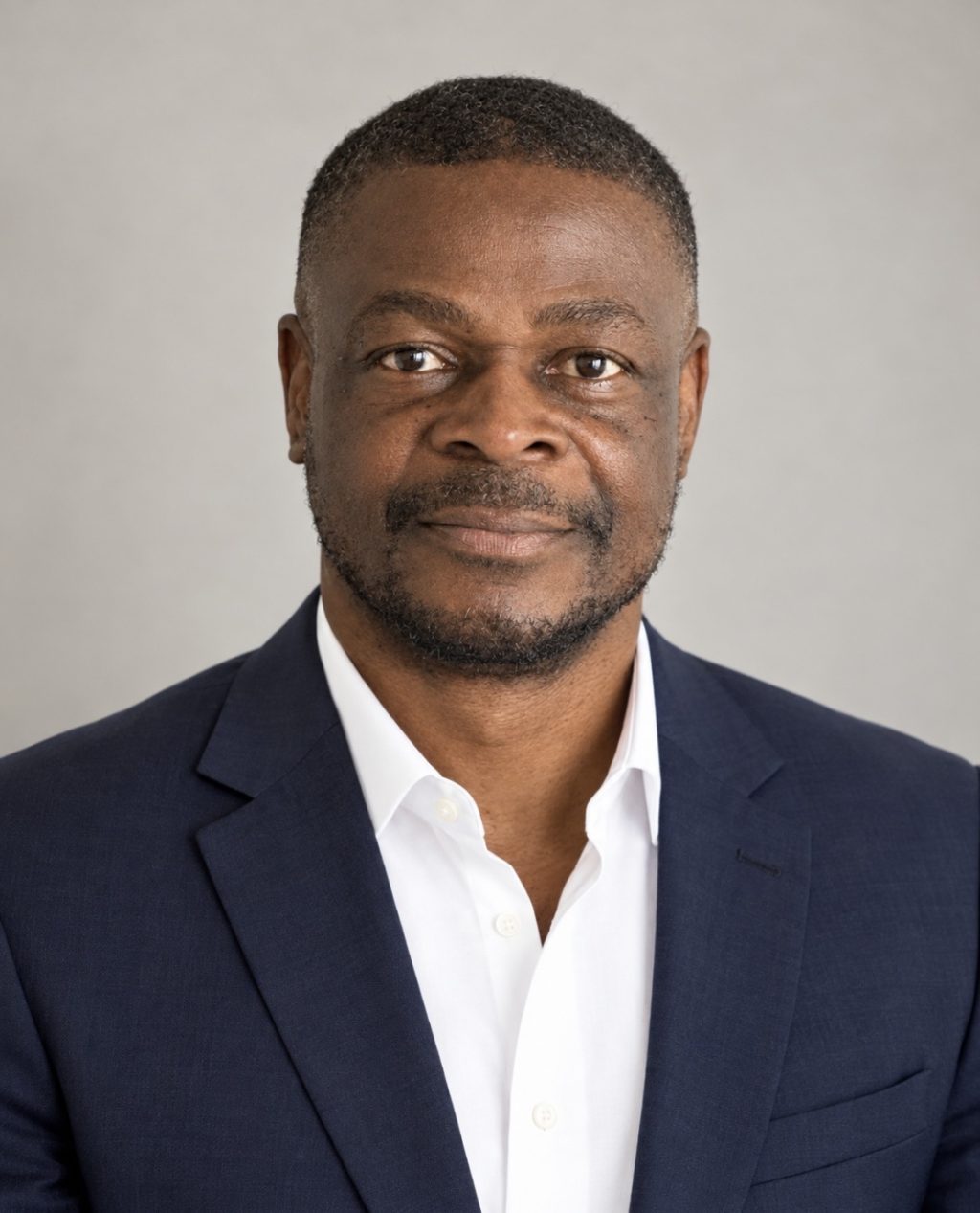
 Eche Munonye, Founder and Chief Strategist, CSR Reporters
One Day, Three Tests: How SISA 2026 Will Put Recognition, Measurement and Debate to the Test
Nigeria does not suffer from a shortage of awards. Almost every week, somewhere in the country, a company is being recognised for one achievement or another. What Nigeria has in shorter supply is a reliable way to distinguish meaningful recognition from ceremonial applause.
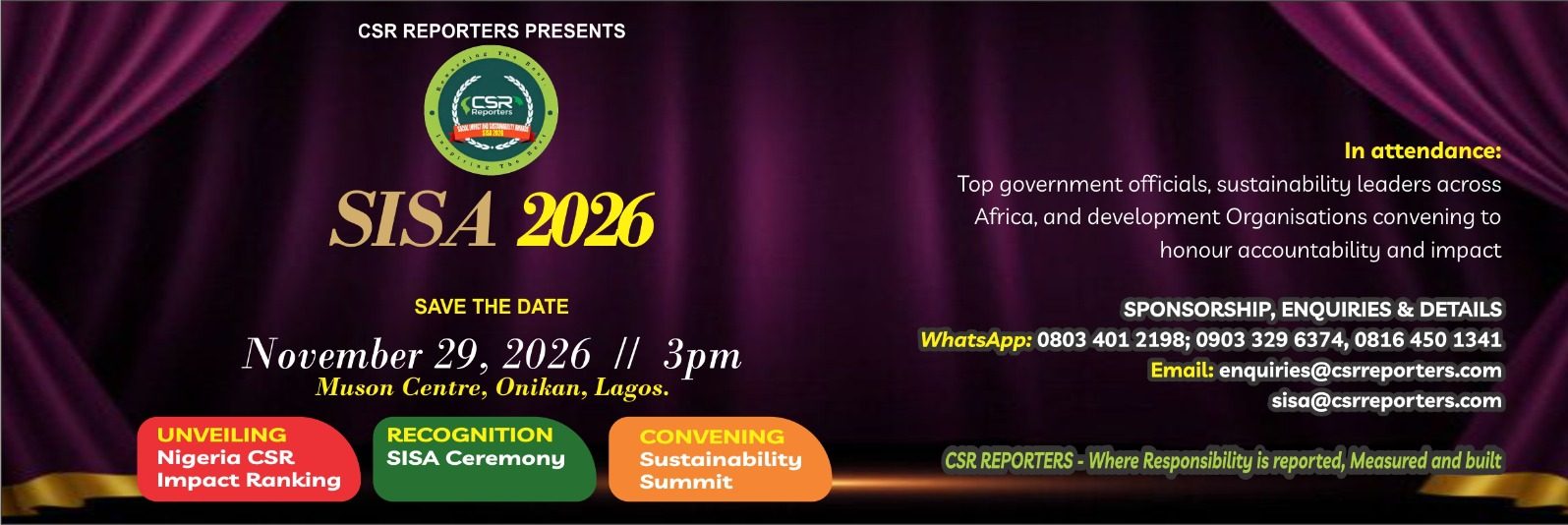
On 29 November 2026, CSR REPORTERS will bring three related but distinct activities together at the MUSON Centre, Onikan, Lagos: the CSR REPORTERS Africa Sustainability Summit, the Social Impact and Sustainability Awards (SISA), and the unveiling of the maiden Nigeria CSR Impact Ranking.
The Sustainability Summit begins at 3pm, followed by the SISA Dinner and Recognition Gala at 5pm, where the Nigeria CSR Impact Ranking 2026 will also be unveiled. The gathering is expected to bring together public-sector representatives, sustainability leaders, corporate executives and development organisations from Nigeria and across Africa.
Bringing these three components together is deliberate. Each serves a different purpose, but each also presents a test. The ranking tests corporate performance against available evidence. The awards test the credibility of the institution conferring recognition. And the summit tests whether the people shaping sustainability practice are prepared to move beyond familiar declarations towards measurable accountability.
If any one of these elements falls short, the value of the entire exercise is diminished.
Why not just hold an awards night?
Because recognition without evidence can easily become flattery.
An awards ceremony without a credible assessment process asks the audience to trust the preferences of the organisers or judges. A company is declared a leader, photographs are taken, speeches are delivered, and the more important questions remain unanswered: What exactly did the company do? Who benefited? What changed? What evidence supports the claim? And is the impact likely to last?
This is how a culture of corporate recognition can flourish alongside persistent development challenges. The number of awards presented may increase without a corresponding improvement in the quality of corporate impact.
Measurement alone has a different limitation. A ranking published without meaningful public engagement can be ignored. Companies that perform poorly may dismiss it, while those that perform well may simply circulate the result as another corporate achievement. Without an opportunity for leaders and stakeholders to examine the findings together, even a credible ranking risks becoming another document that attracts attention briefly and then disappears.
A conference without evidence or accountability can suffer a similar fate. Participants agree that sustainability matters, exchange familiar ideas and return to their organisations without any clear indication of what should change.
SISA 2026 brings these elements together around a simple proposition: measure, recognise and debate.
The sequence matters. Measurement provides an evidence base for recognition. Recognition brings attention to the organisations and initiatives considered worthy of acknowledgement. The summit creates a space for the wider questions raised by both.
Test one: the ranking tests the companies
The Nigeria CSR Impact Ranking 2026 introduces a more direct question into the corporate sustainability conversation: when claims of social and environmental responsibility are examined against available evidence, what do they actually reveal?
For too long, corporate responsibility has been communicated largely through announcements, photographs, sponsorships and descriptions of activities. These may establish that something happened, but they do not necessarily demonstrate what changed as a result.
The ranking is intended to encourage a more evidence-led approach. Its independent assessment draws on editorial research and stakeholder perception, examining areas including governance and accountability, transparency and disclosure, environmental impact, social impact and community investment, and stakeholder engagement. Project-level evidence and independent site visitations also form part of the assessment approach.
This matters because the expectations surrounding corporate sustainability are changing. Reporting requirements are becoming more demanding, investors increasingly want credible and comparable information, and communities and other stakeholders are asking more searching questions about the consequences of corporate activities.
For companies, the test is not simply whether they have sustainability policies, CSR budgets or impressive reports. It is whether their claims can withstand independent examination.
A ranking should not be treated as a declaration that any organisation is beyond criticism. Neither should a position on the list become a substitute for continued improvement. Its value lies in providing a basis for comparison, scrutiny and more informed public discussion.
Ultimately, the question for every company is straightforward: Does your claimed impact stand up when examined by people who do not work for you?
Test two: the awards test CSR REPORTERS
This is perhaps the most important test for us as organisers.
An awards ceremony organised by a platform that scrutinises corporate conduct carries an inherent tension. Companies support the event. Companies receive recognition at the event. Readers and the wider public are therefore entitled to ask whether sponsorship can influence the recognition being conferred.
This year, Dangote Cement is the official headline sponsor, while Access Bank, IHS Towers, TotalEnergies Marketing and Egbin Power are support sponsors.
We recognise that the presence of sponsors creates a legitimate question about independence. Avoiding that question would be inconsistent with the accountability principles CSR REPORTERS promotes.
Our position is clear: sponsorship should buy visibility, never recognition.
Financial support for SISA helps make the event, research, stakeholder engagement and public dissemination possible. It does not purchase an award, determine a ranking position or confer editorial favour. Award decisions must remain grounded in the assessment process, not commercial relationships.
This distinction is fundamental to the credibility of SISA. An organisation’s contribution to the event must not be confused with its performance under the assessment framework.
We also make our sponsorship relationships public for a reason. Transparency does not automatically eliminate a conflict of interest, but it allows the relationship to be examined. A disclosed relationship can be questioned and scrutinised. A hidden one undermines trust when it eventually comes to light.
The same principle applies to our editorial work, including THE VERDICT, where corporate claims and conduct are examined against stated standards and available evidence. Our responsibility is not to protect the reputation of organisations that support us. It is to maintain the credibility of the platform, including when that requires difficult questions about the organisations around our table.
If this sounds uncomfortable, it should. An accountability platform that is unwilling to subject its own relationships and decisions to scrutiny cannot credibly demand accountability from others.
Test three: the summit tests the room
The CSR REPORTERS Sustainability Summit is the third component, and its test belongs to the people who attend.
Under the theme, “From Impact to Accountability: Defining Credible Sustainability in Africa,” the summit will examine what credible, measurable and evidence-based corporate responsibility should look like in the African context.
These are important conversations, but they are not new. Across conferences and policy gatherings, participants routinely agree that sustainability must be measurable, that communities should be heard and that organisations must be accountable. The challenge is translating that agreement into practice.
Too many convenings end with communiqués and broad declarations of intent. What is often missing are specific commitments, identifiable responsibilities, timelines and a means of checking whether anything has changed.
The summit should therefore be judged not by the number of speeches delivered or the seniority of those on the stage, but by the quality of the questions it raises and the commitments it encourages.
What should companies disclose? How should communities participate in decisions that affect them? What evidence should be required before an organisation describes a programme as successful? How can regulators, investors, civil society and the media contribute to more credible sustainability accountability across Africa?
These are the kinds of questions that should move the conversation forward.
A meaningful outcome would be a commitment with an identifiable owner, a timeline and a method of verification. Such commitments give participants and the wider public something concrete to revisit after the event.
Three questions to bring on 29 November
Whether attending as a sponsor, award recipient, guest, sustainability professional or critic, everyone should arrive with three questions:
- For the ranking: What evidence supports the assessment, and how can the findings be independently examined?
- For the awards: Would the recognition remain the same if the sponsorship list were removed from the programme?
- For the summit: What practical commitments will emerge from the conversation, who will be responsible for them, and how will progress be verified?
These questions are not intended to diminish the event. They are an invitation to engage with it more seriously. We would rather answer them in public than avoid them in private.
What credibility costs
It is easier to organise an event that celebrates. It is considerably harder to organise one that measures, recognises and then invites public examination of the standards behind that recognition.
But a country where corporate impact is announced far more frequently than it is independently demonstrated needs the harder kind of engagement.
SISA 2026 will not settle every question about credible sustainability in Nigeria or Africa. Neither will one ranking transform corporate behaviour overnight. What it can do is create a more visible point of reference: a platform where evidence is presented, recognition is subjected to questions and sustainability leaders are challenged to move from commitments to demonstrable results.
For CSR REPORTERS, there is an additional responsibility. We must be prepared to apply to ourselves the standards we expect from the organisations we assess. Our independence cannot rest on what we say about it. It must be demonstrated through the decisions we make and the relationships we are willing to disclose.
That is the real significance of bringing measurement, recognition and debate together on one day.
SISA 2026 holds on Sunday, 29 November 2026, at the MUSON Centre, Onikan, Lagos. The CSR REPORTERS Sustainability Summit begins at 3pm, followed by the SISA Awards Dinner and Recognition Gala at 5pm, including the unveiling of the Nigeria CSR Impact Ranking 2026.
For enquiries, write to sisa@csrreporters.com.