


 ONYINYECHI NWAIGBA
Africa has spent decades demanding climate justice and stronger global support. The next challenge is turning those demands into laws, budgets, institutions, investments and measurable outcomes that improve lives across the continent.
For decades, Africa has been present at global climate negotiations, calling for climate justice, adaptation finance, technology transfer and greater support for countries facing the consequences of a crisis they contributed relatively little to creating.
But a more difficult question is now emerging: what happens after the pledges are made?
That question was at the centre of discussions at the 14th Conference on Climate Change and Development in Africa (CCDA-XIV), taking place in Addis Ababa, Ethiopia, under the theme “From Pledges to Implementation: The Belém-Antalya-Addis Roadmap.”
Former Nigerian lawmaker and President of GLOBE Legislators International, Sam Onuigbo, used the platform to argue that Africa must move beyond simply participating in the global climate system and begin exercising greater agency over the rules, institutions, financing mechanisms and implementation pathways shaping its climate future.
The argument goes beyond climate diplomacy. It touches on governance, development, finance, accountability and ultimately the question of whether climate action is actually improving the lives of Africans.
From Being Heard to Having Influence
There is an important distinction between participation, representation and agency.
Africa can have a seat at international climate negotiations. African priorities can appear in declarations. African leaders can demand climate finance and highlight the continent’s vulnerability.
But that does not necessarily mean Africa is shaping the systems that determine where climate finance goes, who controls it, how projects are selected or how success is measured.
That is the gap Onuigbo is challenging.
He has argued that African climate leadership should mean moving from being consulted to becoming an author of the rules and systems that will determine the continent’s future.
This matters because climate policy is increasingly connected to almost every major development question Africa faces from energy and agriculture to infrastructure, trade, jobs, public health and industrialization.
If Africa does not have greater influence over those systems, climate action risks remaining something largely designed elsewhere and implemented locally.
The Real Test Is Implementation
Africa already has climate commitments.
Countries have submitted Nationally Determined Contributions (NDCs), adopted climate strategies and, in several cases, introduced legislation intended to guide their transitions.
The problem is that a commitment on paper is not the same thing as a functioning program on the ground.
At the CCDA-XIV, Onuigbo called for African countries to translate their NDCs into implementation frameworks, investment plans, sector-specific programs and bankable projects supported by legislation, budgets and effective oversight.
That distinction is crucial.
A climate commitment only begins to matter when it produces something tangible: a flood-resistant road, a functioning early-warning system, cleaner energy, resilient agriculture, protected wetlands, better waste management or jobs in emerging green industries.
This is also where accountability becomes important.
Governments should not only be asked whether they have climate policies. They should be asked what those policies have delivered, how much they have cost, who has benefited and whether vulnerable communities are actually safer than they were before.
Climate Adaptation Cannot Remain Reactive
For Africa, adaptation is particularly urgent.
Across the continent, climate-related risks are already affecting communities, agriculture, infrastructure and livelihoods. In Nigeria, for example, recurring floods have demonstrated how quickly climate-related events can translate into displacement, damaged infrastructure, lost income and pressure on public resources.
Onuigbo has argued that adaptation should no longer be judged by the number of projects announced, but by whether those interventions actually reduce vulnerability, deaths and economic losses.
That is a significant shift in thinking.
A flood-management project should not simply be celebrated because it was commissioned. The more important question is whether communities are actually experiencing fewer losses when heavy rainfall occurs.
An early-warning system should not be considered successful because equipment was installed. It should be judged by whether people receive warnings early enough to act.
This is what outcome-based climate action looks like.
Africa Also Needs Control of Climate Finance
Finance remains one of the biggest barriers to climate action.
African countries need substantial resources to adapt infrastructure, expand clean energy, protect ecosystems and build climate-resilient economies. Yet access to international climate finance can be complicated, slow and expensive.
The question, therefore, is not simply how much climate finance has been pledged.
It is who controls the money, who can access it, what form it takes and what conditions come with it.
Onuigbo has called for stronger African influence over the rules governing major multilateral climate funds and greater direct access for capable African development banks, national climate funds and regional institutions. He has also raised concerns about the impact of expensive loans on countries already facing debt pressures.
For CSR and ESG stakeholders, this is an important conversation.
Climate finance should ultimately translate into measurable social and environmental value. If communities remain vulnerable while large sums are announced but difficult to access, the gap between climate ambition and climate impact remains.
Climate Policy Must Connect With Economic Development
There is another reason African climate agency matters: climate policy cannot be separated from economic development.
Africa still faces major challenges around energy access, industrialization, employment and infrastructure.
A climate transition that ignores these realities risks creating policies that are environmentally ambitious but economically difficult to sustain.
The official CCDA-XIV agenda recognizes this challenge, with discussions covering climate finance, adaptation, trade, industrialization, critical minerals, green structural transformation, science and innovation.
That broader approach is important.
Africa’s transition should not simply mean reducing emissions. It should also mean building industries, developing local expertise, creating jobs, strengthening energy systems and ensuring that African countries capture more of the economic value created by the green transition.
Critical minerals provide one example. Africa possesses significant mineral resources needed for technologies linked to the energy transition. The question is whether the continent will remain primarily a supplier of raw materials or develop stronger local value chains around processing, manufacturing and technology.
Climate agency must therefore include economic agency.
The Private Sector Cannot Be Left Out
Governments cannot deliver the climate transition alone.
Businesses will be critical to financing clean-energy projects, developing new technologies, improving resource efficiency, creating green jobs and building resilient supply chains.
But the private sector also needs predictable policies, functioning institutions, access to finance and clear climate regulations.
This creates an opportunity for African governments, development finance institutions and businesses to move from isolated sustainability projects toward deeper partnerships that support long-term transformation.
For companies operating across Africa, the conversation should also go beyond carbon reporting.
The more important questions include: Are investments strengthening local capacity? Are communities benefiting? Are workers gaining new skills? Are supply chains becoming more resilient? Are environmental commitments producing measurable outcomes?
These are increasingly central questions in responsible business.
From Climate Participation to Climate Agency
The significance of the current conversation is that Africa is not simply asking for a louder voice.
It is asking for greater control over the systems that determine its climate future.
That means stronger institutions. Better data. African-led research and innovation. More accessible finance. Effective legislation. Coordinated regional policies. Stronger oversight. And, perhaps most importantly, the ability to measure whether climate action is actually delivering results.
The official CCDA-XIV program reflects this broader ambition, with the conference expected to produce Addis Ababa Climate Action Messages that will help shape Africa’s position ahead of COP31 and lay groundwork for an African-led COP32 in 2027.
But the real test will not be another declaration.
It will be what happens after the conference halls empty.
Will climate pledges become funded programmes?
Will policies become functioning institutions?
Will adaptation reduce losses?
Will climate finance reach communities faster?
Will green investment create jobs and strengthen African industries?
And will African countries have a greater say in the rules governing the transition?
Africa has spent years making its climate case to the world.
The next chapter may be about something more difficult building the capacity, institutions and economic power to act on that case.
Because climate leadership is not ultimately measured by how often Africa speaks at climate conferences.
It is measured by what changes for African people when the conference is over.
[give_form id="20698"]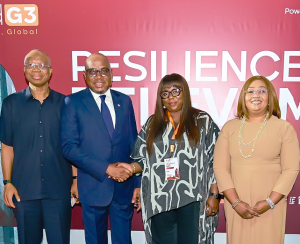


1 thought on “Africa Has Made the Climate Pledges. Now, Who Will Turn Them Into Action?”