ONYINYECHI NWAIGBA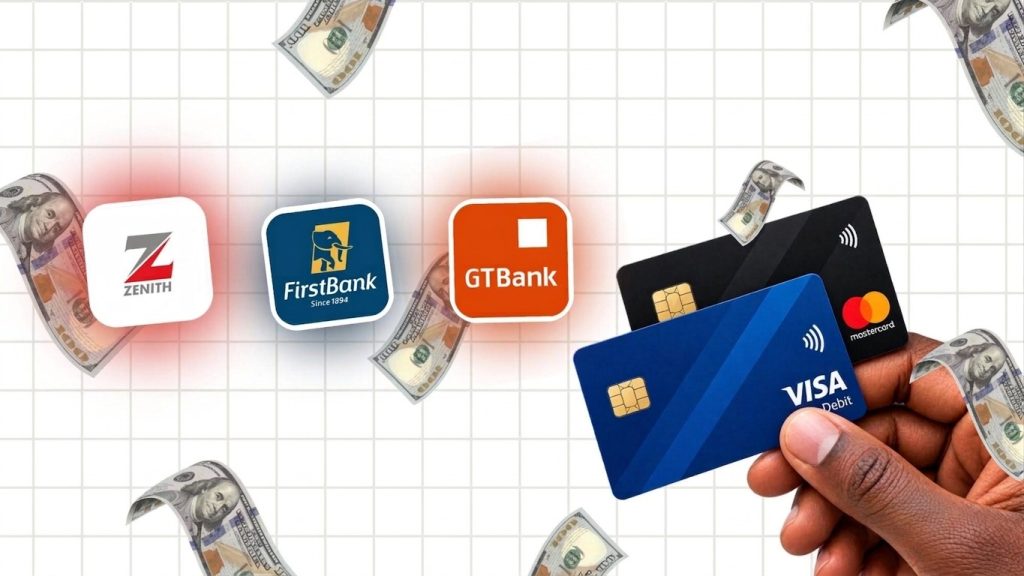
As foreign exchange liquidity improves and banks relax international spending restrictions, Nigerians are gaining easier access to global payments. But the bigger test is whether the improvement can translate into lasting economic confidence and wider financial inclusion.
For years, accessing dollars through Nigeria’s formal financial system was a struggle.
International payments were restricted. Naira cards faced tight spending limits. Students paying overseas tuition, travelers booking flights, businesses purchasing international services and professionals paying for digital tools often had to navigate a difficult foreign exchange environment.
That reality appears to be changing.
Several Nigerian banks have recently increased the limits on international transactions carried out with naira-denominated cards, following improvements in foreign exchange liquidity.
GTCO, FirstBank, Zenith Bank, UBA and Stanbic IBTC are among the major banks that have increased international spending limits, giving customers greater room to make payments for expenses such as tuition, travel, accommodation, online purchases and other legitimate obligations abroad.
On the surface, this may look like a banking story.
But underneath it is a bigger story about economic access.
When Dollar Scarcity Became an Everyday Problem
Nigeria’s foreign exchange crisis did not remain inside financial markets.
Between 2023 and 2025, severe dollar shortages forced banks to reduce international card limits, with some institutions temporarily suspending certain offshore transactions altogether.
The consequences were felt by ordinary Nigerians.
Students needed to pay international school fees. Travellers needed to purchase airline tickets and accommodation. Businesses depended on foreign software, advertising platforms and other digital services. Families supporting relatives abroad also had international financial obligations.
When access to official FX channels became difficult, many were pushed toward more expensive or less convenient alternatives.
The problem was therefore not simply that dollars were scarce.
It was that scarcity affected people’s ability to participate in an increasingly global economy.
The recent increase in card limits suggests that this pressure is beginning to ease.
A Significant Shift in Access
The changes across the banking sector are substantial.
GTCO has increased the quarterly international spending limit on its naira cards to $40,000, after previously setting the limit at $6,000 in May and $20,000 in August.
FirstBank’s Naira Mastercard now allows cumulative international POS and online spending of up to $10,000 per quarter, while ATM withdrawals can reach $1,000 per day.
Zenith Bank allows international transactions of up to $50,000 annually, while Stanbic IBTC has increased its quarterly international card limit to $8,000.
These figures do not mean every Nigerian suddenly has access to tens of thousands of dollars.
They do, however, demonstrate a major change in the financial environment: banks now have greater capacity to process international transactions through formal channels.
That matters.
Students and Families Could Feel the Difference
One of the clearest benefits could be for Nigerians dealing with education and other essential international payments.
For families paying overseas tuition, accommodation or related expenses, uncertainty around whether a card transaction will go through can create enormous stress.
Improved access does not make international education affordable, but it can make the payment process more predictable.
The same applies to Nigerians travelling for work, study, medical care or other legitimate purposes.
When financial systems function properly, people spend less time searching for alternative ways to move money and more time focusing on why the payment is needed in the first place.
That is an important but often overlooked dimension of financial inclusion.
Businesses Also Need Access to the Global Economy
The implications extend beyond individuals.
Nigeria’s businesses increasingly depend on international digital infrastructure.
From cloud services and software subscriptions to advertising platforms, professional services and international suppliers, many businesses need to make legitimate foreign-currency payments to operate.
When access to FX becomes unpredictable, these businesses face another layer of operational risk.
A company may have the naira equivalent of a payment but still struggle to complete the transaction if the financial system cannot provide the required foreign currency.
Improved FX liquidity can therefore support business continuity.
It can make it easier for Nigerian companies to maintain relationships with international suppliers, pay for essential digital services and participate in global markets.
This is particularly important as Nigeria seeks to deepen its digital economy and attract more investment.
The Bigger Story Is Financial Confidence
Perhaps the most important change is psychological.
When people believe that the formal financial system can meet legitimate foreign-currency needs, confidence begins to return.
The recent increase in international card limits comes alongside a significant improvement in Nigeria’s external reserve position.
The country’s external reserves crossed $54 billion in early September 2026, reaching about $54.08 billion, the highest level recorded since December 2008.
The improvement in reserves and greater FX liquidity do not mean Nigeria’s currency challenges have disappeared.
Inflation remains a concern. The cost of living remains high. Businesses still face significant operating pressures, and access to foreign exchange must remain sustainable rather than dependent on temporary improvements.
But stronger liquidity gives the financial system more room to function normally.
And normal functioning matters.
Reform Must Be Felt Beyond the Financial Sector
Nigeria’s FX reforms are ultimately judged by what they change in people’s lives.
A more liquid FX market is useful if it helps businesses plan better.
It is useful if students can make legitimate international payments more easily.
It is useful if travellers can access foreign currency through formal channels without unnecessary uncertainty.
It is useful if Nigerian companies can pay for the technology and services they need to compete globally.
And it is useful if improved confidence encourages more people and businesses to use formal financial channels rather than informal alternatives.
That is where the conversation moves from financial policy to economic inclusion.
But Access Must Remain Responsible
There is also a need for caution.
Greater access to foreign exchange must be supported by strong compliance, monitoring and responsible financial management.
The goal cannot simply be to make it easier to spend dollars abroad.
Nigeria also needs to strengthen the productive side of the economy so that foreign exchange is increasingly supported by exports, investment, remittances, tourism, services and other sustainable inflows.
Otherwise, increased access could simply create another channel for dollar demand without addressing the underlying supply equation.
The long-term objective should therefore be a financial system where Nigerians can access foreign currency when they have legitimate needs while the economy continues to build the capacity to generate those foreign-exchange earnings.
What Does This Mean for Financial Inclusion?
Financial inclusion is often discussed in terms of bank accounts, digital payments and access to credit.
But there is another dimension: being able to participate in the global economy through a reliable formal financial system.
A Nigerian professional paying for an international certification, a student paying tuition, a business renewing software or a traveller purchasing an airline ticket is participating in that global economy.
If the formal financial system makes those transactions easier, it expands the practical value of having access to banking services.
This is why the recent changes deserve attention beyond the banking sector.
They show how macroeconomic conditions can eventually affect very ordinary decisions.
The Real Test Is Sustainability
The increase in international spending limits is encouraging, but it should not be mistaken for the end of Nigeria’s FX challenges.
The real test is whether the improvement can be sustained.
Can Nigeria maintain stronger reserves?
Can the FX market remain liquid without creating new pressures?
Can businesses gain greater certainty when planning international transactions?
Can the country increase its foreign-exchange earnings through stronger production and exports?
And perhaps most importantly, can Nigerians continue to feel the benefits of economic reforms beyond headlines and financial-market statistics?
Those are the questions that will determine whether the current improvement represents a temporary relief or a meaningful structural shift.
For now, however, the direction is notable.
After years in which dollar scarcity restricted how Nigerians interacted with the rest of the world, greater access through formal banking channels suggests that the country’s financial system may be entering a more stable phase.
The bigger opportunity is to ensure that this stability does not stop at higher card limits.
It should translate into greater confidence, easier business operations, stronger financial inclusion and a Nigerian economy that is better equipped to participate in the global economy.
[give_form id="20698"]