


 ONYINYECHI NWAIGBA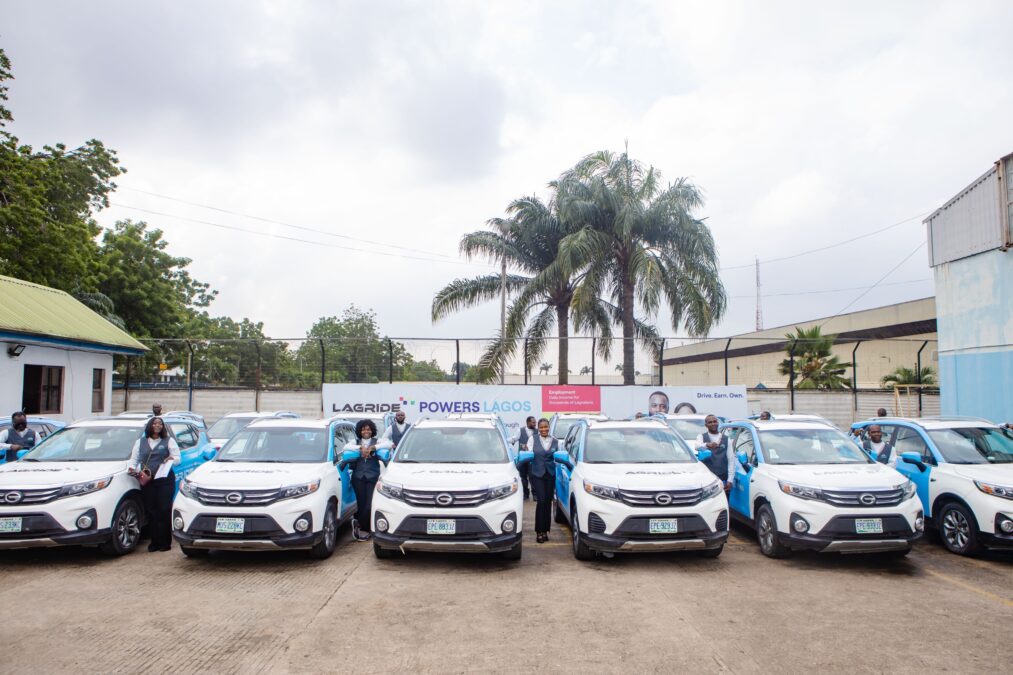
For many Nigerians, having a job is no longer the only measure of economic progress.
The bigger question is what that job makes possible.
Can it help someone pay their bills? Certainly. Can it provide a stable income? Perhaps. But can it help a worker build an asset, gain financial security and eventually become less dependent on the next day’s earnings?
That is where the conversation around Nigeria’s growing ride-hailing economy becomes more interesting.
LagRide recently announced the deployment of 400 new vehicles across Lagos and plans to mobilize more than 1,000 additional drivers between now and December, as demand rises during the Ember Months. The company expects the expansion to support more than 200,000 rides during the period.
On the surface, this is a story about transportation capacity.
But underneath it is another story: livelihoods.
A Job Is Not the Same as Economic Independence
Nigeria’s employment conversation often focuses on how many jobs are created.
That number matters, but it does not tell the whole story.
A person can work every day and still remain financially vulnerable if most of their income goes towards food, rent, transportation, debt and other immediate expenses.
This is particularly important in the gig economy, where workers often have more flexibility than traditional employees but may also face the uncertainty of variable income, operating costs and limited social protection.
Ride-hailing illustrates this tension clearly.
The platform provides access to customers. The vehicle provides the means to earn. The driver provides the labor.
But the real measure of economic empowerment is what happens beyond the daily trip.
Does the driver have an opportunity to increase earning capacity? Can they build savings? Can they access financing? Can they eventually own the asset they use to generate income?
These questions move the conversation from employment to economic mobility.
When Work Can Lead to Ownership
This is where LagRide’s Drive-to-Own programme offers an interesting model to examine.
The programme is designed to allow qualifying Captains to transition from renting vehicles towards ownership, based on performance and other requirements. LagRide has described it as a structured pathway supported by training, platform standards and operational discipline.
That distinction is important.
There is a major difference between giving someone access to a vehicle for work and creating a pathway through which that person can eventually own the asset.
Ownership can fundamentally change the economics of work.
A vehicle is not only a means of earning income. It can become an asset with value beyond the individual ride. It can provide greater control over how the vehicle is used and potentially create another layer of financial security.
This is why programmes that connect work with asset ownership deserve attention in Nigeria.
For millions of people operating within informal and semi-formal economies, the challenge is not simply finding something to do. It is finding ways to turn economic activity into lasting financial progress.
But Gig Work Has Limits
It would be too simplistic to present ride-hailing as a guaranteed route out of financial hardship.
The reality is more complicated.
Drivers have operating expenses. Fuel, maintenance, repairs, insurance, platform-related costs and other expenses can significantly affect what remains as take-home income.
There is also the question of income stability.
A driver may have a busy day and a slow one. Demand can change. Costs can rise. Vehicles require maintenance. And economic conditions can affect how frequently people use ride-hailing services.
So while access to work is important, responsible businesses must also consider the conditions under which that work takes place.
If a company wants to position a platform as a pathway to empowerment, the conversation should include transparent terms, safety, training, maintenance support, fair operating conditions and realistic routes towards financial advancement.
The goal should not simply be to put more people behind steering wheels.
It should be to help them build better livelihoods.
What Should Responsible Platform Businesses Measure?
This is where the CSR conversation becomes more useful.
Companies often measure impact through numbers: number of people trained, number of jobs created, number of vehicles deployed or number of beneficiaries reached.
Those figures are useful, but they do not necessarily show whether people’s lives have improved.
A more meaningful impact framework would ask different questions.
How many drivers increased their income after joining the platform?
How many were able to build savings?
How many moved from renting towards asset ownership?
How many completed professional training?
How many remained financially stable after participating in the programme?
And perhaps most importantly: what happens to these workers three or five years later?
These are the kinds of questions that can distinguish activity from impact.
A company can create thousands of opportunities without necessarily creating thousands of economically empowered people.
The difference lies in what those opportunities make possible.
Beyond the Number of Drivers
LagRide’s latest expansion is taking place at a time when Nigeria needs more pathways into productive work.
The company says the additional vehicles will support more than 1,000 new Captains while expanding coverage to areas including FESTAC, Ikorodu and Ajah.
That creates an immediate opportunity for income generation.
But the longer-term opportunity is bigger.
If a driver can enter the platform, develop professional skills, earn consistently, manage finances, access a structured ownership pathway and eventually own a productive asset, the impact extends beyond one job.
It becomes a story about financial inclusion, asset creation and upward mobility.
That is the kind of impact Nigeria needs more of.
Not necessarily because every worker must become a vehicle owner, but because economic empowerment should ultimately be about increasing people’s ability to make choices about their financial futures.
The Bigger Question
Nigeria does not only need more jobs.
It needs better pathways from work to stability, from stability to savings, and from savings to ownership and long-term economic security.
That is why the growing gig economy deserves to be examined beyond the convenience it offers consumers.
Behind every ride is a person trying to make a living.
And behind every new vehicle placed on the road is an opportunity to ask whether that work can become something more than daily survival.
For businesses operating in this space, the responsibility may therefore go beyond creating access to income.
It may mean designing systems that help people build skills, protect their livelihoods and, where possible, accumulate assets.
Because the strongest form of economic empowerment is not simply helping someone earn today.
It is helping them build something that gives them more control over tomorrow.
[give_form id="20698"]


1 thought on “Beyond the Ride: Can Nigeria’s Gig Economy Create Real Economic Mobility?”